
A 500MW Floating Solar Plant being designed by Green Hybrid Power in partnership with the Intensive Energy User Group is to be installed at Kariba Dam in Zimbabwe in the country’s quest to boost power supply.
At a stakeholder engagement meeting on the proposed project held in Harare, Marian Chombo, Minister of State for Provincial Affairs and Devolution, said the initiative will increase power supply to the export-oriented sector, particularly mining and mineral processing industries.
“Reliable energy supply will boost production, strengthen export performance and increase foreign currency earnings for our nation. Mashonaland West province stands ready to complement this national objective,” Chombo said.
The project will optimise utilisation of existing transmission infrastructure, she added
Chombo said the Kariba transmission system was designed to supply approximately 1,200MW. Yet, for nearly two decades, it has transmitted less than 400MW.
Maximising the use of infrastructure enhances efficiency and generates valuable wheeling charges in hard currency, thereby empowering the Zimbabwe Electricity Transmission Distribution Company (ZETDC) to strengthen and modernise the national grid, according to the minister.
The initiative includes an innovative aquaculture component that is breeding fish beneath the floating solar panels.
According to Chombo, if successfully implemented, the initiative will revive and diversify the fishing industry in Kariba, creating jobs and expanding economic opportunities for local communities.
The initiative is also a clean energy project that contributes directly to Zimbabwe’s decarbonisation agenda and supports the country’s commitments under global climate frameworks.
Mining and processing industries powered by renewable energy will qualify for carbon credits, enhancing their competitiveness in international markets, informed Chombo.
She said it is strongly encouraged that part of the revenue generated from carbon credits be reinvested into the Kariba community, thereby supporting social infrastructure, youth empowerment and environmental conservation.
“This is not just a power project but a development, resilient and future-facing project,” she said.
The minister urged stakeholders to ensure that Kariba becomes a symbol of hydro-power excellence, innovation, sustainability and energy diversification for Zimbabwe and the region.
The project represents not only an investment in infrastructure but an investment in Zimbabwe’s energy security, industrial growth and sustainable future, according to the government.
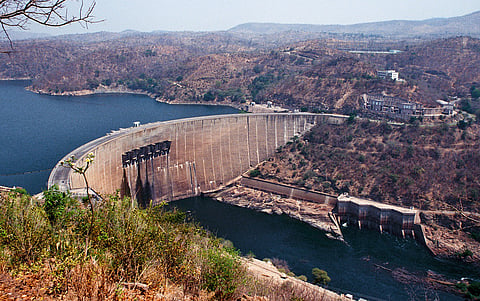
The Kariba Dam is a massive hydro-electric dam on the Zambezi River between Zambia and Zimbabwe, creating the world’s largest human-made lake by volume, Lake Kariba.
Completed in 1959, the 128-metre-high double-curvature concrete arch dam provides critical electricity to both countries while impacting local ecology and communities.
Mashonaland West province, where the current project is being initiated, has historically been the heartbeat of Zimbabwe’s power generation.
Since the commissioning of Kariba Power Station, with an installed capacity of 1,050 megawatts, in 1959, the province has powered homes, industries, mines and businesses across the nation.
However, over the past 25 years, the realities of climate change have profoundly affected hydro-power generation.
Recurrent droughts and reduced inflows into Lake Kariba have resulted in severe water rationing. As a consequence, generation capacity has declined dramatically, averaging between 250 and 350MW in recent years.
Chombo said in 2023, the situation reached critical levels, with power generation falling below 100MW for extended periods.
According to local energy experts, floating solar gives developing countries a few practical wins. This includes saving land since panels sit on reservoirs instead of farmland or settlements, which is important in areas where land is scarce or costly.
Floating solar also boosts output when water cools the panels and they generate 5 to 10 per cent more power. They also shade the reservoir, cutting evaporation. This is said to be also helpful for water-stressed dams like Kariba.
Another highlighted advantage is that the projects are quick to add to existing hydro since they can be hooked into the dam’s transmission lines and even run a solar-by-day / hydro-by-night mix, smoothing supply without building new grid links.
Local jobs and skills are created in construction, maintenance and monitoring, creating technical work and training opportunities.
Other advantages of such initiatives mentioned by energy experts include reduction in fuel imports and addition of clean energy megawatts that offset diesel or coal, easing foreign-exchange pressure on developing countries like Zimbabwe.
For Zimbabwe, that means more electricity for mines and towns, less water lost from Kariba and a faster route to diversify a hydro-dependent grid.
The 1GW hybrid floating PV project on Lake Kariba, the world’s largest human-made reservoir is planned in phases with a pilot of 500 MW, first phase of 250 MW with a $4.4 m the African Export-Import Bank (Afreximbank) preparation facility to fund feasibility and bankability studies
The hybrid design pairs floating solar panels with existing Kariba hydro capacity and optionally battery storage solar will run by day, hydro at night, using the same transmission lines.
Partners include Afreximbank, which will finance the project; the Intensive Energy Users Group who are an off-taker consortium of miners/industries under a 20-year PPA and Green Hybrid Power as the developer.
Sosten Ziuku, Director, Energy Conservation and Renewable Energy in Zimbabwe’s Ministry of Energy and Power Development, said the country currently does not have any operational floating solar plant and the Kariba one is being proposed and feasibility studies have just begun.
Ziuku said his ministry had previously received enquiries for floating solar at Mutirikwi Dam but nothing concrete has happened.
A feasibility study conducted by a joint consortium is currently underway for the proposed Kariba project while the Afreximbank is reported to be at the final stages of evaluation by consultants.
