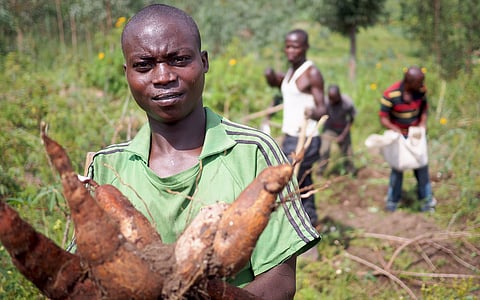


The overall level of contamination of cassava by various types of fungus is very high across Africa, ranging from 85 per cent to 95 per cent, with an average contamination rate of about 90 per cent, according to a new study.
Clear differences were observed between regions, according to the study. In West Africa (Nigeria, Ghana, and Benin) contamination rates were consistently above 90 per cent. This high level is largely linked to poor drying practices, which allow molds to grow and produce mycotoxins.
In East Africa, particularly in Uganda and Kenya, contamination levels were also high, with an average rate of about 88 per cent. The warm and humid climate in these areas creates favourable conditions for fungi such as Rhizopus and Penicillium to grow.
In Central Africa, especially in Cameroon, fungal contamination was also widespread, with an average prevalence of about 87 per cent. In this region, contamination is influenced not only by storage methods after harvest but also by differences in storage facilities, handling practices, and socio-economic conditions that affect how foods are preserved.
Cassava (Manihot esculenta Crantz) is an important food crop that supports the diets of millions of people across Africa. It is often called the ‘Bread of the tropics’.
However, cassava is easily contaminated by fungi, which can cause serious health problems.
Some molds, including Aspergillus, Penicillium, and Fusarium, produce harmful substances called mycotoxins. The most important of these mycotoxins are aflatoxins, ochratoxin A, and fumonisins. These toxins are dangerous because they can cause cancer, damage the kidneys, and weaken the immune system.
Although many individual studies have reported the presence of fungi and mycotoxins in cassava and cassava-based products, there is no complete and quantitative summary of the available data. This is especially true for countries such as Burkina Faso, Togo, the Democratic Republic of Congo, and Cote d’Ivoire, where information is limited.
As a result, it is difficult to clearly understand how widespread contamination is, how it varies across regions, and what factors increase the risk of contamination.
The current study aimed to fill this gap. It carried out a systematic review and meta-analysis of research published between 1999 and 2025.
The aim was to estimate overall levels of fungal and mycotoxin contamination, compare differences between regions, examine the methods used to detect contamination, and evaluate possible health risks.
A total of 489 full-text African studies, representing 82.6 per cent of the available articles, were reviewed and included in the meta-analysis.
Fungal contamination of dried food products remains a serious problem in Africa, mainly because of traditional drying and storage methods.
The study’s findings show that fungal contamination in Africa is caused by a combination of environmental conditions and human practices.
Overall, the findings highlight an urgent need to improve post-harvest handling, processing, and storage practices for cassava. Strengthening food safety awareness, promoting better drying and storage techniques, and improving monitoring systems are essential steps to reduce contamination and protect public health in Africa.
The study was published in the Journal of Agricultural Chemistry and Environment on December 23, 2025.
