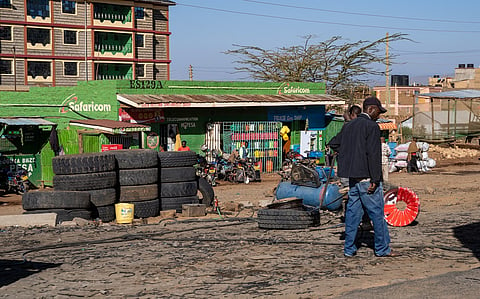


Across Africa, millions of tyres reach the end of their life every year-from around 3 million in Ghana to more than 10 million in Nigeria — yet only a tiny fraction is recycled through formal systems, with average recycling rates hovering around 10 per cent. While recycling technologies such as pyrolysis, crumb rubber recycling exists in a few isolated facilities across the continent, the scale of recycling remains far too limited to handle the growing volume of waste tyres.
This gap points to a more insidious challenge. While the visible symptoms of waste tyre dumping are widely recognised and discussed on various platforms, the underlying issue is not confined to a matter of disposal methods or recycling technology. At its core, the crisis reflects the absence of robust systems designed to manage tyres once they reach the end of their useful life. The question remains: what does such a robust system actually consist of? Essentially, a well-functioning waste-tyre system thus rests on two basic pillars: regulation that ensures tyres are collected and managed responsibly, and markets that create demand for the material recovered from them. Without regulation, tyres fall out of the system, and without markets, they come right back as a different version of the same waste — stockpiled, unsold and going nowhere.
From a regulatory perspective, an effective waste-tyre system should begin with a very simple principle: responsibility should lie with those who place tyres on the market. In African nations, this implies importers rather than manufacturers, since the majority of tyres enter the continent through imports of new and used tyres. The real strength of such producer responsibility, vitally, lies in how well it is designed.
A key design principle for producer responsibility is proportionality — simply put, the more tyres a company places on the road, the greater its responsibility for managing them once they reach the end of their life. This principle ensures that the burden of waste management is shared fairly and that no producer can benefit from the market without contributing to the system that manages its waste. One practical way to operationalise proportionality is through collection obligations, since in most places the first hurdle to an effective recycling ecosystem is the collection of discarded tyres. Responsibility for collection can be directly linked to the number of tyres sold, ensuring that companies selling larger volumes of tyres would be responsible for the establishment or support of a greater number of collection centres. This will allow the collection system to grow alongside tyre sales, ensuring that increasing volumes of waste tyres are captured and redirected into formal recycling pathways. Additionally, other provisions such as mandatory take-back requiring sellers to accept an equivalent waste tyre free of charge when a new one is sold, can further strengthen the collection system developed through producer responsibility.
Crucially, along with downstream impacts, advancing producer responsibility upstream is vital to influence the types of tyres entering the African market (majorly through importers). Tyre design and quality determine the duration a tyre can remain in use for, whether it can be retreaded and how easily it can be recycled. Encouraging the introduction of tyres into the African market that incorporate recycled materials such as recovered carbon black or crumb rubber, can help create stable demand for recycled outputs. Better-designed tyres therefore reduce waste generation while strengthening recycling systems.
To encourage this principle, companies placing tyres on the market above a defined threshold should be required to prepare mandatory waste-prevention plans. Such plans would compel large importers to actively examine how the tyres they introduce into the market can be made more durable, longer lasting and easier to recover at the end of their life. This can further be reinforced through eco-modulated financial contributions, where the fees paid by importers or producers are adjusted based on tyre performance. Tyres that are more durable, easier to retread or recycle, or incorporate higher shares of recycled materials can attract lower fees, while tyres with poorer recovery potential face higher charges.
The second pillar of this system, creating markets for recycled rubber is just as important. Without sustained demand for recycled materials, collected tyres that get recycled can simply accumulate elsewhere in a different form.
One of the most effective ways to create such markets is through public procurement. Governments should mandate or incentivise the use of tyre-derived materials in public infrastructure projects such as roads, pavements and urban construction. When public agencies incorporate such materials in large projects, they automatically create a reliable outlet for recycled products along with demonstrating the technical performance of such products. In the long term, this is sure to encourage wider adoption of these products as well as reduce the inherent risk recyclers face in investing in recycling facilities that create them.
After this, financial and innovation support can further help emerging recycling industries take root. Recycling technologies and new product applications often face high initial costs and uncertain markets in their early stages. Targeted incentives, research funding and innovation grants can therefore play an important role in helping companies develop new applications for recycled rubber, diversify the range of products made from waste tyres and gradually strengthen downstream markets. Together, these measures can help ensure that waste tyres are not merely collected but absorbed into productive use across the economy.
Side by side, the two foundational pillars — regulatory and market measures — can help move tyre recycling from scattered initiatives to effectively functioning systems. Once these pillars are actively implemented, the continent’s growing tyre piles will no longer represent a waste problem but will instead become a recoverable resource that can be used to develop nations’ economies.