
Subscribe

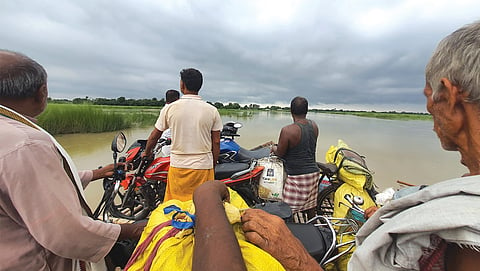
Sheila Devi has one reason to be grateful for the COVID-19 pandemic. It brought her husband Lalit Yadav home—and this time, he stayed. For generations, migration has been a way of life in Maran, a village in Bihar’s Madhubani district. Perched on the banks of the Kamla river, which flows from Nepal and floods the area almost every monsoon, the village offers little certainty. When the waters rise, many leave in search of work. After finishing high school, Yadav followed that familiar path. He moved to Bhiwandi in Maharashtra with his father, who worked in a textile mill, and learnt tailoring. His plan was simple: acquire a skill, find steady work and build a life in the city. The pandemic overturned those plans.
The father-and-son duo returned home during the nationwide lockdown. What began as a forced return gradually became a fresh start. Yadav began by stitching clothes in the village before opening a small ready-made garment shop, which now earns him Rs 15,000-20,000 a month. Over the years, he has brought his family’s one-and-a-half bighas (0.38 hectare) of ancestral land back under cultivation and bought two cows.
Ramesh Kumar Singh, president of Ghoghardiha Prakhand Swarajya Vikas Sangh (GPSVS), a non-profit that helps returning migrants in rural Bihar improve their livelihoods, estimates that 87 workers returned to Maran during the lockdown. “Some have gone back, but around 40 per cent have stayed and are now engaged in farming and allied activities,” says Singh. Land that once lay fallow has been brought back under cultivation, with farmers now growing at least two crops a year alongside vegetables. Yadav’s family produces enough not only to feed itself but also to sell the surplus. Singh says a similar pattern is emerging in other villages across Bihar, where many returning migrants have stayed on and taken up farming…
This article is part of the cover story “Back to crisis again”, originally published in the July 16-31, 2026 print edition of Down To Earth
