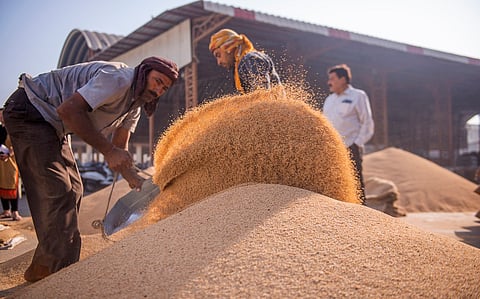


India stands at a pivotal moment in global agri-food trade. It is among the world’s largest producers of rice, milk, spices, fruits, fisheries, and several horticulture products, yet its share in global agricultural exports remains modest at around 2.2 per cent. The contradiction is striking: a country with vast production capacity still struggles to fully translate its agricultural strength into sustained global competitiveness.
The challenge is no longer merely about producing more. It is about building resilient, traceable, standards-compliant, and globally integrated agricultural value chains. As international trade increasingly revolves around quality assurance, sustainability, food safety, and logistics efficiency, India must move beyond the traditional “farm-to-market” approach toward a modern “farm-to-global-market” framework.
At the core of this transformation lies value chain strengthening. Indian agriculture continues to be fragmented, dominated by smallholders, and characterised by weak aggregation systems. A substantial share of produce passes through multiple intermediaries before reaching processors or exporters, eroding farmer margins and compromising quality consistency. In several commodities, post-harvest losses remain significant due to inadequate cold chains, storage infrastructure, and grading systems.
This fragmentation becomes particularly costly in export markets, where buyers demand uniformity, traceability, and reliable delivery schedules. Countries competing with India in agri-food exports—such as Vietnam, Thailand, Brazil, and the Netherlands—have invested heavily in integrated supply chains linking farmers, processors, logistics providers, certification agencies, and exporters. India’s agricultural competitiveness will increasingly depend on whether it can replicate similar ecosystem efficiencies.
Evidence from an NCAER study on agro-processing cooperatives and institutional financing further highlights the structural weaknesses in India’s agricultural value chains. The study, covering 304 cooperative units across states including Assam, Gujarat, Kerala, Maharashtra, and West Bengal, found that marginal and small farmers continue to sell a major share of their produce to private traders due to weak aggregation systems and inadequate storage infrastructure. As a result, farmers often fail to benefit from favourable price movements even during bumper harvests. The study also observed that nearly 34 per cent of surveyed agro-processing units were operating below optimal capacity because of irregular raw material supply, shortage of skilled manpower, weak market demand, and limited access to modern machinery. These findings underline the urgent need for stronger producer organisations, cooperative processing systems, warehousing networks, and integrated supply chains to improve India’s export competitiveness.
Farmer Producer Organisations (FPOs), cooperatives, and agri-tech platforms can play a transformative role here. Aggregation at the producer level not only improves bargaining power but also facilitates standardisation, contract farming, digital traceability, and certification compliance. Strengthening linkages between farmers and food processing industries is equally important, especially for high-value exports such as fruits, vegetables, marine products, spices, dairy, and organic produce.
However, stronger value chains alone are insufficient if market access barriers continue to constrain exports. Increasingly, global trade barriers are shifting away from tariffs toward non-tariff measures, particularly Sanitary and Phytosanitary (SPS) regulations and Technical Barriers to Trade (TBT). These standards govern pesticide residues, food safety, animal and plant health, packaging norms, traceability, and sustainability practices.
For Indian exporters, SPS compliance has emerged as one of the most critical bottlenecks. Studies indicate that SPS notifications and trade-related standards can significantly reduce agricultural exports from developing economies by increasing compliance costs and uncertainty. Export consignments from India have periodically faced rejections in advanced markets due to issues relating to residue levels, contamination, or documentation gaps. Such incidents not only cause immediate economic losses but also affect long-term credibility in international markets.
The problem is not that standards are unnecessary. On the contrary, food safety and biosecurity are legitimate global concerns. The issue is that India’s compliance ecosystem remains uneven across regions and commodities. Many small and medium exporters lack access to internationally accredited laboratories, real-time testing facilities, traceability systems, and technical advisory support. Compliance is often treated as an end-stage formality rather than being embedded throughout the value chain.
India therefore requires a strategic shift from reactive compliance to proactive standards competitiveness. This calls for substantial investments in testing infrastructure, digital traceability systems, residue monitoring, cold-chain logistics, and certification ecosystems aligned with global benchmarks such as Codex Alimentarius and WTO SPS frameworks. Export-oriented clusters for specific commodities—such as grapes, shrimp, spices, mangoes, and basmati rice—can serve as models for integrated standards-driven production systems.
Equally important is institutional coordination. India’s agri-trade governance is spread across multiple ministries and agencies including the Ministry of Agriculture, Ministry of Commerce, APEDA, FSSAI, MPEDA, DGFT, state departments, and commodity boards. While each institution performs an important function, coordination gaps often create delays, duplication, and regulatory uncertainty for exporters.
A fragmented institutional architecture is particularly problematic in global trade negotiations and standards diplomacy. Developed economies increasingly shape market access through regulatory frameworks, sustainability norms, and private standards. India needs stronger inter-agency coordination to anticipate emerging global requirements, negotiate equivalence agreements, and support exporters in adapting to evolving standards.
Trade agreements must also move beyond tariff discussions to include regulatory cooperation, mutual recognition arrangements, and SPS harmonisation. Research on SPS barriers suggests that many advanced trade agreements now incorporate deeper regulatory coordination mechanisms, whereas India’s approach has historically remained limited to reiterating WTO provisions. Future trade strategies must therefore integrate market intelligence, standards negotiations, and export facilitation into a unified framework.
There is also a domestic dimension to this debate. Agricultural exports should not be viewed merely as foreign exchange earners, but as catalysts for rural transformation. Stronger agri-food value chains can generate non-farm employment, stimulate food processing, improve farmer incomes, encourage crop diversification, and reduce post-harvest wastage. Export-linked agriculture often creates incentives for higher quality production, better infrastructure, and improved logistics that benefit domestic markets as well.
India’s demographic and dietary transitions globally also present an opportunity. Rising demand for processed foods, nutritionally diverse products, sustainable sourcing, marine products, organic food, and ready-to-eat segments opens new export avenues. India possesses natural advantages in many of these sectors due to climatic diversity, large production bases, and labour availability. But comparative advantage alone no longer guarantees market success. Competitiveness now depends on reliability, quality assurance, logistics efficiency, and institutional responsiveness.
The next phase of India’s agricultural transformation must therefore be export-oriented, standards-driven, and value-chain centric. Production surpluses without market integration will yield diminishing returns. What India needs is an integrated agri-trade strategy that links farmers to global consumers through efficient logistics, strong institutions, compliance ecosystems, and modern supply chains.
India’s competitiveness in global agri-food trade will ultimately depend not only on production volumes, but on its ability to build coordinated institutions, farmer-centric aggregation systems, modern processing infrastructure, and standards-compliant value chains. In the coming decade, global agri-food trade will increasingly reward countries that can combine scale with standards. India has the scale. The challenge now is to build the systems that make that scale globally competitive.
Saurabh Bandyopadhyay and Laxmi Joshi work with NCAER
Views expressed are the authors’ own and don’t necessarily reflect those of Down To Earth