

August 2026 matched July 2023 as the hottest month ever recorded, with global temperatures 1.65°C above pre-industrial levels and 0.85°C above the 1991-2020 average.
Driven by greenhouse gas emissions and a strong El Niño, it also brought record-warm oceans, severe drought, wildfires and exceptionally low river flows across western Europe, alongside contrasting wet and dry extremes worldwide.
August 2026 was the joint hottest month on record globally alongside July 2023, according to the Copernicus Climate Change Service (C3S), implemented by the European Centre for Medium-Range Weather Forecasts (ECMWF). Global oceans outside the polar regions were also record warm in August tied with March 2024. The monthly global average temperature crossed 1.5°C above the pre-industrial average for the first time since November 2025.
The high temperatures were caused by combined impacts of the warming induced by greenhouse gas (GHG) emissions into the atmosphere by the burning of fossil fuels and the ongoing strong El Niño conditions in the Equatorial Pacific Ocean, according to C3S.
The global average surface air temperature in August 2026 was 16.96°C. This was 0.85°C above the 1991-2020 average and 1.65°C above the pre-industrial average between 1850 and 1900. This made it the hottest August month on record surpassing the joint record of 2023 and 2024 along with the joint hottest month on record. The period from June to August was also record warmest, almost as much as in 2024.
The average sea surface temperatures (SST) for oceans outside the polar regions was 21.07°C, another record for August, higher than the previous record of 20.98°C set in 2023. This was also a record for all months of the year, jointly with March 2024. The much warmer than normal conditions in the Equatorial Pacific Ocean continued in August, highlighting the formation of one of the strongest El Niño events on record.
“Much of the southern USA and northern Mexico, parts of Canada, the Maghreb, part of the Horn of Africa, Siberia, large parts of central Asia, China, South America, South Africa, and northern Australia were drier than average” in August 2026, according to a press release from C3S. On the contrary, eastern United States and Canada, Alaska, parts of western and eastern Russia, the northern part of the Indian subcontinent, Chile, southeastern Brazil, easternmost Asia, eastern China, Taiwan and Japan were wetter than normal.
During the summer period from June to August, central and eastern United States, northern Canada, northern Siberia, parts of Central Asia, the Maghreb, Horn of Africa, most parts of Brazil, Madagascar and northern Australia were drier than average.
In the same summer period “wetter-than-average regions included the southwestern USA, central Canada, Alaska, western Russia, easternmost Asia, part of central Asia and southern regions of Australia.”
The summer period of June to August 2026 was the hottest for western Europe, breaking the record set in 2003. “The 2026 season was marked by a succession of exceptionally early, persistent and intense heatwaves across the region”, as per C3S. Much of western and parts of central and eastern Europe experienced drier than average conditions, continuing from the previous months in many regions.
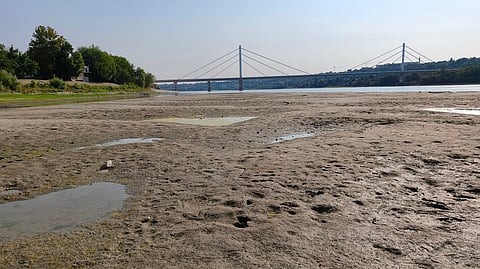
“The dry conditions were led to widespread drought and wildfire activity across several regions of the continent,” said C3S. Severe drought conditions were experienced in France, the United Kingdom, Hungary, Romania and Serbia. “Across the dry regions, major European river flows were exceptionally low, including – from west to east – the Rhine, Danube, Southern Bug and Dnieper experiencing exceptionally low flows,” according to C3S.
The SST around Europe were also record high in August, especially along the Atlantic coast and the western Mediterranean, characterised with severe marine heat waves.
“August 2026 was a remarkable month in the global climate record. It was both the warmest August and the warmest month ever recorded, with global temperatures reaching 1.65°C above pre-industrial levels, marking the return of global temperatures above 1.5°C,” said Samantha Burgess, Strategic Lead for Climate at ECMWF.
“Combined with record global sea surface temperatures and the warmest summer on record for Western Europe, these observations show how climate change is driving extremes across both the atmosphere and the oceans. The impacts of these conditions are increasingly being felt by communities, economies and ecosystems across the world,” Burgess added.