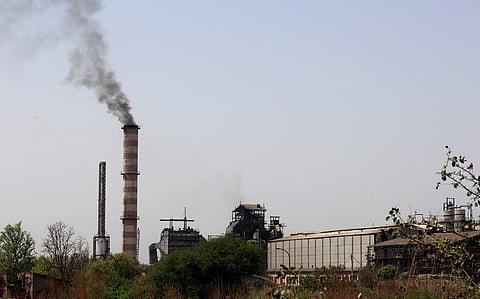


Climate change, driven largely by the accumulation of greenhouse gases such as carbon dioxide (CO2) in the atmosphere, has emerged as one of the most pressing challenges of the modern era, posing severe threats to ecosystems, public health, and global economic stability.
Rising temperatures, erratic weather patterns, and increasing frequency of extreme climatic events are already disrupting natural and human systems alike, making urgent mitigation efforts essential.
India, as one of the world’s largest emitters due to its dependence on fossil fuels, rapid industrialisation, and growing energy demands, faces a particularly complex dilemma: how to reduce emissions while continuing to pursue economic development and improve living standards for its population.
In this context, Carbon Capture, Utilisation, and Storage (CCUS) has gained prominence as a practical and scalable solution that can significantly reduce emissions without requiring an immediate halt to industrial growth. CCUS technologies capture carbon dioxide from major emission sources such as power plants and industrial facilities, or even directly from the air, and either reuse it in various industrial applications or store it safely underground, thereby preventing its release into the atmosphere.
The relevance of CCUS in India is closely tied to its economic structure, where energy-intensive industries such as power generation, cement manufacturing, and steel production account for a substantial share of total emissions and are difficult to decarbonise solely through renewable energy transitions.
While India has made notable progress in expanding renewable energy capacity, particularly in solar and wind power, these sources alone cannot fully address emissions from hard-to-abate sectors, underlining the need for CCUS as a complementary strategy to achieve long-term climate goals.
The implementation of CCUS in India requires a carefully planned and phased approach that prioritises both technological feasibility and economic efficiency. In the initial stages, efforts should focus on retrofitting existing high-emission industrial plants with post-combustion carbon capture technologies, which can be integrated into current systems with relatively lower disruption.
For new facilities, more advanced approaches such as pre-combustion capture and oxyfuel combustion can be incorporated at the design stage to enhance overall efficiency and reduce costs over time. Additionally, emerging technologies like Direct Air Capture (DAC) have the potential to remove carbon dioxide from the atmosphere, though their current high costs necessitate pilot-scale deployment and continued research before large-scale adoption becomes viable.
A geographically targeted rollout strategy would further improve effectiveness, beginning with major industrial hubs such as Maharashtra, Gujarat, and Tamil Nadu, where emissions are concentrated, and gradually expanding to other regions as technological maturity improves and costs decline.
However, the widespread adoption of CCUS is heavily dependent on the availability of financial resources, given the high capital investment and operational costs associated with capture, transportation, and storage infrastructure.
To address this challenge, a diversified financing framework is required that combines strong government support with private-sector participation and international collaboration. Government interventions, such as subsidies, grants, and tax incentives, can play a crucial role in lowering initial costs and encouraging early adoption, while carbon pricing mechanisms, such as carbon taxes or cap-and-trade systems, can create economic incentives by assigning a tangible value to emission reductions.
Public-private partnerships are particularly important in sharing financial risks and leveraging technical expertise, while international climate finance and cooperation can provide additional funding and access to advanced technologies. Innovative financial instruments such as green bonds and carbon credit markets can also help generate sustainable revenue streams, making CCUS projects more economically viable in the long term.
Alongside financial considerations, establishing a robust, transparent regulatory framework is essential to ensuring the safe and efficient deployment of CCUS technologies. Clear guidelines governing carbon capture, transportation, utilisation, and long-term storage are necessary to build investor confidence and address environmental and safety concerns.
Streamlining approval processes can accelerate project implementation, while consistent policy support, such as incentives and carbon pricing, can reinforce the economic case for CCUS adoption. Furthermore, integrating CCUS into broader national climate strategies, including renewable energy expansion and energy efficiency measures, will ensure a more comprehensive and balanced approach to emissions reduction. International collaboration can further enhance India’s capabilities by facilitating knowledge exchange, technology transfer, and access to global best practices. Beyond its environmental benefits, CCUS also presents significant economic and employment opportunities, contributing to industrial growth and job creation across multiple sectors.
The development, deployment, and maintenance of CCUS infrastructure can generate employment in engineering, construction, manufacturing, and technical services, providing opportunities for both skilled and semi-skilled workers and supporting inclusive economic development. At the same time, CCUS enables existing high-emission industries to continue operating under stricter environmental regulations, thereby preserving jobs and maintaining industrial competitiveness.
Moreover, the utilisation aspect of CCUS can stimulate the emergence of new industries that convert captured carbon dioxide into valuable products such as synthetic fuels, chemicals, and building materials, creating a broader economic ecosystem with positive spillover effects on research, innovation, and supply chains. Despite its considerable potential, the successful deployment of CCUS in India depends on overcoming key challenges, including high costs, infrastructure development, and policy support.
Strategic investments in research and development are necessary to improve efficiency and reduce costs, while coordinated efforts among government, industry, and international partners are essential to build the required infrastructure and regulatory environment.
If these challenges are effectively addressed, CCUS can become a cornerstone of India’s climate strategy, helping the country move towards its net-zero emissions targets while sustaining economic growth, fostering technological innovation, and positioning itself as a global leader in sustainable and responsible development.
Santosh Kumar Sahu is Associate Professor of Economics at the Department of Humanities and Social Sciences, IIT Madras, Chennai
Views expressed are the author’s own and don’t necessarily reflect those of Down To Earth