

Every year, climate change announces itself with increasing force. Heatwaves scorch large parts of India. Floods overwhelm cities and villages alike. Unpredictable rainfall affects agriculture and livelihoods. Scientists continue to warn that climate impacts will intensify in the coming decades.
Yet there is a paradox at the heart of the climate crisis.
Public awareness of climate change has grown significantly. Most people today know that climate change is real and that its consequences are serious. Governments, journalists, scientists, and civil society organisations have spent years communicating the scale of the threat. Yet awareness has not always translated into sustained public engagement or collective action.
Why does concern so often stop short of action?
One answer may lie in the way climate change is commonly understood. It is frequently presented as an environmental problem requiring technological solutions or individual behavioural changes. Citizens are encouraged to reduce waste, save electricity, conserve water, and adopt sustainable lifestyles.
These actions matter. But climate change cannot be addressed through individual action alone.
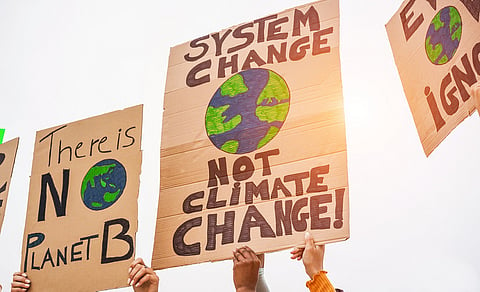
Climate change is fundamentally a collective-action problem. Reducing emissions, adapting to environmental risks, and building resilient societies require cooperation among citizens, communities, institutions, and governments. No individual, however committed, can solve the problem alone.
The challenge, therefore, is not simply whether people understand climate change. It is whether they believe collective efforts can make a difference.
Social scientists describe this belief as collective efficacy. It refers to people’s confidence that groups acting together can successfully address shared challenges. Collective efficacy is not blind optimism. Rather, it is the belief that cooperation, organisation and collective participation can produce meaningful outcomes.
This idea has important implications for countries such as India.
India faces a particularly complex climate future. It is among the countries most vulnerable to climate impacts while simultaneously pursuing economic growth and development. Climate adaptation and mitigation will require not only government action but also public participation, community mobilisation and support for ambitious environmental policies.
Yet public engagement cannot be taken for granted.
In a recent study published in a special issue of Journalism and Media devoted to environmental resilience, we examined how beliefs about efficacy shape climate-related political engagement among young Indians. Drawing on data from more than 700 university students, we explored the relationship between efficacy beliefs and intentions to participate in climate action.
The findings were striking.
Students who believed that citizens acting together could influence outcomes were significantly more willing to engage in collective forms of climate action. They were more likely to express intentions to organise others, mobilise communities and encourage wider participation in climate-related initiatives. Among the factors examined in the study, collective efficacy emerged as one of the strongest predictors of intentions to engage in collective political action.
The finding highlights an often-overlooked aspect of climate communication.
Public discussions frequently oscillate between alarm and individual responsibility. Citizens are warned about environmental threats and urged to change their personal behaviour. While these messages are important, they may not be sufficient. Awareness of a problem does not automatically create a sense of agency.
People are more likely to act when they believe their efforts are part of something larger than themselves. They are more likely to participate when they expect others to participate as well. They are more willing to invest time and energy when they believe collective action has a realistic chance of success.
This insight extends beyond climate change. Environmental protection, public health, and disaster preparedness all depend on collective responses. In each case, citizens must believe that cooperation can achieve results.
For policymakers, educators, and communicators, the lesson is straightforward. Informing people about climate risks remains essential. But effective climate engagement also requires strengthening public confidence in collective solutions. Citizens need to see examples of communities, movements, and institutions successfully addressing environmental challenges. They need opportunities to participate in collective initiatives that demonstrate the value of cooperation.
India’s climate future will not be shaped solely by technological innovation or government policy. It will also depend on whether citizens believe they can act together to influence environmental outcomes.
Concern is an important starting point. But concern alone rarely produces action.
People act when they believe collective action can make a difference.
Nimmagadda Bhargav is Assistant Professor in the Communication Area at the Indian Institute of Management Indore.
Jagadish Thaker is Senior Lecturer in the School of Communication and Arts at The University of Queensland, Australia.
Views expressed are the authors’ own and don’t necessarily reflect those of Down To Earth