
Subscribe

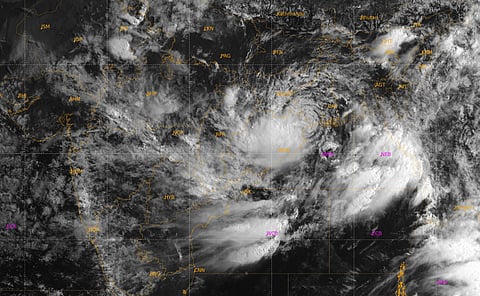
A powerful deep depression crosses near Digha, moving inland toward Odisha, Jharkhand, and Chhattisgarh with widespread heavy rainfall warnings.
Odisha and Chhattisgarh receive red alerts as extremely heavy rainfall, flooding risks, and hazardous weather conditions threaten several districts.
Active monsoon conditions bring heavy showers, thunderstorms, and gusty winds across more than 20 states, affecting daily life and travel.
Uttarakhand and Himachal Pradesh witness intense rainfall, raising concerns over landslides, flash floods, road disruptions, and emergency situations.
Weather officials urge citizens, farmers, and fishermen to remain cautious, avoid unnecessary travel, and follow local administration instructions.
A deep depression that formed over the northwest Bay of Bengal made landfall near Digha on the West Bengal coast shortly after midnight, setting off a chain of intense weather events across eastern and central India. According to the latest weather update issued on July 28, 2026, the system crossed the coastline between 12:30 a.m. and 1:30 a.m. and was centered over north coastal Odisha and adjoining Gangetic West Bengal by early morning. The India Meteorological Department (IMD) said the weather system is now moving west-northwest toward northern Odisha, southern Jharkhand, and northern Chhattisgarh, bringing widespread heavy to extremely heavy rainfall, thunderstorms, lightning, and strong winds to more than 20 states.
Meteorologists have warned that the deep depression is likely to remain active over land during the next 24 hours, resulting in intense rainfall over Odisha, Jharkhand, Chhattisgarh, West Bengal, and neighboring regions. Several districts in Odisha and Chhattisgarh have been placed under a red alert due to the likelihood of extremely heavy rainfall exceeding 204.5 mm in isolated locations. Authorities have cautioned that low-lying areas could experience severe waterlogging, while overflowing rivers and streams may lead to flash floods in vulnerable regions.
The IMD has also indicated that the monsoon has regained strength across large parts of the country. The active monsoon trough stretching from Rajasthan through central India to the Bay of Bengal, coupled with an upper-air cyclonic circulation over Rajasthan, has further enhanced rainfall activity. As a result, several northern, central, and eastern states are expected to receive sustained precipitation over the next two days.
Continuous overnight rainfall has heightened concerns in the Himalayan states, particularly Uttarakhand. Heavy showers have been recorded in Dehradun and several surrounding districts, prompting the weather department to issue an orange alert for Dehradun, Rudraprayag, Chamoli, Uttarkashi, Nainital, and other districts. Rainfall between 115.6 mm and 204.4 mm is forecast in many areas, increasing the likelihood of flash floods, landslides, and road blockages.
As a precautionary measure, schools have remained closed in several districts, including Dehradun, Pauri, and Pithoragarh. Local authorities are closely monitoring river levels and hillside stability while emergency response teams remain on standby. Similar conditions are expected in Himachal Pradesh, where heavy to very heavy rainfall may trigger landslides and disrupt transport in mountainous regions. Jammu and Kashmir is also likely to witness widespread rainfall over the coming days, with rising water levels in rivers and streams posing additional risks.
The impact of the weather system is expected to extend well beyond eastern India. Delhi and the National Capital Region are forecast to receive heavy to very heavy rainfall under an orange alert, with cloudy skies and cooler daytime temperatures providing temporary relief from recent heat. Rainfall is expected to continue through July 29 and 30.
Elsewhere, orange alerts have been issued for Haryana, Punjab, Uttar Pradesh, Vidarbha, Madhya Maharashtra, coastal and south interior Karnataka, where heavy rainfall is likely. Yellow alerts remain in force for Assam and Meghalaya, Gujarat, Madhya Pradesh, Telangana, Kerala, Konkan and Goa, Sikkim, coastal Andhra Pradesh, eastern Rajasthan, and several northeastern states, indicating the possibility of heavy showers accompanied by thunderstorms.
In addition to heavy rainfall, the IMD has warned of thunderstorms accompanied by lightning and gusty winds reaching speeds of 40 to 50 kmph across Odisha, Gangetic West Bengal, coastal Andhra Pradesh, Kerala, Karnataka, and the Andaman and Nicobar Islands. Similar weather conditions are expected in parts of Rajasthan, Madhya Pradesh, Telangana, Tamil Nadu, and Jammu and Kashmir.
Authorities have urged residents to avoid unnecessary travel during periods of intense rainfall and to stay away from waterlogged roads, overflowing drains, and fast-flowing streams. People living in landslide-prone areas have been advised to remain vigilant, while farmers have been asked to ensure proper drainage in agricultural fields. Fishermen have also been strongly advised not to venture into the sea until weather conditions improve.
With the deep depression continuing its inland journey and the southwest monsoon becoming increasingly active, weather experts expect unsettled conditions to persist across large parts of India over the next one to two days. Officials continue to monitor the evolving situation closely as emergency services remain prepared to respond to any weather-related incidents.
