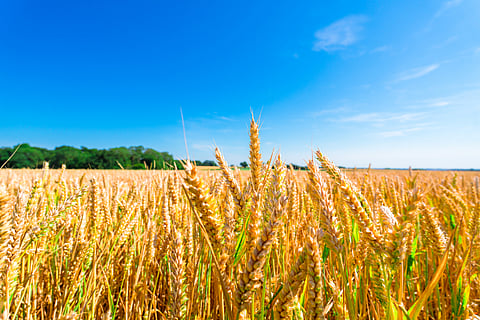


England recorded its worst combined cereal and oilseed rape harvest since records began in 1984, with production falling to 16.03 million tonnes in 2026.
Extreme heat, prolonged drought and unusually dry conditions affected crop growth and yields across the country.
Barley production declined by 11% to 3.7 million tonnes, while oat production fell by 29% to 527,000 tonnes, its lowest level in 14 years.
Winter wheat yields were 11% below the five-year average, while spring barley and oat yields declined by 17% and 14%, respectively.
Oilseed rape production rose by 43% to around one million tonnes, but the increase could not offset the overall decline in cereal production.
The poor harvest has raised concerns about farm incomes, agricultural resilience and the UK's food security amid increasingly extreme weather.
England recorded its worst combined cereal and rapeseed harvest since records began in 1984, as extreme heat and prolonged drought affected crop production in 2026.
Provisional figures released by the Department for Environment, Food and Rural Affairs (Defra) earlier this month highlighted the challenges facing farmers following a summer of unusually hot and dry weather.
According to an analysis by UK-based research organisation Energy and Climate Intelligence Unit, England's combined harvest of wheat, barley, oats and rapeseed totalled 16.03 million tonnes, below the previous record low of 16.16 million tonnes in 2020.
The poor harvest followed a dry spring and successive heatwaves in May and June, followed by an exceptionally dry July across England and Wales. The conditions left all of Wales and around half of England in drought, reducing the moisture available to crops during key growing periods.
Data from the Agriculture and Horticulture Development Board (AHDB) showed that winter wheat yields averaged 6.9 tonnes per hectare, 11 per cent below the five-year average. Spring barley yields fell to 4.8 tonnes per hectare, 17 per cent below the five-year average, while oat yields stood at 4.6 tonnes per hectare, down 14 per cent.
Barley and oats were particularly badly affected. Defra's provisional figures showed barley production falling by 11 per cent to 3.7 million tonnes, while oat production declined by 29 per cent to 527,000 tonnes, its lowest level in 14 years.
Wheat production increased slightly to 10.8 million tonnes, although yields remained below their longer-term average.
Rapeseed was among the few crops to record an improvement, with production rising by 43 per cent to approximately one million tonnes. The increase was driven by a larger planted area and improved yields, but was insufficient to offset the decline in overall cereal production.
Harvest results also varied across England. Northern regions generally performed better than southern areas, with Yorkshire and the Humber recording an increase in wheat production, while several southern regions experienced declines.
High temperatures and insufficient rainfall affected crop growth and development, particularly for wheat, spring barley and oats.
Dry soils and prolonged heat restricted crop development and grain formation, with some farmers harvesting earlier than usual and others reporting substantially reduced yields.
Although rapeseed performed better than several other crops, the increase in its production was not enough to compensate for the wider decline.
The poor harvest has added to financial pressures on farmers already facing high production costs. Lower yields and reduced grain quality can limit marketable supplies, complicate storage and sales, and affect farm incomes and agricultural supply chains.
The results have also highlighted the need for measures to help agriculture withstand increasingly extreme weather.
Improving soil moisture retention, investing in water storage and irrigation, developing drought-resistant crop varieties and expanding agricultural research could help farmers adapt to changing conditions.
Government support could help make such measures more affordable, while long-term planning and improved water management could strengthen domestic food production and reduce risks to rural livelihoods.
The 2026 harvest highlights the challenges facing England's agricultural sector as farmers seek to maintain production amid increasingly unpredictable weather conditions.
