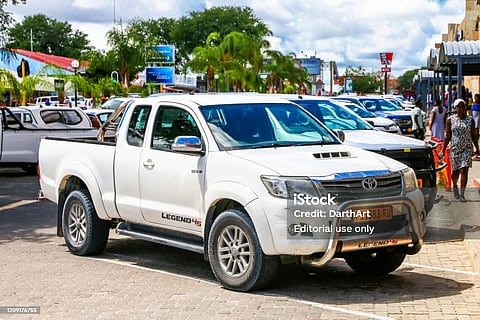


Importing nations need mandatory pre-shipment roadworthiness checks, verified battery State of Health data, and transparent repair histories to keep degraded vehicles off their roads.
Exporting countries must stop trade in end of life vehicles (ELVs). The EU leads by banning ELV exports and enforcing pre-export safety and battery passport rules.
Safe EV adoption requires domestic charging infrastructure, skilled high-voltage technicians, and battery recycling and reuse.
At the 31st UN climate conference (COP31) in Antalya, Türkiye, South Africa brought together international experts alongside the UN Environment Programme (UNEP) and countries such as Kenya to confront a pressing transport dilemma facing the emerging markets.
For decades, Africa and other developing regions have relied heavily on imports of ageing, polluting internal combustion engine (ICE) vehicles. These governments are now tightening rules to restrict imports of old ICE vehicles to cut emissions. They are also building domestic electric vehicle (EV) assembly capacity. Yet restricting imports of used ICE vehicles remains difficult, prolonging dependence on polluting, carbon-intensive and energy-intensive transport systems.
Emerging economies are now looking to the same cross-border trade networks to source used EVs to cut emissions and bypass the fossil-fuel curve. There is a growing interest in how to leverage trade in used EVs by avoiding the pitfalls of the used ICE vehicle market.
Both exporting and importing countries need to share equal responsibility for ensuring that the global used-EV trade is affordable, transparent and safe—keeping end-of-life vehicles (ELVs) and hazardous wrecks off developing-world roads.
This discussion assumes significance against the backdrop of the COP presidency’s proposed “35 by 35” target for economy-wide electrification and the leapfrog measures that several Global South countries have begun to leverage vehicle-import policy to electrify the fleet.
The global vehicle fleet is projected to double by 2050, with two-thirds of that growth occurring in low- and middle-income countries. Historically, imports of used vehicles have been the basis of fleet expansion in these markets, driving urban air pollution, rising energy demand and greenhouse gas emissions.
Drawing on insights presented by Rob de Jong, head of UNEP’s sustainable mobility unit, there are differing trends. Between 2015 and 2022, as many as 22.6 million used light-duty vehicles were exported from major markets — the US, Europe, Japan and the Republic of Korea — with Africa alone absorbing 33 per cent of that recorded flow.
In regions like West Asia, wide disparities in vehicle age, emissions and roadworthiness standards underscore the urgent need for harmonised rules.
Meanwhile, the global shift towards electric mobility is accelerating rapidly. According to 2026 International Energy Agency (IEA) data, EVs account for 25 per cent of global new car sales, growing by more than 20 per cent year-on-year. China manufactures 75 per cent of the world’s EVs and electric models represent 55 per cent of its domestic new car sales.
According to de Jong, this surge in new EV adoption is now feeding a rapidly expanding second-hand market, with 3 million used EVs sold across major markets in 2025—a 35 per cent jump from 2024.
China led this momentum with over 1.5 million used EVs sold, capturing 8 per cent of its used car market, while Germany recorded roughly 400,000 sales, accounting for over 6 per cent of second-hand transactions. Across the Atlantic, the US saw nearly 400,000 used EVs change hands, representing 2.5 per cent of its used-car market.
Across the broader Europe—spanning France, Germany, Italy, Spain, and the UK/US markets—used EVs climbed to 4 per cent of second-hand sales, up from just 1 per cent in 2021.
Used-EV exports to developing regions are surging. Between 2022 and 2025, the share of Chinese EV exports destined for non-high-income countries jumped from 3 per cent to 34 per cent, alongside growing second-hand electrified shipments from the EU.
Despite its promise, the cross-border used-EV trade carries significant risks. Most buyers purchase imported used-EVs online, where prices, mileage, range, photographs and shipping costs are readily visible.
However, critical metrics remain unverified and opaque. These include battery state of health (SoH), accident and repair histories, remaining warranty coverage, local charging compatibility, total landed import costs and domestic after-sales support.
Without safeguards, importing nations risk becoming dumping grounds for degraded batteries and unrepairable vehicles. Preparing emerging markets for used EV imports therefore requires looking well beyond import tariffs.
Countries must first establish firm vehicle standards by enforcing roadworthiness inspections, mandatory battery SoH testing and traceable import documentation. At the same time, authorities have to ensure grid and charging readiness so that connector compatibility, accessible charging infrastructure and a reliable electricity supply are in place before cars hit the road.
Building domestic technical capacity is equally essential, requiring investment in training technicians for high-voltage battery diagnostics and repair while securing steady spare-parts supply chains. Finally, governments must plan ahead for battery circularity by establishing safe collection, storage, manufacturer take-back schemes and environmentally sound recycling pathways.
Governments across Africa, Asia and the Caribbean are already pairing tax incentives with strict quality controls to govern used-EV imports. As highlighted by Anne Nyatichi Omambia, deputy director programmes and partnership from Kenya’s National Environment Management Authority (NEMA), Kenya enforces an eight-year age limit, pre-export inspections and a minimum 80 per cent battery SoH threshold.
Similarly, Jong pointed out, India restricts used EV imports to vehicles under three years old with mandatory certification, while Trinidad and Tobago caps battery EVs at eight years, subject to roadworthiness licensing.
To encourage adoption, countries are lowering the upfront financial barriers. Rwanda offers zero per cent import duty until June 2028, while Ghana provides an eight-year duty exemption. Georgia grants import and excise tax exemptions for left-hand-drive EVs. Jamaica levies a 10 per cent duty on qualifying EVs up to three years old, while Barbados offers value-added tax (VAT) and excise concessions.
Exporting jurisdictions have to be equally responsible for ensuring that junk ELVs are not traded and their safety and performance and roadworthiness are assessed before entering market.
At this stage only the EU has tightened outbound rules for used-vehicle trade. Under the EU’s landmark End-of-Life Vehicles Regulation (EU) 2026/1738 (Chapter VI, Articles 39-40), vehicles classified as ELVs are banned from export.
Taking full effect on September 1, 2031, Article 39 mandates that any used vehicle exported outside Europe must pass formal roadworthiness assessments under Directive 2014/45/EU, complemented by EU EV Battery Passport and SoH data-access rules.
There is a considerable role of the global platforms to guide and regulate this trade. For instance, through initiatives like the Global Environment Facility (GEF) Global E-Mobility Programme and the Global Battery Partnership, UNEP is working across four interconnected pillars to scale a safe used-EV market.
This effort begins with regional harmonisation, aligning minimum vehicle and battery standards across regional trading blocs and exporting hubs so rules work seamlessly across borders. That alignment is reinforced through pre-export verification, which institutes mandatory pre-shipment roadworthiness checks, transparent battery SoH records, and cross-border data traceability before a vehicle ever leaves port.
Alongside stronger rules, the UNEP focuses on building market and institutional capacity by tracking trade flows and future waste volumes while training customs and inspection officials to enforce regulations on the ground.
Rounding out the strategy is end-of-life circularity, which embeds Extended Producer Responsibility (EPR), battery repurposing policies, and safe recycling systems into national frameworks.
It emerged from the discussion that by pairing strict export bans on wrecks with strong import standards and battery circularity, the global used-EV trade can move from an unregulated risk to a lever for clean, affordable mobility across the developing world.
