
Subscribe

We now prepare boondi only on Tuesdays. Earlier, we were serving the sweet to our customers everyday,” says Mansingh, a sweet-maker who has a shop along the Chhata-Barsana road in Uttar Pradesh’s Mathura district. “After the government increased the price of commercial cylinders, we have entirely discontinued the use of LPG (liquefied petroleum gas). We now use dung cakes along with firewood to heat up the bhatti. But cooking on earthen stove takes longer, and we have to start at least an hour early, and work two-three hours late,” he adds.
Launched in 2016, Pradhan Mantri Ujjwala Yojana is a flagship scheme that aims to make clean cooking fuel such as LPG available to rural and deprived households that were using traditional cooking fuels like firewood, coal and cow-dung. According to the Petroleum Planning and Analysis Cell (PPAC) monthly oil and gas report, the total active domestic LPG connections stand at 333 million, as of June 1, 2026.
But with the geopolitical disruptions in West Asia following the US-Israel war with Iran and the prolonged instability around the Strait of Hormuz—one of the world’s most critical energy shipping routes, blocked since the beginning of March—there were reports of widespread shortage of LPG in the country. India meets about 65 per cent of its LPG demand through imports of which 90 per cent arrives via Strait of Hormuz, as per Union Ministry of Petroleum and Natural Gas. Between March and June, the government increased domestic LPG prices by Rs 89 for a 14.2 kg cylinder, and commercial LPG prices by Rs 1,331 for a 19 kg cylinder. LPG consumption in the country went down from 2.36 million tonnes in March 2026 to 2.19 million tonnes in June 2026, as per the PPAC report.
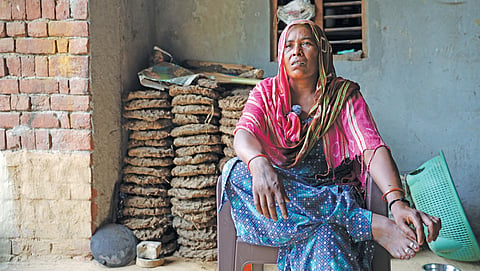
To meet the energy shortage, households, eateries and small businesses have increasingly turned to traditional fuels such as cow dung cakes and firewood, which has resulted in a hike in their market prices. “A bitora [traditional dome-shaped stack of 2,000 dung cakes] that cost Rs 3,000 before the crisis now costs Rs 3,600, while a quintal of firewood has increased from Rs 800 to Rs 1,000,” says Mansingh.
However, there are people who have stayed unaffected by the crisis. Priyanka Devi, a daily wage worker and home-maker based in Sikhera village of Uttar Pradesh’s Bulandshahr district, is one such individual. Priyanka Devi owns a buffalo and three cattle that generate about 20 kg of dung a day. She converts most of it into dung cakes, allowing her family of five to cook meals, saving an estimated Rs 9,600 annually. Though Priyanka Devi’s livestock economy is geared towards ...
This article was originally published in the August 1-15, 2026 print edition of Down To Earth