
Subscribe

The raging climate change-triggered heatwave in Europe has begun to affect the continent’s nuclear energy sources after wreaking havoc by generating wildfires and drought.
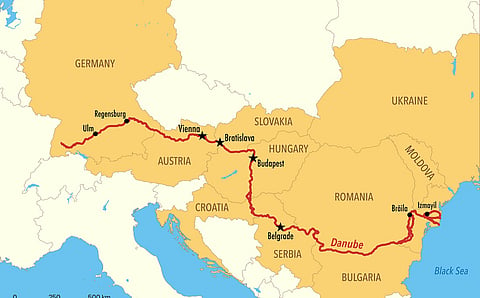
Nuclear power plants in Hungary and Romania, both countries in the basin of the continent’s second-longest waterway, the Danube have been shut down after the river reached levels last recorded 30 years ago.
In Hungary, the country’s Prime Minister Péter Magyar stated that its only nuclear power plant will be forced to shut down entirely for the first time due to record low water levels of the Danube.
The Paks power plant was built in the Soviet era. It uses water from the Danube for cooling. Since the water level has reached record low levels, suction levels are unable to reach it, according to a report by the BBC.
The British news agency further quoted Magyar as saying that Hungary’s energy supply could become “critical” from August 3 due to Paks’ shutdown and the ongoing heatwave, which will see temperatures hover around 37C for a week.
The prime minister asked Hungarians to limit activities that required significant energy consumption between the peak times of 17:00 and 22:00, including charging electric cars and using air conditioning equipment.
Further downstream from Hungary on the Danube, Romania, which is home to the river’s delta on the Black Sea has also been forced to shut down one of its only two nuclear reactors at the Cernavoda power plant, which provides about 20 per cent of the country’s power.
The reactor was shut down earlier this week. If the other reactor is also shut, Romania will be without nuclear energy production like Hungary, according to the BBC report.
Meanwhile, in the western part of the continent, France has had to shut the Golfech-2 nuclear reactor on the Garonne river in the southwestern part of the country, which has also seen raging wildfires this past week.
French utility firm, Electricite de France SA, owned by the French government, shut down Golfech-2 even as the heatwave continued across Europe.
According to Bloomberg News, many of France’s nuclear plants rely on river water for cooling before discharging the warmer water back into the river. Environmental regulations limit those discharges when river temperatures are already high, forcing reactors to reduce output.
In the United Kingdom, a forest fire in the county of Suffolk has triggered a “major incident” declaration, according to the Times. According to the newspaper, the Sizewell B nuclear power plant is located three miles south of the fire. The Times reported a meteorologist calling for tougher government action to stop bonfires and barbecues during droughts, “as climate change brings hotter and drier summers”.
The European Union hopes to end its dependence on Russian energy imports with its strategic plan called the REPowerEU. This framework targets the phase-out of Russian gas, oil, and the substitution of Russian nuclear fuel materials.
Under the plan, the EU intends to replace Russian-supplied enriched uranium and reactor fuel assemblies (used in Soviet-designed VVER reactors) with alternative Western and European providers. It also intends to phase out new supply contracts and co-signings for Russian-origin nuclear materials via the Euratom Supply Agency.
But given that Europe is the fastest warming continent and climate change is triggering extreme weather disasters like wildfires and drought, the EU’s plans to end its Russian dependence could be seriously in doubt.
