

As the fragile United States (US)-Iran ceasefire enters its second week, uncertainty continues to hang over both the humanitarian crisis in West Asia and the global energy system, particularly following disruptions in the Strait of Hormuz—a critical artery for global oil and gas flows.
New analysis by the Centre for Research on Energy and Clean Air (CREA) shows that global fossil fuel-based power generation fell by around 1 per cent year-on-year in March, marking the first full month after the onset of the Hormuz blockade. The decline was led by a sharp 4 per cent drop in gas-fired power generation, while coal-fired generation remained broadly flat.
The analysis, based on near-real-time electricity data covering major power markets, including China, the US, the European Union and India, captures 87 per cent of global coal power generation and over 60 per cent of gas-fired generation, offering one of the most comprehensive snapshots of how the energy system is responding to the current crisis.
A key finding is that the fall in fossil fuel generation was entirely offset by a surge in renewables. Solar power generation rose by 14 per cent and wind by 8 per cent in March, supported by record capacity additions in 2025. Hydropower also saw a marginal increase, though this was partly offset by a decline in nuclear generation.
Outside China, coal-fired power generation fell by 3.5 per cent, underscoring a broader structural shift away from fossil fuels even in the face of supply shocks. In contrast, China saw a modest 2 per cent increase in coal generation in coastal regions, as high gas prices prompted some switching from gas to coal. However, overall coal use in China remained below 2024 levels, indicating no sustained reversal toward coal.
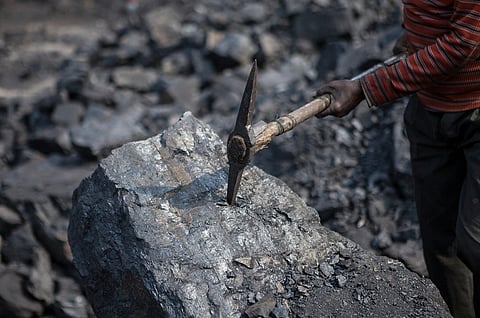
The report challenges the widely circulated narrative of a global “return to coal” in response to the crisis. Despite high gas prices and supply disruptions, there has been no significant increase in coal capacity or reactivation of retired plants. Analysts note that coal plants were already operating near their maximum feasible levels prior to the crisis, leaving limited room for further ramp-up.
At the same time, global coal trade patterns reflect weakening demand. Seaborne coal transport volumes fell 3 per cent year-on-year in March, reaching their lowest levels since 2021—the height of the Covid-19 pandemic—according to Kpler data. The drop comes despite expectations that countries would turn to coal as a fallback fuel amid gas shortages.
Beyond immediate market responses, the data also highlights the growing role of renewables in enhancing energy system resilience. Solar and wind capacity added in 2025 alone is estimated to generate roughly 1,100 terawatt-hours (TWh) of electricity annually, nearly double the power that could be produced from liquefied natural gas transported through the Hormuz route before the disruption.
“The record growth in global clean power generation, particularly solar and wind, has helped ease the impact of the latest fossil fuel crisis,” said Lauri Myllyvirta, lead analyst at CREA. “The increase in clean electricity offset the fall in gas-fired power generation following the Hormuz blockade, preventing a jump in coal-fired power generation. To mitigate the effects of the current crisis and make such recurring global emergencies a thing of the past, it’s essential to use this moment to accelerate the global energy transition.”
India is among the countries where the shift away from fossil fuels was most pronounced during the period under review. Along with the United States, South Africa, Turkiye, Germany and the Netherlands, India recorded one of the largest declines in coal-fired power generation in March.
In both India and the US, rapid expansion of solar energy emerged as the single largest driver behind the reduction in fossil fuel-based power generation. This trend reflects the increasing competitiveness and scalability of renewables in meeting incremental electricity demand.
Coal trade data further underscores the shift. Seaborne coal shipments to India fell by 9 per cent in March, contributing to a broader 3 per cent decline in global coal transport volumes. This drop pushed overall seaborne coal trade to its lowest level since 2021, signalling weakening import demand even amid global energy uncertainty.
Policy momentum has also remained strong. The Union Ministry of New and Renewable Energy continues to advance large-scale procurement plans, having issued a bidding trajectory targeting 50 gigawatts of renewable energy capacity annually from FY24 to FY28 through Renewable Energy Implementing Agencies. The move is part of a broader strategy to insulate the power sector from fossil fuel price volatility and supply disruptions.
The current trends suggest that India’s growing renewable energy base is beginning to play a stabilising role in its power system, reducing dependence on imported fuels and cushioning the impact of global shocks.
The CREA analysis indicates that the latest fossil fuel crisis, triggered by geopolitical tensions and supply disruptions in the Strait of Hormuz, is accelerating, rather than reversing, the global shift toward clean energy.
Even as uncertainties persist around the ceasefire and broader regional stability, the data points to a structural transformation already underway: one in which renewables are not only expanding rapidly but also acting as a critical buffer against energy security risks that have historically driven increased fossil fuel use.