
Subscribe

Hydrogen now can be produced without the scarce and expensive metal platinum, a research team led by Chalmers University of Technology, Sweden claims, using sunlight and water, potentially removing one of the biggest cost and sustainability bottlenecks in green hydrogen production. The work, published in Advanced Materials, replaces platinum co-catalysts with nanoparticles made from electrically conductive plastic—materials that are cheaper, more abundant and easier to scale.
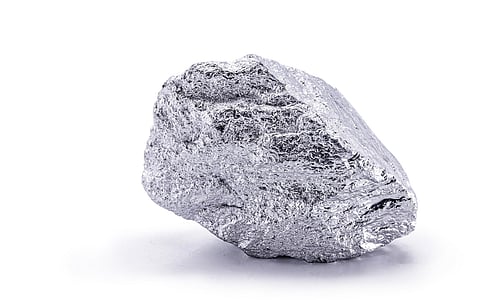
Hydrogen is widely seen as a cornerstone of future clean energy systems because it emits only water when used. But producing it sustainably and at scale remains difficult. One major hurdle has been the reliance on platinum in photocatalytic systems that split water using sunlight. Platinum is scarce, environmentally costly to mine, and geographically concentrated in a few countries such as South Africa and Russia.
In the new study, the Chalmers-led team demonstrates that platinum is no longer essential.
“Developing efficient photocatalysts without platinum has been a long-standing dream in this field,” says Alexandre Holmes, a researcher at Chalmers and joint first author of the paper. “By applying advanced materials design to our conducting-plastic particles, we can produce hydrogen efficiently and sustainably without platinum – at radically lower cost, and with performance that can even surpass platinum-based systems.”
The process relies on conjugated polymers—electrically conductive plastics that absorb sunlight efficiently. Traditionally, these materials have performed poorly in water, limiting their usefulness for solar hydrogen.
The breakthrough came from redesigning the material at the molecular level. By making the polymer chains more hydrophilic and loosely packed, the researchers improved how the particles interact with water and light.
“We also developed a way to form the plastic into nanoparticles that can enhance the interactions with water and boost the light-to-hydrogen process,” Holmes explains. “The improvement comes from more loosely packed, more hydrophilic polymer chains inside the particles.”
When immersed in water and exposed to simulated sunlight, the nanoparticles immediately begin producing visible bubbles of hydrogen gas. In laboratory demonstrations at Chalmers, the gas is collected and measured in real time.
“With as little as one gram of the polymer material, we can produce 30 litres of hydrogen in one hour,” Holmes says.
The advance is reinforced by parallel work at Chalmers showing that the conductive plastic itself can be manufactured without harmful chemicals and at significantly lower cost. Together, these developments point to a hydrogen production pathway that is not only platinum-free, but also cleaner across the entire supply chain.
Avoiding platinum could dramatically improve the scalability of solar hydrogen, particularly in countries that lack access to precious metals or want to reduce exposure to geopolitically sensitive supply chains.
For now, the system still relies on vitamin C as a “sacrificial antioxidant” that donates electrons and keeps the reaction running at high speed. While effective in the lab, this is not viable for large-scale, fully sustainable hydrogen production.
The long-term goal is complete water splitting—producing hydrogen and oxygen simultaneously using only sunlight and water.
“Removing the need for platinum in this system is an important step towards sustainable hydrogen production for society,” says Ergang Wang, professor of chemistry and chemical engineering at Chalmers and leader of the research. “Now we are starting to explore materials and strategies aimed at achieving overall water splitting without additives. That will need a few more years, but we believe we are on the right track.”
If successful, the approach could help make solar hydrogen a truly low-cost, scalable pillar of the global energy transition—powered not by rare metals, but by sunlight, water and plastic.