
Subscribe

Last winter, on a very cold morning at school, I suddenly felt a sharp pain in my back after reaching my office. The weather was freezing and the pain made it difficult to sit comfortably. I asked the school peon to place my chair in the sun for some time, hoping the warmth would give me little relief. I went outside and sat quietly in the sun. Seeing me like this, the peon gently asked, “Ma’am, is your back hurting?”
When I nodded, she smiled and said, “Tomorrow, I will bring Taradi and Halad laddoos for you that I have prepared myself. Eat one every day and slowly, your pain will reduce.”
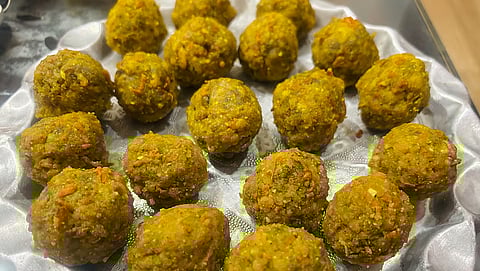
The very next day, she brought homemade laddoos prepared with love and care. They were delicious and comforting. Within a few days I noticed that my back pain was decreasing, not just due to the nutritional value of Taradi and turmeric laddoos but was also because of the love, care and concern with which they were given to me. These laddoos carried warmth, healing and the quiet strength of traditional wisdom. This winter, remembering the warmth, I procured Taradi and turmeric myself and prepared those laddoos in my own kitchen.
Taradi (tubers of Dioscorea sp.), also known as water or purple yam, is a perennial climber found in the forests of Hamirpur district of Himachal Pradesh. These tubers are nutritious, with many health benefits.
These are rich in dietary fibre, which helps improve digestion and prevent constipation. These help maintain stable blood sugar levels and support heart health.
Dioscorea also contains antioxidants that boost immunity and provide sustained energy, making it beneficial for overall health. It is traditionally used in local cuisine and seasonal festivals symbolising food security and prosperity in many rural and tribal communities. It is a part of traditional knowledge systems passed down through generations. Dioscorea is also linked with indigenous farming practices helping preserve cultural heritage and community identity. The yam helps prevent soil erosion, grows with very few chemicals, and supports biodiversity. It survives well in poor soils and changing climate conditions, making it a sustainable and eco-friendly plant.
Taradi Halad Laddoo
Taradi tubers: 200 g
Raw turmeric: 100 g
Walnuts: 50 g
Almonds: 50 g
Pistachio: 50 g
Cashew nuts: 50 g
Acacia gum: 20 g
Jaggery: 200 g
Fox nuts: 1 cup
Desi ghee: 1/2 cup
Thoroughly wash the taradi and grate it. Grate raw turmeric. Deep fry each separately in ghee. In a pan, take 2 tbsp of ghee and fry the dry fruits and the gum one by one and set aside. Grind all the fried dry fruits into a coarse powder. Grind the fried gum and fox nuts separately. Heat 200 g jaggery with 1 tbsp of water on low flame until it forms a syrup. Add the dry fruit powder and the fried taradi and turmeric mixture to the jaggery syrup, mix thoroughly and then shape into laddoos.
My Food Story is a collection of stories and recipes that celebrate India’s traditional plant-based ingredients sourced from local biodiversity. You can see these recipes on our interactive dashboard (https://www.cseindia.org/page/myfoodstory).
Join us as we showcase the recipes shared with us by the participants of a recently concluded recipe contest on winter dishes.
Manjari V Mahajan is a teacher from Himachal Pradesh.