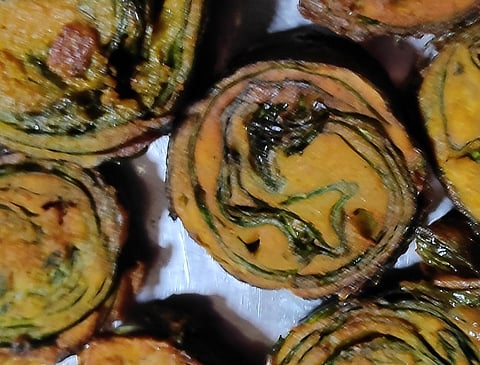


Rikwich pakode is not only one of my favourite dishes but also a dish that was very special to my late father. My dadi (paternal grandmother) used to prepare this, and over the years, the recipe was passed down to my mother, who continues to make it with the same love and care. The dish has travelled with our family over the years, from our hometown, Patna, to the city where we live today. When we first moved here, arbi (taro) leaves were not available in the local markets. During the monsoon season, whenever someone visited us from Patna, they would bring fresh arbi leaves along with them so that my mother could prepare this dish. Today, arbi leaves are available locally as well, but the dish remains just as special. My mother still prepares it using the same recipe that came from my dadi. Every time we eat it, it takes us back to our home in Patna and brings back cherished memories of my father. For me, it is much more than just a favourite dish, it is a taste of family, home and memories that have been passed down through generations.
Arbi (taro) leaves
Besan or gram flour
Salt
Black pepper
Red chillies
Garlic/ginger as per choice
Aamchoor powder
1. In a bowl, mix besan with salt, black pepper, red chilli powder, ginger, garlic and aamchoor powder. Add a little water and mix well to make a smooth, thick paste.
2. Wash and clean the arbi leaves thoroughly. Place a leaf flat on a surface and spread a thin, even layer of the besan paste over it.
3. Place another arbi leaf over the first one and repeat the process, adding layers of leaves and besan paste.
4. Once the layers are complete, carefully roll the leaves tightly into a log.
5. Steam the rolls until the leaves and besan mixture are completely cooked and firm.
6. Allow the rolls to cool slightly and then cut them into slices.
7. Heat oil in a pan and shallow-fry or deep-fry the slices until they are crisp and golden on the outside.
8. Serve hot with chutney.
My Food Story is a collection of stories and recipes that celebrate India’s traditional plant-based ingredients sourced from local biodiversity. You can see these recipes on our interactive dashboard (https://www.cseindia.org/page/myfoodstory).
Anshu Singh is a content writer from Uttar Pradesh