

Maharashtra is considering raising funds from teak forests to support the Mukhyamantri Majhi Ladki Bahin Yojana
The welfare scheme provides Rs 1,500 a month to women from low-income households
Forest minister Ganesh Naik says the programme is straining the state treasury but will continue
Funds raised could be used for forest infrastructure, tackling human–wildlife conflict and rehabilitating forest-dwelling communities
The Maharashtra government is considering raising revenue from teak forests to help support the Mukhyamantri Majhi Ladki Bahin Yojana, a flagship welfare scheme that provides Rs 1,500 a month to eligible women.
The proposal was discussed in the state legislative assembly, where state forest minister Ganesh Naik said the scheme was placing increasing pressure on the state’s finances but would not be discontinued.
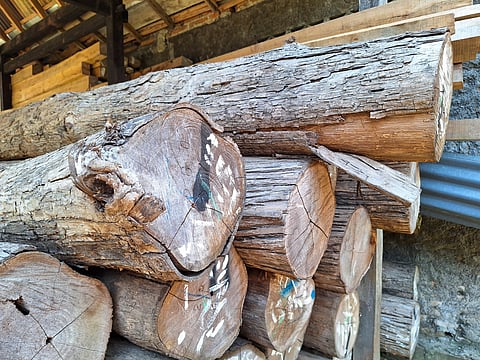
Instead, the government is exploring ways to leverage the economic value of teak plantations managed by the Forest Development Corporation of Maharashtra (FDCM).
The Mukhyamantri Majhi Ladki Bahin Yojana provides financial assistance to women whose annual household income is below Rs 2.5 lakh.
As of March 2026, the Maharashtra government says 15.3 million women have been included in the updated beneficiary list.
The programme is widely seen as politically significant and a game changer for polls. A similar welfare initiative, the Ladli Behna Yojana in neighbouring Madhya Pradesh, was credited with helping the Bharatiya Janata Party (BJP) secure victory in the state’s 2024 assembly elections.
Speaking in the assembly on February 27, 2026, Naik acknowledged that the scheme had created financial pressure on the state treasury and affected funding for other programmes and departments.
However, he said the government had no plans to end the programme.
“The scheme will continue,” he told legislators, adding that alternative sources of funding were being explored.
Naik said teak resources under the Forest Development Corporation of Maharashtra have an estimated asset value of around Rs 12,000 crore.
The government has proposed taking a loan of Rs 6,000 crore against these assets. According to the minister, a proposal has already been placed before the state cabinet.
Once approved and funds are received, the money could be used for a range of purposes within the forest department. These include building infrastructure such as Range Forest Officer (RFO) and Divisional Forest Officer (DFO) offices, departmental rest houses and roads in forest areas. The funds could also help meet administrative expenses, including staff salaries and allowances.
“What is the use of this property if it does not help the forest department carry out various work?” Naik told the assembly.
The minister said the funding could also support measures aimed at reducing human-wildlife conflict and rehabilitating people who live inside forest areas.
Naik was responding to questions from legislators about several forest department initiatives, including a proposal to expand the buffer zone of the Navegaon-Nagzira Tiger Reserve. Lawmakers also sought details about plans to improve road connectivity, strengthen forest infrastructure and address the rising number of encounters between wildlife and nearby communities.
BJP members of the legislative council (MLC) Parinay Phuke and Praveen Darekar, along with Congress MLC Satej Patil, highlighted the growing number of attacks on people living close to tiger reserves and forest fringes.
According to figures presented in the assembly, 420 people across Maharashtra have been attacked by wild animals over the past five years.
Of these, 248 deaths were attributed to tiger attacks and 104 to leopard attacks.
