
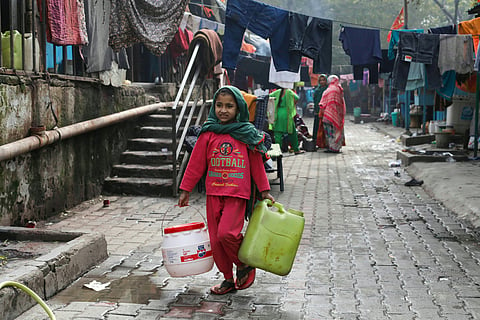

The Baba Faridpuri Transit Camp in Delhi was established in 2014 at Anand Parbat as a temporary housing arrangement for the residents of Kathputli Colony, who were displaced due to a large-scale redevelopment project.
Kathputli Colony, located in West Delhi, is one of India’s oldest slum settlements known for being home to traditional street performers, including puppeteers, magicians, musicians and dancers — many of whom trace their roots to Rajasthan and other parts of India.
The Delhi Development Authority (DDA), in partnership with Raheja Developers, initiated a plan to demolish the slum and replace it with high-rise residential buildings as part of an in-situ rehabilitation effort.

The transit camp consists of semi-permanent one-room units, each measuring approximately 12x8 feet. These are basic structures meant to provide temporary shelter during the redevelopment period.
The camp includes essential amenities like electricity, community toilets, and a limited water supply, mostly delivered via tankers.
While the camp was created with the aim of ensuring that families had a place to stay until the new homes were ready, conditions in the camp have drawn significant criticism over the years.
Residents face a range of challenges in the Baba Faridpuri camp.
Access to clean water is inconsistent, with some families receiving water for just an hour a day. Sanitation facilities are often inadequate, leading to unhygienic conditions and concerns over public health.
The structures themselves are vulnerable to environmental conditions, with some reports of roofs blowing off during storms.
Furthermore, the camp has witnessed multiple fire incidents over the years, which have not only caused injuries and loss of property but have also destroyed important documents necessary for claiming future housing.
Although the government promises permanent housing in newly constructed flats, many residents remain skeptical. The redevelopment has been slow, and repeated delays have tested the patience of the community.
Meanwhile, those living in the camp continue to struggle with uncertainty, overcrowding and a lack of security.
For many families, the hope for a better future hinges on the successful and fair completion of the redevelopment project.