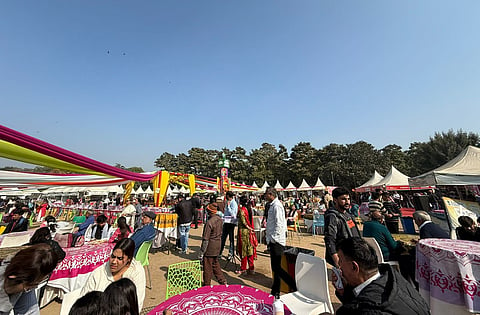


Set against blooming mustard flower beds, this year’s SARAS Aajeevika Food Festival, organised by the Union Ministry of Rural Development, Government of India, from November 29 to December 9, was held in the lush green manicured gardens of Sunder Nursery — a favourite winter refuge for Delhiites. The festival’s primary objective is to showcase Indian culinary diversity from all parts of the country while bringing to the forefront the indigenous talents and traditions that shape these recipes. For the last two years, the festival took place at Baba Kharak Singh Marg, Rajiv Chowk opposite the different state handicraft and handloom showrooms there.
But this year, its setting in the serene Sunder Nursery gardens — a landscape that celebrates the char bagh tradition of water conservation amid blooming flowers and greenery — transformed SARAS into an immersive biodiversity experience. It brought together regional food entrepreneurship led by women-based self-help groups (SHGs), indigenous recipes, preparations made of ancient grains — offering urban audiences a deeper engagement with India’s rich ecological heritage and gastronomic plurality. Most importantly, the festival, every year, celebrates the resilient stories of lakhpati didis who are redefining India’s entrepreneurial capital from the ground up. This year around 300 lakhpati didis from 25 states showcased their culinary prowess and indigenous skills.
This year, the festival offered three improvements drawn from its experiences over the past two years. First, since the festival was set in the gardens, there were more open spaces and better arrangements for sitting and eating and cultural performances like hasya kavi sammelan, live folk music and dance acts unlike in the previous locations. A representative from one of the states noted how the new venue provided respite from the city’s pollution. Second, the festival brought together SHG women entrepreneurs under state-led brands — the SHG-run cafés and canteens now institutionalised across states and supported by the DAY-National Rural Livelihoods Mission. Until now, individual SHGs set up stalls; this time, they came as consolidated state wide brands and entities. For instance, state-run, women-led cafés such as Mangalam Canteen (Gujarat), Akka Café (Karnataka), Aajeevika (Punjab), Asomi (Assam), and Didi ki Rasoi (Bihar), along with cafés from the Northeast and other states, all came together under one roof at the SARAS mela.
Third, unlike the last few editions, the larger spaces meant that handicrafts and handlooms could also be exhibited with far greater ease in comparison to the last editions of the festival.
Harsik Dungdung (44) from Simdega district, Jharkhand — who works at the Palash Didi café — attended SARAS for the first time with other women members from the state. Together, they were preparing piping hot recipes: dal pitha, ragi pitha, and ragi momos — blending modern and traditional recipes. Their specialty, Dhuska chaat made from rice and lentil flour freshly made fritters garnished with fresh vegetables and chutneys drew many visitors. A member of the Albela SHG with 14 other women, Harsik also runs her honey business. “Such festivals help us visit cities like Delhi, flourish and diversify our livelihood opportunities,” she shared.
Another didi from Prerna Canteen in Bijnor, Uttar Pradesh, while preparing a plate of rajma chawal, mentioned how supportive the administration has been in making provisions for the travel, stay, utensils, stoves, and other infrastructure required for cooking and serving meals. Renu didi from the state mentioned how she now aspires to be a “crorepati didi” from lakhpati didi. Most didis at the festival reported earnings of Rs 30,000-Rs 35,000 per day, some even upwards of Rs 40,000 reflecting the large visitor footprint at the mela. Many reported the locational advantage, and those who couldn’t visit the IITF held earlier in November ended up visiting the SARAS mela instead — seeking a glimpse of rural entrepreneurship of SHGs — carrying home a slice of crafts and indigenous foods.
Another striking feature was the curiosity of visitors, eagerly asking after local ingredients, regional names, and recipes — reflecting appreciation and inclusivity around the intangible cultural heritage and food diversity.
Preeti (35) from Rajnandgaon, Chhattisgarh, adorned in Chhattisgarhi jewellery, represented the Bihaan Canteen from the state. Patiently preparing hot chawal ka cheela, she noted how women from Kerala’s Kudumbashree were helpful to SHG didis at SARAS in terms of setting up the stalls and managing the event. Kudumbashree from Kerala is, without doubt, hailed as the pioneer of the SHG revolution in India. In addition to running the canteen near the Zila Panchayat office, Preeti doubles up as a Village Organisation Assistant (VoA) and a Community Resource Person (CRP) and is a member of Maa Sheetla SHG. The Bihaan canteen served regional specialities like arsi, khurmi, thethari, and a special thaali from the state.

Representing Hilans Kitchen from Uttarakhand was Jyoti Didi, also a CRP, offering regional delicacies like the iconic bal mithai and other produce collected and packaged by farmers in Uttarakhand.
Other regional specialties like Himachali siddu, tandoori chai, kadhi chawal, makke ki roti, Rajasthani kachori, and litti choka from Bihar and others also added to the food diversity at the festival.
Him Ira from Himachal showcased SHG-made perfumes and ittars from Kangra, seabuckthorn cream, walnut and apricot creams, oils, and handmade soaps. Tara Chauhan (45) from Nari Shakti Khuro SHG in Shimla described the hardships of harvesting wild sea buckthorn in mountainous terrains and the general difficulties faced by women in agriculture in hilly areas. With other women from her SHG, she carried galgal ka achaar, pahari ghee, wild honey, apple chutney, and plum chutney — that were all best sellers from the stall.
Beyond food, the festival displayed rich handicrafts, natural produce, and handlooms. Digital payments and usage of apps like BHASHINI — which help local artisans and SHG members communicate in their own regional language are also important steps that empower these communities.
By exhibiting the rich potential of India’s vast networks of SHGs supporting food systems, SARAS emerged this year as a living museum where biodiversity, women’s collective entrepreneurial talent, and India’s food and gastronomic heritage converged.
Set against the ecological background of Sunder Nursery, it indirectly highlighted debates surrounding the sustenance of Indian, as well as global, food systems — addressing issues of small, marginal, and women farmers — most of whom are represented by SHG women, seed and food sovereignty, and the preservation of indigenous recipes and ancient grains such as millets with green entrepreneurship at its centre.
By showcasing indigenous brands such as Palash Didi cafe, Didi ki Rasoi, Bihaan, and others, festivals like SARAS serve as powerful platforms for decentralised empowerment amid the rising proliferation of urban food brands. Through these events, women-led cafés, canteens, and collectives not only strengthen their regional identities but also emerge as pivotal actors in sustaining rural livelihoods, food systems, and local economic development.
Swasti Pachauri is an academic and a public policy professional
Views expressed are the author’s own and don’t necessarily reflect those of Down To Earth