

Approximately 1,800 to 2,000 new vehicles are added to Delhi’s roads daily. As of 2024-2025, Delhi’s total registered vehicle count crossed 15.6 million, with a significant surge in private two-wheelers and cars.
As Delhi’s vehicular count surges, it is now building elevated roads to decongest the bumper-to-bumper traffic.

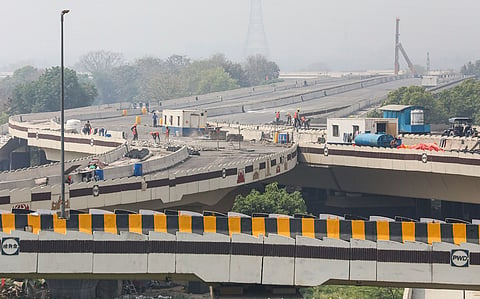
Workers are carrying out construction on the Barapullah Phase-III elevated corridor amid haze in New Delhi.
The Rs 1,635 crore project, cleared by the Delhi government, aims to provide signal-free connectivity from Mayur Vihar to AIIMS, easing congestion at key corridors including Sarai Kale Khan, Ring Road and the DND Flyway.
But as Delhi’s human and vehicular count rises, can its strategies to handle this flood be effective for long? Can elevated roads be a substitute for properly developed public transport? These are questions that only the authorities and people of the national capital can answer.