
Subscribe

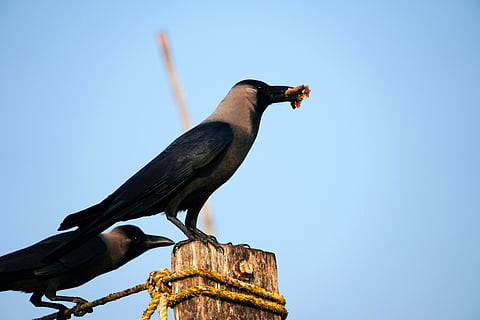
More than 1,000 crows died across Chennai in late January and early February, with tests confirming the presence of the H5N1 avian influenza virus
The deaths have triggered statewide surveillance in Tamil Nadu to prevent the virus spreading to poultry or humans
Authorities say no human infections have been reported and transmission remains rare, but monitoring has been intensified
Officials point to wildlife mortality as an early warning signal, allowing intervention before commercial poultry is affected
Avian influenza has resurfaced in Tamil Nadu after the deaths of more than a thousand crows in Chennai, prompting authorities to step up surveillance to prevent the virus from spreading to poultry or humans.
Between January 29, 2026 and February 4, 2026 municipal workers received repeated complaints of birds falling from trees and rooftops in areas including Adyar, Velachery, Thiruvanmiyur and along the East Coast Road. Laboratory tests soon confirmed what veterinary officials suspected: the highly pathogenic H5N1 avian influenza virus was circulating among wild birds.
Officials estimate that between 1,000 and 1,500 crows died across the Chennai region within a short period, triggering heightened concern and a swift response from authorities.
India reported 11 outbreaks of the highly pathogenic H5N1 bird flu on farms in December 2025, according to UN agency WOAH, news agency Reuters reported on January 5. Before that, Delhi zoo was shut for visitors in September 2025 following a bird flu outbreak.
The crow deaths prompted Tamil Nadu to activate disease surveillance across the state. The Union government also advised Tamil Nadu to intensify monitoring of poultry farms, wildlife habitats and bird markets, while strengthening biosecurity and reporting systems.
Health Minister Ma Subramanian said precautionary containment measures were already in place. “There is no cause for panic. Surveillance has been intensified, and both veterinary and public health teams are working together to monitor the situation closely,” he said.
Health authorities have stressed that no human infections have been reported. Transmission to people remains rare and usually occurs only through direct exposure to infected birds or carcasses. Officials have advised residents to avoid handling dead birds, ensure poultry products are thoroughly cooked, and report unusual bird deaths immediately.
State Health Secretary Supriya Sahu said coordinated action was underway. “All districts have been instructed to strengthen surveillance, report bird mortality immediately and ensure biosecurity measures in poultry farms and markets,” she said.
In affected neighbourhoods, the sudden mortality unsettled many residents.
“We began noticing dead crows on the roadside for several days, and people were worried because it happened so suddenly,” said R Kannan, a resident of Thiruvanmiyur.
Veterinary experts say such wildlife deaths often act as early warning signs. Mortality among wild birds can signal viral circulation in the environment, giving authorities a crucial window to intervene before infection spreads to commercial poultry, where the consequences can be far more serious.
Tamil Nadu’s experience with avian influenza has differed from that of several northern and eastern states, which have faced repeated large-scale outbreaks in poultry.
In most years, the state’s response has been precautionary, triggered either by alerts from neighbouring Kerala or by isolated detections among wild birds. Surveillance is typically intensified along border districts, poultry transport routes and high-production clusters such as Namakkal, one of India’s largest egg-producing centres.
This reflects the geography of risk in southern India. The Tamil Nadu–Kerala corridor is an interconnected ecological and commercial zone. Poultry trade moves freely across state borders, migratory birds share wetland systems, and wildlife populations cross landscapes without regard for administrative boundaries. When avian influenza appears in one state, the other is almost automatically placed on alert.
Migratory birds play a central role in the spread of avian influenza. Coastal wetlands, reservoirs and urban water bodies along the Chennai-Pulicat-Cauvery delta belt lie along international flyways. Viruses carried by migratory waterfowl can enter local ecosystems, circulate among wild birds and, in some cases, spill over into domestic poultry.
For Tamil Nadu, the risk is heightened by the concentration of commercial poultry production in several districts. An outbreak in these clusters could lead to mass culling, supply disruptions and significant livelihood losses. The surveillance now underway is aimed at preventing precisely such a spillover.
Monitoring has been stepped up at poultry farms, hatcheries, live-bird markets and wetlands. Veterinary teams are collecting samples from wild and domestic birds, while municipal authorities are disposing of carcasses through incineration or deep burial under biosecurity protocols. Hospitals have also been asked to stay alert for influenza-like illness, particularly among people who may have had contact with birds.