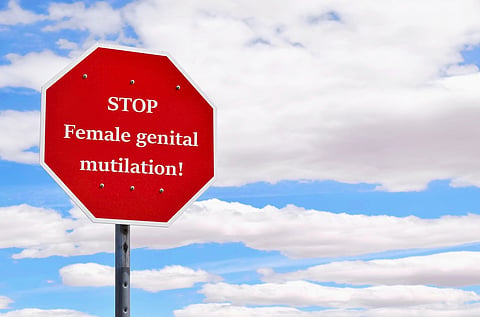


Human society thrives on culture and tradition. These customs are a beacon of belonging, identity, and continuity. But sometimes, practices that are born of tradition become instruments of harm – especially when they violate basic human rights. One such practice is Female Genital Mutilation (FGM) — the partial or full removal of female genitalia or other injury to the female genital organs for non-medical reasons. Despite its abhorrent nature, we cannot pretend it is completely foreign to India.
In fact, as a recent Times of India report highlighted, the Chief Justice of India, B.R. Gavai, acknowledged that “many girls continue to be tragically denied their fundamental rights … and face harmful practices like FGM” even today. His words underscore a reality that often goes unspoken — that such deeply harmful traditions persist within parts of our society.
Human rights advocate Sunita Tiwari has brought this issue to the forefront by filing a public interest litigation (PIL) seeking a complete ban on the practice. She contends that what is euphemistically referred to as “female circumcision” within the Dawoodi Bohra community is, in essence, a form of FGM. According to Tiwari, this practice violates women’s constitutional rights — their right to equality, their right to privacy, and their right to personal liberty.
So, we must ask ourselves: are all traditions worthy of preservation? When such practices inflict irreparable harm on girls and women in the name of culture, faith or honour, our collective conscience must speak up.
According to a recent UNICEF report, an estimated 230 million girls and women worldwide have undergone some form of FGM — many of them before the age of 15. The UN Population Fund (UNFPA) further estimates that over 4 million girls are at risk each year, and that COVID-19-related school closures and programme disruptions could lead to an additional 2 million cases over the next decade.
In India, the Dawoodi Bohra community is the only group known to practise FGM regularly. Studies estimate that 75 per cent and 85 per cent of Bohra women aged 18 to 85 have undergone the procedure. While there are indications that the practice may also occur on a smaller scale among other groups — such as the Sulemani Bohras and a sub-sect of Sunnis in Kerala — there has been no comprehensive survey to confirm its prevalence beyond the Bohra community.
FGM is carried out for one reason alone — to control women’s bodies. It is often justified under the guise of purity, modesty, or cultural identity, but none of these claims can conceal what the procedure truly is: a violation of human rights and an act of gender-based violence. The World Health Organization (WHO) has long condemned the practice, noting that it has no health benefits and inflicts lifelong physical and psychological harm. Psychologically, FGM can lead to post-traumatic stress disorder, anxiety disorders, depression and somatic (physical) complaints such as aches or pain with no organic cause. The effects are devastating. Immediately after the procedure, girls face severe pain, excessive bleeding, swelling, infection, shock, and sometimes death. In the long term, survivors endure urinary tract infections, chronic pain, sexual dysfunction, complications during childbirth, and even newborn deaths. In the most extreme form — infibulation, in which the vaginal opening is stitched closed — women may later need repeated surgeries to open and reclose the wound for childbirth or intercourse, compounding trauma with each cycle.
Sometimes genital tissue is stitched again several times, including after childbirth, hence the woman goes through repeated opening and closing procedures, further increasing both immediate and long-term risks.
In every form and context, FGM stands in direct opposition to universally recognised human rights. It strips away the principle of equality and non-discrimination, targeting girls and women solely because of their sex. It constitutes cruel, inhuman, and degrading treatment, violating the right to bodily autonomy and the highest attainable standard of health. It deprives children of their rights and, in the most severe cases, threatens the most fundamental right of all — the right to life.
Ending FGM demands more than laws and awareness campaigns. It requires a shift in collective consciousness — one that replaces control with consent, shame with dignity, and silence with open dialogue. Communities must confront the myths that sustain this practice, from misplaced ideas about purity to patriarchal control over female sexuality.
FGM survives because it hides — behind closed doors, within the language of tradition, in the fear of ostracism. To end it, we must bring it into the light. Policymakers must speak up. Faith leaders must speak up. So must doctors, teachers, and families.
Every year that we delay, millions more girls risk losing not just a part of their bodies but also a piece of their future. No cultural justification can outweigh the harm of mutilation. What’s at stake is not culture, but humanity itself.
The world’s conscience cannot rest easy while children are cut in the name of custom. FGM is not heritage — it is harm. And ending it is not a matter of cultural sensitivity; it is a matter of moral clarity.
Manu Prathap is an independent researcher
Views expressed are the author’s own and don’t necessarily reflect those of Down To Earth