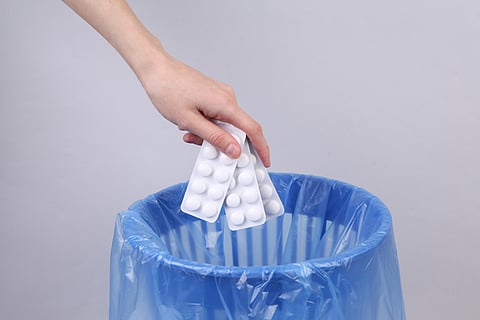


Waste prevention has emerged as a central recommendation in a new report by the United Nations Environment Programme (UNEP), Safe disposal of unused medicines. The report warns that the improper disposal of medicines poses serious risks to both environmental and public health, and calls for stronger national systems to address the problem.
Improper disposal of unused medicines is linked to environmental as well as public health risks. It is recognised as a driver of serious health threats such as antimicrobial resistance (AMR), along with endocrine disruption and toxicity. In an earlier report from 2023, UNEP noted the role of unused and expired antimicrobials in causing AMR pollution. Improper disposal has also been linked to increased risks of poisoning and to air, water and soil pollution.
The guidance document aims to address these risks by strengthening the implementation of national systems for safely disposing of unused medicines through a One Health approach. To achieve this, it proposes an integrated four-pillar framework within and across critical sectors such as healthcare, agriculture and households, where unused medicines can be generated.
The report argues that the best way to prevent unused medicines from entering the environment is to stop them from being generated as waste in the first place — in other words, prevention at source. This would also reduce the costs associated with disposal. The other three pillars are comprehensive take-back schemes, legal and policy frameworks, and awareness-raising within and across sectors.
The most direct way to prevent medicine waste is disease prevention, that is, ensuring that people and animals do not fall ill. Fewer diseases mean fewer medicines, which in turn means fewer unused medicines requiring disposal. Appropriate Water, Sanitation and Hygiene (WASH) measures in human health, along with effective biosecurity and vaccination practices in the veterinary sector, can help prevent disease-causing infections.
Another approach is the judicious use of medicines. Misuse and overuse of medicines in human and animal sectors can be reduced through timely and accurate disease diagnosis, followed by appropriate treatment and prescription. Stewardship measures, such as clear guidelines and policies (for example, essential medicines lists, antimicrobial stewardship guidelines, and hospital infection prevention and control protocols), restrictions on over-the-counter sales, and prohibiting the non-therapeutic use of antibiotics as growth promoters in livestock, can promote the responsible use of medicines.
The report also highlights unit-dose packaging, where pharmacists dispense smaller containers or the exact quantity of medicines required, as a way to reduce the generation of unused medicine waste.
A third approach is effective redistribution. This involves finding a new home for medicines that are no longer needed in households, healthcare or veterinary settings but are still safe to use. However, this can only happen when issues such as quality assurance, counterfeit risks and legal constraints are properly addressed. PharmaSwap, an online platform in the Netherlands, allows pharmacists to trade unexpired and unopened medicines, potentially preventing and reducing medicine waste.
Medicines entering the waste stream can also be prevented through better management of substandard and falsified medicines, as well as medicines donated during emergency situations. The promotion of such preventive actions must be supported by effective awareness-raising and outreach efforts.
India’s recently released National Action Plan on AMR 2.0 also calls for the development and implementation of mechanisms for the safe disposal of expired or unused antimicrobials, in order to reduce environmental contamination with AMR-causing determinants such as AMR genes, resistant pathogens and antimicrobial residues.
Last year, India’s apex drug regulator, the Central Drugs Standard Control Organisation (CDSCO), circulated guidelines on the disposal of expired and unused drugs to all state and Union Territory drug controllers. The guidelines broadly outline methods for the disposal of expired or unused medicines, existing policies, procedures to be followed, and processes for the collection, storage and transportation of drugs prior to disposal. They also include a list of 17 drugs under a “Flush List”, which may be safely flushed down the sink or toilet to prevent harm.
Kerala already has an operational drug take-back initiative — the New Programme on Removal of Unused Drugs (nPROUD) — launched in December 2024 by the state drug control department. Piloted in the Kozhikode Municipal Corporation and the Ulliyeri panchayat, the programme covers nearly 200,000 households and thousands of medical stores.
Earlier, in 2019, the Delhi-based think tank Centre for Science and Environment (CSE) also drew attention to the improper disposal of drugs, including antibiotics, across households as well as retail and wholesale levels in and around the Delhi-National Capital Region. It advocated for drug take-back initiatives to ensure that expired and unused medicines are returned from their point of generation to facilities for safe disposal.