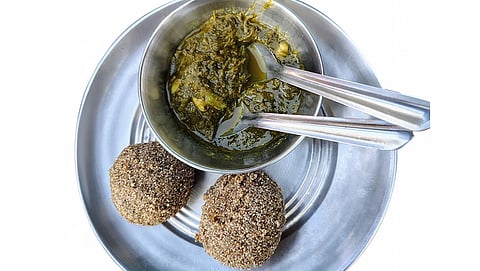


During one of my field visits in Madhya Pradesh, I came across a subtle, light, and nourishing preparation called Lakhori Bhaji during a Sankranti gathering at a Gond household. It was part of their traditional festive spread, simple in appearance, yet deeply rooted in memory.
What intrigued me instantly was how an often-overlooked garden plant Lakhori or Grass Pea (Lathyrus sativus), requiring minimal care to grow, could become such a wholesome, easy-to-make flavourful dish. The peas of the same plant are commonly consumed as teora dal across the region, but the community had evolved a separate healthy delicacy from its leaves and tender shoots. The preparation was minimal, almost raw, lightly spiced, allowing the plant’s own earthy and slightly tangy flavour to dominate the palate.
I not only wanted to learn the recipe but also became fascinated by the wider utility of the plant itself. Experiences like this always take me back to the culinary curiosities hidden within traditional landscapes and livelihood. I usually prepare it whenever I come across the plants in the field after their flowering season, usually during February-May.
Tender shoots and fresh leaves of the Lakhori or Grass Pea (Lathyrus sativus) plant, garlic, ginger, chopped chilies, mustard oil, dried red chilli, cumin seeds, salt, and coriander (optional).
1. Wash the tender shoots and fresh leaves of the Lakhori thoroughly and grind them into a smooth paste. Optionally, coriander can also be added to the paste.
2. Heat mustard oil in a pan and lightly toss cumin seeds and dried red chilli in it. Once the oil heats up, add chopped garlic, ginger, and chillies, and saute for a while.
3. Now add the prepared Lakhori paste to the pan, cook it until the raw texture is properly cooked down.
4. Depending on the consistency, add a little water or slight oil. Add salt as per taste, cover, and let it cook for a while.
5. Serve it hot alongside rice. And your minimal Lakhori Bhaji ki Sabji is ready to be relished!
My Food Story is a collection of stories and recipes that celebrate India’s traditional plant-based ingredients sourced from local biodiversity. You can see these recipes on our interactive dashboard (https://www.cseindia.org/page/myfoodstory).
Ramit Mitra is an environmental researcher from Karnataka