
Subscribe

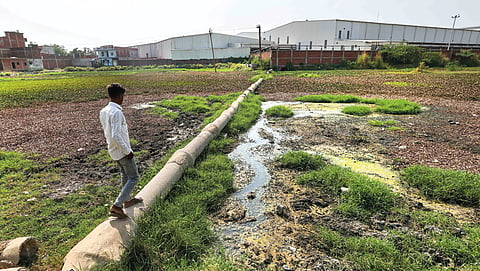
There used to be a major fair along the riverbank every September. Its main attraction was pottery utensils made from the soil of the river. After the river became a drain, the livelihood of potters who made the utensils has disappeared,” says Acharya Ravishankar, a schoolteacher in Panditpur village of Uttar Pradesh’s Ayodhya district. He is referring to the Tilodki Ganga river, on whose shores the village is situated.
A seasonal river originating during the monsoon in Panditpur, the Tilodki Ganga is now extremely polluted and referred to as a drain in revenue department records. Local residents say that during land consolidation from the 1960s to the 1980s, parts of the river were recorded as non-agricultural land and allotted to people. Later, constructions and encroachments resulted in the river becoming polluted and significantly narrower—less than 10 m.
The Tilodki Ganga is one of Uttar Pradesh’s 20-odd rivers designated as drains by the state government in an April 9, 2026, affidavit filed with the National Green Tribunal (NGT) and in other cases. The rivers, most of which are tributaries of the Ganga, are spread in 37 districts.
The process of a river turning into a drain—in public memory and in government records—happens over decades. It starts with people referring to seasonal streams carrying only rainwater as drains, or with a seasonal river narrowing due to encroachment and pollution…
This article was originally published in the July 16-31, 2026 print edition of Down To Earth
