

The India AI Impact Summit 2026, held this February in Delhi, placed India as a global leader in “Applied AI” and a prime driver for the Global South. The AI market in 2024 in India was estimated at $9.51 billion and is projected to reach about $130 billion in 2032. The Indian government views AI as a strategic tool for socio-economic progress and launched the India AI Mission in March 2024, allocating over Rs 10,300 crore (approx. $1.25 billion) to adopt a robust AI ecosystem. India is home to more than 200,000 startups and ranks among the leading global markets for newly funded AI companies. Many international companies are interested in investing in India for their AI mission.
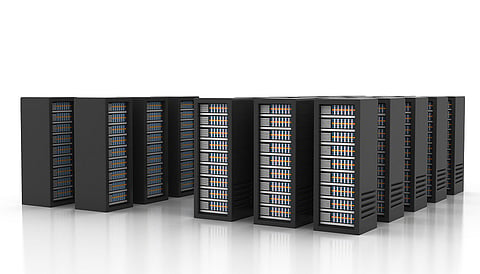
But AI is a transformative tool for environmental sustainability that simultaneously carries a heavy ecological burden. The development and operation of large AI models need huge AI centres, but the development and operation of AI centres are linked with different environmental issues. As India races to reach 8GW of data centre capacity by 2030, the physical extension of these facilities generates substantial ecological pressure. Big AI centres necessitate devoted, high-voltage transmission lines (often 50-100 miles long) and high-speed road access. These “linear intrusions” are a primary cause of forest fragmentation in India, splitting big, integral habitats into thousands of small, vulnerable patches.
One major concern is AI’s carbon footprint. The rising energy consumption from data centres directly raises carbon dioxide emissions due to the burning of fossil fuels. Local electricity grids may be severely strained by the quick and erratic power demands of AI computation, which may occasionally force the usage of less sustainable backup power sources like diesel generators. Data centres are among the IT industry’s biggest energy consumers, and their quick growth will increase demand for electricity. Therefore, switching data centres from coal-heavy grids to renewable energy sources like solar, wind, and hydropower is essential. The requirement for enormous processing capacity, which puts a burden on renewable energy sources and results in considerable greenhouse gas emissions during training and operation, exacerbates these risks. Increased greenhouse gas emissions are a result of AI’s increasing computational demands in a number of ways. Large amounts of electricity are needed for the training and operation of generative AI systems, such as large language models (LLMs). AI data centres are expected to consume nearly 5 per cent of India’s total electricity by 2030, and electricity demand from data centres is projected to increase nearly fivefold by 2030.
Projections from the India-AI Impact Summit 2026 indicate that data centre water consumption in India could reach 358 billion litres annually by 2030, up from roughly 150 billion in 2025. Large volumes of water are needed for AI infrastructure, mostly to cool the high-performance processing devices. Large amounts of fresh water are frequently needed for the extensive cooling systems used in data centres. Cooling towers often evaporate this water, which causes depletion from nearby supplies. Data centres in India are projected to consume 150.3 billion litres of water in 2025, rising to 358 billion litres by 2030. Particularly in water-stressed or drought-prone locations, like Bengaluru, Hyderabad and Gurugram, the concentration of data centres might put local water security at risk by taxing municipal supplies.
India is currently third largest producer of e-waste in the world. AI hardware, particularly high-performance GPUs, typically becomes obsolete within 2-3 years. The surging market of AI in India makes the situation worse in the near future. India currently lacks advanced recycling infrastructure to handle the toxic materials and rare minerals found in these specialised chips. Older hardware quickly becomes obsolete due to the swift speed of AI advancement. AI chips and servers that are thrown away add to the growing issue of e-waste, which frequently contains dangerous materials like lead and mercury that, if improperly processed, can contaminate soil and water. The extraction of raw materials and rare-earth elements, which are frequently acquired through environmentally damaging mining activities, is essential to the hardware for AI.
The application of AI in agriculture may unintentionally favour monoculture, growing a single crop over a variety of farming techniques. The increased use of AI in agriculture may lead to excessive fertiliser and pesticide use, which would contaminate the land and water and threaten biodiversity. Monocultures and biodiversity loss could result from using AI in agricultural operations to boost yields at the expense of preserving ecosystem health.
AI may have indirect environmental implications in addition to the direct expenses of infrastructure. Environmentally damaging activities may be indirectly accelerated by AI applications. Examples include increasing the efficiency of the fossil fuel industry to increase production, optimising supply chains to promote overconsumption, or encouraging monoculture in agriculture, which degrades soil quality and biodiversity.
AI models have the potential to provide vast amounts of false information about environmental problems or climate change, which might erode public support for sustainability and climate action initiatives.
In conclusion, although AI has the potential to improve efficiency and monitor the environment, its current course poses serious risks due to its enormous demands on material, water, and electricity resources.
The development of data centres in India, the third-largest economy in Asia, has been accelerated by the remarkable emergence of AI. JLL, a worldwide real estate adviser, predicts that the industry will experience “explosive growth” and that India’s data centre capacity will increase by 77 per cent to 1.8GW by 2027.
Data centres and AI compute farms are not mentioned in India’s EIA Notification 2006; only heavy sectors (steel, cement, thermal power, and mining) are categorised in Schedules “A” and “B.” A new “Green-B” entry could be included in a proposed amendment.
“All greenfield and brownfield data-centre complexes with aggregate IT load ≥ 5 MW or annual energy consumption ≥ 20 GWh—including AI-optimised compute farms—shall require Category A environmental clearance.”
The expansion of such energy-hungry, water-guzzling infrastructure has significant ramifications for India’s decarbonisation objectives, even if it is essential for the country’s developmental needs.
Creating “Green AI” involves concentrating on energy-efficient AI models, hardware, and data centres that run on renewable energy.
Proposals include requiring the use of renewable energy, incorporating data centres into Environmental Impact Assessments (EIAs), and requiring operational indicators (such as Power Usage Effectiveness and Water Usage Effectiveness) to be transparent. Environmentalists are now advising policymakers to extend EIA to cover large-scale AI infrastructure. EPR (Extended Producer Responsibility) rules require AI hardware importers to recycle 70-80 per cent of their specialised chips by 2026.
There is an urgent need to identify environmental issues related to the development and operation of AI centres and find their remedial measures.
When choosing a data centre, high-temperature and water-deficient places should be avoided. Indian coastal cities may be a good choice for the development of AI centres due to their low temperature and the availability of plenty of water. Data centres are stimulated to evolve to 100 per cent renewable energy. Only non-potable water (treated wastewater) must be used for the cooling of AI centres. Closed-loop liquid cooling may also be a good alternative. Centres must firmly adopt the e-Waste (Management) Rules, 2022, which mandate the segregation and channelisation of waste to registered recyclers. Regulatory Clearances and Compliance help control pollution during the development and operation of AI centres. Close monitoring and more extensive research are required for the analysis of the environmental impact of AI centres. Formation and regulation of AI environmental laws are required in India.
India has the potential to become a leading market in the field of AI; thus, preventive environmental measures are required for sustainable development and making a Self-Reliant India (Atmnirbhar Bharat).
Sughosh Madhav is presently working as a Senior Project Scientist, Unnat Bharat Abhiyan, Sri Aurobindo College, University of Delhi
Amit Kumar Singh is presently working as an Assistant Professor of environmental studies at Deshbandhu College, University of Delhi
Views expressed are the authors’ own and don’t necessarily reflect those of Down To Earth