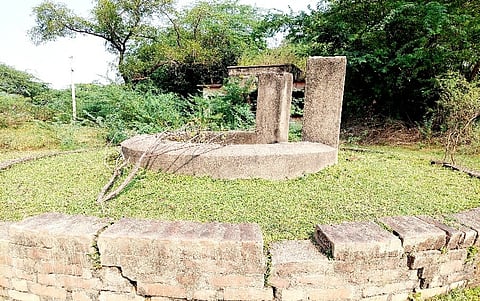


By noon, the roads in Banda start becoming empty. Tea stalls close early, and farmers return home before the afternoon heat becomes too harsh. Construction workers sit under whatever little shade they can find. Even the wind feels hot. This summer, Banda district of Uttar Pradesh’s Bundelkhand region became one of the hottest places in India. Temperatures crossed 47°C many times and touched nearly 48°C during May. For several days, Banda was hotter than many places in Rajasthan, which is usually known for extreme heat.
But Banda’s rising heat is not only because of climate change. It is also because the region is slowly losing its water. Across Bundelkhand, groundwater levels are falling. Ponds are drying up, wells and hand pumps are no longer working as they did before. As water disappears from the land, the land itself becomes hotter.
The link between heat and water is very simple, as wet soil, ponds, rivers and trees help cool the environment naturally. Moisture in the ground keeps temperatures lower. Trees release water vapour into the air and provide shade. But when the land becomes dry, it heats up very quickly under the sun and stays hot for longer hours. This is what Banda is facing today. The district is not dealing with only the heatwaves. It’s also dealing with rising temperatures and disappearing groundwater at the same time.
The Bundelkhand region has always faced droughts and low rainfall. For generations, people survived difficult summers by depending on ponds, open wells and other traditional water systems for their daily water needs. These systems stored rainwater during the monsoon and helped recharge groundwater as well.
But over time, these traditional water systems gradually began to break down. Many ponds and small water bodies were neglected and became filled with silt, plastic, and other solid waste. Several ponds also disappeared because of continuous encroachment and unplanned construction around them. At the same time, tree cover in many areas was reduced sharply, affecting the natural ability of the land to absorb rainwater. Instead of slowly recharging the soil and groundwater, rainwater began flowing away quickly as runoff. As surface water sources weakened, communities in villages, urban centres, and peri-urban areas increasingly turned towards groundwater to meet their daily needs. Groundwater became the main source for farming, drinking, livestock, and other household use. Over the years, this growing dependence placed heavy pressure on underground water reserves, leading to falling groundwater levels and increasing water scarcity in many regions.
For many years, groundwater acted like a hidden support system for communities. Even during droughts, people could still get water from wells and hand pumps. But today, signs of water shortage are visible across Banda and other parts of Bundelkhand. Borewells and wells are becoming deeper every year as groundwater levels fall. In summer, many hand pumps stop working or run dry. Because of this, many families now depend on water tankers or travel kilometres for getting the drinking water, especially the women.
A recent study conducted by the Centre for Science and Environment (CSE) across 15 villages in four blocks of Banda district highlights the growing challenges of rural water security in groundwater-dependent regions. The study found that many villages continue to face irregular water supply despite receiving tap water connections under the Government of India’s Jal Jeevan Mission (JJM). During summer, the situation becomes even more difficult as water demand increases, and water supply becomes more erratic. The study found that nearly 50 per cent of households reported facing water shortages during the summer months, mainly due to inadequate water supply hours, pump breakdowns and electricity disruptions. Overall, 32 per cent of households experienced water shortages on a daily basis, while 51 per cent reported that the JJM supply was insufficient and that they had to rely on groundwater sources. As a result, many households continue to depend on hand pumps, borewells, open wells, neighbouring sources and, in some cases, distant river sources to meet their daily water needs. In villages such as Acchharaundh, residents often travel up to 5 km and spend 45-60 minutes per trip fetching water from nearby rivers when local sources fail.
The data clearly shows that groundwater sources continue to play a critical role in sustaining rural drinking water supplies in the surveyed villages. In many areas, hand pumps, borewells, and open wells remain the primary source of water for drinking, cooking, livestock, and other household needs. Even where tap water connections exist, groundwater often acts as an important backup source, especially during periods of irregular supply or summer shortages.
However, the study also highlights the growing stress on these groundwater systems. Around 34 per cent of the groundwater sources assessed including hand pumps, borewells, and open wells were found to be defunct (see Table 1). Many of these sources had either dried up, stopped functioning, or were abandoned because water levels had fallen too low. In several villages, hand pumps produced very little water during summer, while some open wells remained dry for long periods.

The increasing number of defunct groundwater sources reflects the rising pressure on underground water reserves. Over the years, groundwater extraction has increased significantly for irrigation, domestic use, livestock, and other economic activities. At the same time, reduced rainfall infiltration, loss of ponds and traditional water bodies, declining tree cover, and rapid surface runoff have weakened natural groundwater recharge. As a result, groundwater is being withdrawn faster than it can be replenished.
This growing imbalance is making rural water security increasingly fragile. Families are often forced to depend on a limited number of working water sources, travel longer distances to fetch water or rely on tanker supply during the peak summer months. Even borewells, which are usually considered the last and most reliable option during water shortages, are becoming increasingly unreliable. Several borewells observed during field visits had already been abandoned because groundwater levels had fallen sharply.
The report also shows that groundwater levels in some areas are declining by more than two meters below ground level (mbgl) in one decade (see graph 1). This means that people have to dig deeper to access water. As groundwater levels continue to fall, villages become far more vulnerable during extreme heatwaves and prolonged dry periods.
When temperatures rise above 45°C, the demand for water increases sharply. People require more drinking water to cope with the heat, animals need additional water, and crops dry out faster, increasing the need for irrigation. As a result, pumps are used for longer hours, placing even greater pressure on already stressed groundwater reserves.
At the same time, water sources in the villages are drying up faster than they used to. Extreme heat causes the soil to lose moisture quickly, making it harder for rainwater to soak into the ground. Small ponds and other local water bodies that once held water for several months now dry up much earlier. The pond in village Tindwara shows this change clearly. Satellite images from 2012 and 2026 reveal that the pond has become smaller over the years (See Image 1&2). Its area reduced from about 2.0 hectares to 1.64 hectares, a decline of more than 18 per cent in 14 years. The latest image also shows more aquatic plants and less open water. This means the pond can store less water than before. For villagers who depend on such water sources, this is a growing concern, especially during the hot summer months when water is needed the most.
This creates a dangerous cycle. Falling groundwater levels intensify the impacts of heatwaves, while rising temperatures increase water demand and accelerate water scarcity. Together, heat stress and groundwater depletion are making rural communities more vulnerable every year.
For people living in Banda, this crisis affects everyday life. Women spend hours collecting water when nearby hand pumps stop working. Farmers are changing crops because irrigation has become uncertain. Labourers continue working under dangerous heat because they cannot afford to lose daily wages.
Many people say summers have become much harder than before. Older villagers remember a different Banda. They remember ponds that stayed full for longer periods. Trees that kept roads cooler. Open wells that worked even during difficult summers.
Today, much of that natural cooling and water recharge system has disappeared. The report also notes that even in areas where water conservation structures were built, groundwater levels continued to decline. In many cases, this happened because the recharge systems were poorly planned, not properly maintained, or not designed according to local hydrogeological conditions. At the same time, groundwater extraction for irrigation, drinking water, and other uses increased far beyond the amount of water being naturally recharged. As a result, groundwater reserves continued to shrink despite efforts to conserve water.
This is a serious warning for Bundelkhand and other drought-prone regions across India. If groundwater levels continue to fall, rural drinking water systems will face even greater stress during future heatwaves and droughts. Water scarcity will not only affect drinking water supply, but also agriculture, livestock, livelihoods, and public health.
The real solution lies in restoring local water systems and rebuilding the natural water balance of the landscape. Across India, many villages have shown that reviving ponds, protecting catchment areas, planting trees, and improving groundwater recharge can significantly improve water availability and reduce heat stress. These measures help landscapes hold water for longer periods and make communities more resilient during extreme weather conditions.
When ponds and local water bodies retain water for longer, they help cool nearby areas and improve local humidity. Better groundwater recharge increases soil moisture, which supports agriculture and reduces the impact of dry spells. Trees also play an important role by lowering temperatures, providing shade, reducing soil erosion, and slowing down rainwater runoff so that more water can seep into the ground.
Bundelkhand once had strong traditions of water conservation. Villages built ponds, tanks, and small water harvesting systems to store rainwater and recharge groundwater. Communities protected these local water bodies because their survival depended on them. These traditional systems helped villages manage dry periods and survive harsh summers for generations.
The story of Banda is not only about record-breaking temperatures, but it is also a story of changing landscapes, disappearing ponds, falling groundwater levels, and villages struggling to cope with harsher summers every year.
At the same time, it is a warning for the rest of India. Many parts of the country are already facing similar challenges declining groundwater, shrinking ponds, loss of tree cover, and rising temperatures. Climate change is making heatwaves more intense and frequent, but the destruction of local water systems is making their impacts even more severe. What is happening in Bundelkhand today could become the reality for many other regions tomorrow.