
Subscribe

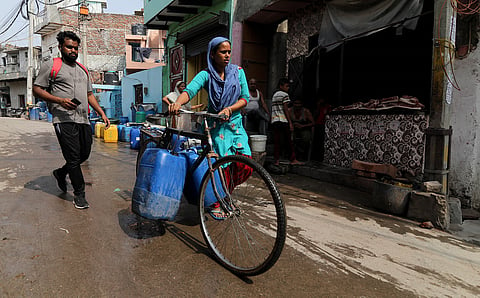
Delhi exemplifies the complex challenge of water being “too much, too little, and too polluted.” The city’s daily demand of about 1,290 million gallons far surpasses the formal supply of approximately 1,000 million gallons, driving unsustainable groundwater withdrawal and aquifer depletion. The Yamuna, Delhi’s primary water source, faces increasing pollution, while waste and drainage systems often get disrupted during heavy rains.
This is not just Delhi’s story but rather reflects the stark reality of many Indian cities today. Despite housing nearly 18 per cent of the world’s population, India has access to only 4 per cent of global freshwater resources. Erratic monsoons and rampant groundwater extraction have exacerbated the crisis, with millions of residents in informal settlements bearing the brunt, often spending up to 15 per cent of their income on unreliable private water sources. Water insecurity is linked to 21 per cent of communicable diseases.
Enhancing water security, across India’s rapidly growing cities and urban centres, requires a multi-pronged and well-calibrated approach that empowers communities, strengthens governance mechanisms and addresses policy implementation gaps to improve water-resilience.
Beyond infrastructure, water security requires adaptive and inclusive water governance, with collectives playing a central role. Collectives, comprising local communities, sector experts and public agencies, are uniquely positioned to bridge policy and practice gaps by integrating lived experiences, local knowledge and scientific expertise. Across time and geographies, we see collectives emerge as indispensable partners in tackling the water crisis and building long-term resilience.
Participatory water governance builds grassroots capacity for climate-resilient resource management and amplifies marginalised voices. Collectives in two informal Delhi settlements now co-design interventions to improve water access, quality and flood management. Rainwater harvesting and localised water storage efforts reduced dependence on inconsistent municipal supplies and costly private vendors. These interventions prioritised women, persons with disabilities and elder residents.
NGO-led collectives in north and central Delhi run decentralised storage systems, ensuring equitable access to water. The Delhi Jal Board’s 12 Jal Shakti Kendras complement these efforts by training residents on water conservation and wastewater management.
Community mobilisation should be anchored in strong ties and trust for successful on-ground action. Delhi’s Sangam Vihar saw residents unite to challenge predatory water mafias and establish accountable, fair water-sharing mechanisms.
In north-west Delhi, residents leveraged grassroots partnerships to create Community Water Forums and a Delhi Water Forum, establishing platforms for collective priority-setting, problem-solving and sustained action. In Odisha, the Drink from Tap mission and Pani Panchayats offer compelling community-led water management models that tap into the social capital of self-help groups and farmer’s collectives, respectively.
Women bear the brunt of water insecurity, and their experience with managing water for their households, coupled with valuable local knowledge, positions them as leaders for collective water action. Collectives fill a gap by providing a crucial avenue for women to participate in decision-making.
In an initiative in Delhi, women learnt to regularly monitor for vector-borne diseases and water quality, presenting findings that prompted official action. Collectives advance gender equity, a cornerstone of sustainable development, with ripple effects across society.
Effective policy implementation requires more robust collaboration between communities, experts and policymakers. In Delhi, collectives of water scientists, urban planners, public health professionals and community members conducted detailed water audits, exposing supply gaps and billing inefficiencies. Their efforts spurred the adoption of smart meters and infrastructure delivery.
The Delhi Heat Action Plan 2025 promises 3,000 water ATMs citywide but only about 20 were functional by mid-2025, with the majority being inaccessible to informal settlements. Collectives provide policymakers with ground-level insights, ensuring disparities are addressed and community needs are met.
Chennai and Bengaluru’s community-led lake restoration and groundwater recharge initiatives revitalised natural drainage and provide valuable blueprints for cross-sector, multi-stakeholder governance aligned with India’s vision for smart, inclusive and sustainable urban development.
India’s water future depends on a hybrid approach, blending infrastructure upgrades and policy reform with empowered community collectives that bring cross-sectoral expertise. Some fear that collectives may fragment governance or burden vulnerable groups, but evidence shows they augment, rather than replace, public systems by delivering immediate relief, building adaptive capacity, and fostering inclusive, fair and climate-resilient water governance.
National initiatives, like Jal Sanchay Jan Bhagidari, emphasise community ownership over water conservation. State-level successes, such as Gujarat’s Sujalam Sufalam Jal Sanchay Abhiyan, demonstrate sustainable water management at scale — critical to reduce water scarcity, strengthen livelihoods and achieve India’s broader development goals.
Securing a sustainable and equitable water future is urgent. It demands a fourth tier of governance, led by empowered citizens and scientific expertise, for improved communication, transparency, conflict resolution, sectoral alignment and joint accountability. This integrated approach is key to building resilient, inclusive cities and realising the promise of a truly “Viksit Bharat.”
Prerna Vijaykumar Mehta is Associate Program Director, Urban Development at WRI India.
Victor R Shinde is Head-Water and Environment at National Institute of Urban Affairs (NIUA).
They worked closely on the Australia-India Water Security Initiative (AIWASI), co-creating climate-resilient water and sanitation solutions with two vulnerable settlements in Delhi, inspiring city-level shifts towards inclusive urban water governance.
Views expressed are the authors’ own and don’t necessarily reflect those of Down To Earth