Yamuna in Delhi begins to fill up, courtesy Hathnikund. Is it enough though?

Most excess water from Hathnikund was discharged into canals; Delhi getting less water could make the difference between a clean and a dirty river
Yamuna in Delhi begins to fill up, courtesy Hathnikund. Is it enough though?
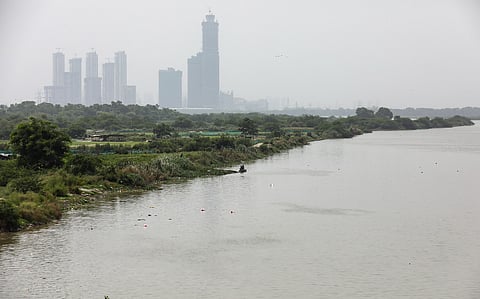
The Yamuna appears fuller on the border between Delhi and Noida. The water is courtesy increased inflows at the Hathnikund Barrage upstream in Haryana. Photo: Vikas Choudhary/CSE
Published on

The Yamuna in Delhi is showing signs of filling up in Delhi and the National Capital region.

While it has not rained much in the plains this monsoon, rainfall increased water inflows at the Hathnikund Barrage upstream in Haryana.

Yamuna in Delhi begins to fill up, courtesy Hathnikund. Is it enough though?
But is this water enough for a clean Yamuna in Delhi?Photo: Vikas Choudhary/CSE

Consequently, the river in Delhi shows signs of change. Shallow pools fill up as water spreads over the vast sandy bed, till it becomes one broad channel.

However, is this enough for solving the capital’s pollution problems in the Yamuna?

Yamuna in Delhi begins to fill up, courtesy Hathnikund. Is it enough though?
According to the South Asia Network on Dams, Rivers and People (SANDRP), excess water at the barrage was discharged into canals. That means less water for Delhi where the river is at its dirtiest. Unless there is water, the river cannot self-clean itself.Photo: Vikas Choudhary/CSE

According to the South Asia Network on Dams, Rivers and People (SANDRP), inflows into Hathnikund increased steadily after the onset of the monsoon. But most excess water was discharged into canals.

Additional water is needed in Delhi to wash away the toxins and effluents that the Yamuna accumulates during its 22-kilometre course through the capital. Without water, the river cannot become clean.

Down To Earth
www.downtoearth.org.in