
Subscribe

More than 30,000 live animals were seized during a month-long global crackdown.
The operation involved enforcement agencies in 134 countries.
Authorities intercepted ivory, pangolin scales, bushmeat, insects and timber.
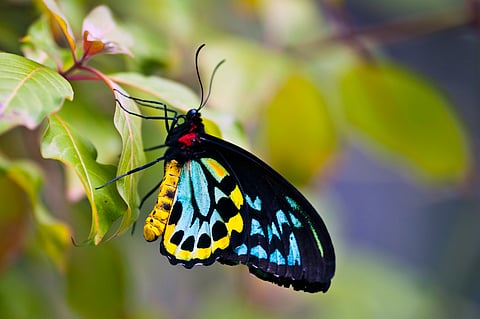
Smaller species such as butterflies and reptiles are increasingly targeted.
Interpol warns wildlife crime is linked to organised criminal networks.
More than 30,000 live animals, along with protected plants and timber, have been seized during a global crackdown on illegal wildlife and forestry trade, according to Interpol.
The seizures were made during a coordinated operation between September 15 and October 15, 2025 involving police, customs, border security, forestry and wildlife authorities in 134 countries. In total, 4,640 seizures were recorded in just one month, Interpol said in a statement.
The operation uncovered thousands of protected animals and plants, tens of thousands of cubic metres of illegally logged timber and more than 30 tonnes of spices listed as endangered under the Convention on International Trade in Endangered Species of Wild Fauna and Flora (CITES).
Interpol said the operation revealed an escalating illicit trade in bushmeat — meat from wild animals, particularly from tropical regions. Belgian authorities intercepted primate meat, Kenyan officials seized more than 400 kilogrammes of giraffe meat, and Tanzanian law enforcement recovered zebra and antelope meat and skins valued at about $10,000 (about Rs 9 lakh).
“Globally, a record 5.8 tonnes of bushmeat was seized, with a notable increase in cases from Africa into Europe,” Interpol stated.
The crackdown, known as Operation Thunder 2025, was coordinated by Interpol in partnership with the World Customs Organization. Its aim was to intercept and seize illegally traded wildlife and forest products, disrupt global supply chains, dismantle criminal networks and identify suspects involved in environmental crime, estimated to be worth up to $20 billion annually.
Authorities cautioned that the true scale of the trade is likely to be higher, given its clandestine nature.
In South Africa, police arrested 24 suspects and seized protected succulents, live pangolins and more than 17,000 abalone, as well as unlicensed firearms and ammunition.
Across the operation, authorities seized 215 kg and 1,900 pieces of elephant ivory; 28 kg and seven rhinoceros horns; 159 kg and 338 pieces of big cats and other felines; and seven tonnes of pangolin scales and meat. Interpol said the term “pieces” refers to fragments of animal material — ranging from complete remains to partial specimens — as well as whole or partial plants or timber.
Other seizures included 1,560 pieces of primates, 830 pieces and derivatives of bears, 4,340 pieces of birds and 38,850 pieces of reptiles. Primate body parts and skulls were intercepted from a shipment arriving from Asia at a North American mail centre.
Indonesian authorities seized birds and arthropods, including butterflies, spiders and centipedes. Turtles and tortoises accounted for 3,640 pieces, while arthropod seizures totalled 10,500 pieces.
Marine species made up 245 tonnes and 91,000 pieces, including 4,000 shark fins. Other wildlife seizures amounted to five tonnes and 32,000 pieces. Plants and timber accounted for 10 tonnes of plant material and derivatives, as well as 31,560 square metres and 14,320 pieces of timber respectively.
Authorities also recorded bushmeat seizures totalling six tonnes.
While iconic large mammals often dominate public attention, Interpol said the operation highlighted a growing threat to smaller species and plants. In particular, there was a sharp rise in trafficking of exotic arthropods.
“Nearly 10,500 butterflies, spiders and insects — many protected under CITES — were seized around the world,” the statement said. “Though tiny in size, these creatures play vital ecological roles. Their removal destabilises food chains and introduces invasive species or diseases, posing serious biosecurity and public health risks.”
The illegal plant trade also reached record levels in 2025, with more than 10 tonnes of live plants and plant derivatives seized, driven largely by demand from horticulture and collector markets, authorities said.
Illegal logging remained a major concern. Interpol said illicit timber is estimated to account for between 15 per cent and 30 per cent of all timber traded globally, with significant economic, social and environmental impacts.
“While live animal seizures reached a record high this year — largely driven by demand for exotic pets — most wildlife trafficking involved animal remains, parts and derivatives, often used in traditional medicine or specialty foods,” the agency said.
Among major individual cases, Qatari authorities arrested a person attempting to sell an endangered primate for $14,000 on social media. In Brazil, police dismantled a trafficking network, identified 145 suspects and rescued more than 200 wild animals, including breaking up an international golden lion tamarin trafficking ring.
Mexican authorities seized seven animals in Sinaloa, including two tigers, alongside firearm components linked to organised crime. In the United States, officials intercepted more than 40 shipments of insects and 80 shipments of butterflies originating from Germany, Slovakia and the UK.
French customs seized ivory pieces from marketplaces, while Austrian authorities recovered six more from an ivory dealer’s home. Vietnamese officials detained two people and seized a fishing vessel carrying 4.2 tonnes of pangolin scales, along with other reptiles and bird parts.
Germany intercepted more than 1,000 illegal wildlife and forestry items — including ivory, reptile parts, coral, plant derivatives and live specimens — primarily at mail centres and airports.
Interpol’s Secretary General, Valdecy Urquiza, said the operation had once again exposed the scale and sophistication of criminal networks behind the illegal wildlife and forestry trade.
“These networks increasingly intersect with other forms of serious crime, from drug trafficking to human exploitation,” he said. “They target vulnerable species, undermine the rule of law and endanger communities worldwide.”
