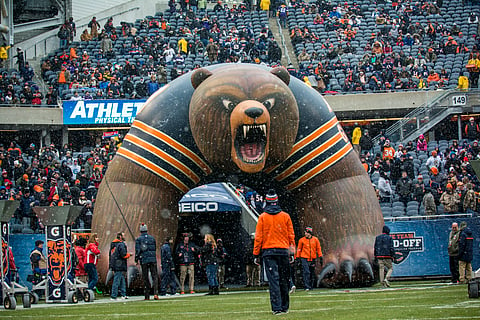


A global study of 2,970 professional teams finds wild animals are the most common sports symbols.
Over half of the species used in logos — including lions, tigers and wolves — are threatened or declining.
Researchers say sports teams could tap fan loyalty to support conservation efforts.
Examples from Japan and the US show how teams can partner with wildlife organisations.
Scientists launch The Wild League to connect sport and conservation action.
Lions roar from team jerseys, tigers leap across stadium walls and wolves glare from flags. In sport, these animals symbolise strength, pride and courage. In the wild, however, many of them are fighting for survival.
A new study, Wildlife Diversity in Global Team Sport Branding, published in the journal BioScience in December 2025, examined 2,970 professional sports teams across 10 major sports: Football, basketball, rugby, cricket, American and Australian football, baseball, handball, lacrosse and ice hockey. These teams represent the ten wealthiest countries across the world’s five regions. The global dataset was compiled by international research team from France, Finland, Australia, the United States and the United Kingdom.
The researchers found that wild animals are the most common symbols used by teams. Of 727 teams featuring animals in their names or logos, 161 different species were identified. Lions, tigers, grey wolves, leopards and brown bears were among the most frequently used emblems, typically chosen to reflect power, ferocity and fighting spirit.
But the study, led by Ugo Arbieu of the Écologie Systématique Évolution department at Université Paris-Saclay, also showed that more than half of these wildlife-themed teams use animals that are threatened or declining, according to the International Union for Conservation of Nature (IUC) Red List. In essence, the mascots that dominate stadium culture are slipping towards extinction in the real world.
Regional patterns also emerged. Teams in Asia and Africa tended to choose native species, while those in Europe and North America often adopted exotic animals such as lions and tigers — species found nowhere near their home grounds. To illustrate this global trend, the researchers created an interactive map showing which species sports teams use as symbols across different regions.
According to the IUCN Red List, many of these species are threatened with extinction. Lions and tigers are listed as ‘Vulnerable’, meaning their numbers are falling because of habitat loss and hunting. Leopards and wolves face pressure from conflict with humans, shrinking habitats, and climate change. Even animals that look strong on team logos are struggling to survive in nature.
The paper highlights successful examples of sports teams using their influence for conservation. The Saitama Seibu Lions, a professional baseball team in Japan, have partnered with global wildlife groups to support lion conservation. In the United States, universities have formed the Tigers United Consortium to promote tiger conservation efforts.
Other collaborations include support for the Trans-Kalahari Predator Programme, which protects large carnivores in southern Africa.
To galvanise ground-level action, the researchers have launched The Wild League (thewildleague.org), a platform that brings conservation and sport together.
Sports, the authors of the paper argued, wield enormous cultural influence. Fans form deep emotional attachments to team symbols, buying merchandise, wearing logos and identifying with the animals they portray. This, the authors write, is a powerful yet largely untapped pathway for conservation.
“This emotional connection to wildlife through sport branding may offer a promising yet underexplored avenue to foster conservation intentions,” the authors wrote.
If teams used their platforms to highlight the threats facing their mascot species, from poaching and habitat destruction to climate change, fans might be more inclined to support conservation.
The study recommends that sports organisations:
Partner with conservation groups
Support local initiatives linked to their symbolic animals
Use games, events and social media to raise awareness
Raise funds for species and habitat protection
Work with leagues and governing bodies for broader impact
Fans, too, can contribute by donating to conservation groups affiliated with their favourite teams, backing awareness campaigns or supporting local wildlife projects.
The authors argue that if wild animals can unite fans inside stadiums, they can also inspire collective action to protect nature outside. Symbols of pride on the field, these animals face far greater challenges in the wild — and sports teams may be unlikely but powerful allies in their fight for survival.