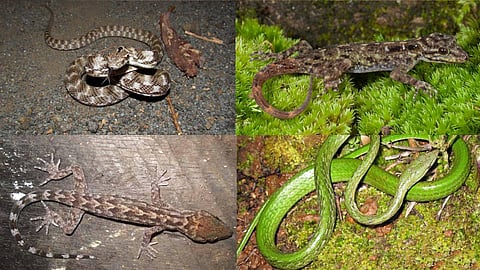


India is home to 1,047 reptile taxa, including 839 species and 30 subspecies, according to an updated checklist spanning 267 years of zoological records.
The list includes three crocodiles, 35 turtles, 370 snakes and 431 lizard species described between 1758 and December 2025.
Published in Zootaxa, the study also examines the origins and meanings of scientific names, including those derived from places, people and Indian languages.
Researchers say the work aims to make taxonomy more accessible by explaining the stories, histories and cultural references preserved in scientific names.
India is home to 1,047 reptile taxa, according to an updated checklist spanning 267 years of zoological records.
The list includes 178 genera, 839 species and 30 subspecies, covering three crocodiles, 35 turtles, 370 snakes and 431 lizard species described between 1758 and December 2025.
The findings, published in the journal Zootaxa on August 24, 2026, also include a comprehensive analysis of the origins and meanings of the reptiles’ scientific names. The authors say this is the first such detailed analysis of the etymology of Indian reptile names.
The study examines how scientific names preserve information about India’s reptiles, including their biological features, places of discovery, cultural contexts, languages and histories.
The year 1758 is an important milestone in zoological naming. The 10th edition of Systema Naturae by Swedish naturalist Carl Linnaeus is regarded as the formal starting point of modern zoological nomenclature, the authors said.
The figures highlight India’s reptile diversity and its importance as one of the world’s major regions for reptile biodiversity.
“A staggering 304 (~36 per cent) of these species have been described since 2000, demonstrating not only the highly active herpetological research community but also the unexplored diversity within the country,” it said.
The authors said the latest checklist of Indian reptiles, published in 2024, listed 778 taxa, including 19 subspecies. Since its cut-off date in December 2023, another three genera and 59 species have been described.
The authors found that most reptile names are derived from Latin and classical Greek, or from Latinised words not used in classical Latin, such as place names. Place names, or toponyms, were a common source. The study found 227 names derived from locations.
Four toponyms were used for at least five species: andamanensis, for the Andaman Islands; himalayanus, for the Himalayas; khasiensis, for the Khasi Hills in Assam; and travancoricus, for Travancore, an older name for a former province in what is now southern Kerala and the far south of Tamil Nadu.
A large number of reptile species were also named after people. The study found 226 such eponyms. The top 11 taxonomists had at least three species named after them. Three of them are living taxonomists: Romulus Whitaker, born in 1943; Aaron Bauer, born in 1961; and Ishan Agarwal, born in 1984.
The authors also found several names derived from local languages. These were used to describe 19 genera and 34 species. “For instance, the cobra genus and species Naja was named after the Sinhala naya, meaning cobra,” the authors said.
The viper genus Daboia appears to be of Hindi origin, from dabohiya, meaning “that lies hid, the lurker”, they said. The turtle genus Chitra appears to be derived from the Sanskrit chitra, meaning “variegated” or “multicoloured”, referring to the colour pattern on the carapace and neck of these species.
The study said most local species names are derived from one of India’s many languages.
For example, Batagur kachuga comes from the Hindi word kachua (कछुआ), meaning turtle. Ahaetulla laudankia is derived from the vernacular name of the species in Odia, a language spoken in Odisha, and refers to the snake’s resemblance to the dried stems or danka, of bottle gourd, or lau.
However, the origins of some reptile names remain uncertain. The study identified at least five Indian reptile names of unknown or unclear origin. The meanings of names such as Boiga and Sitana remain uncertain or speculative. “For instance, without any reference, it has been suggested that Sitana is derived from the Tamil language sit wona for small lizard,” the study said.
Some species names may be eponyms, but it remains unclear who they were named after. Platyceps plinii may have been named after Pliny the Elder, the Roman naturalist and philosopher. Psammophis schokari may be derived from the Arabic “shigari”, meaning “from the trees”, or from a person, the study said.
Lead author Peter Uetz, professor (associate) at Virginia Commonwealth University, said names were more than labels. “Words matter! Names matter! They are not just labels, they carry meaning, information, even political or societal statements. They can tell you stories about the species, its environment, the political situation or the life of the author and their family,” he said in a statement.
Co-author Dikansh Parmar, researcher at Leibniz Institute for the Analysis of Biodiversity Change, said the study is an attempt to bring scientific naming into a language that ordinary people can understand.
“For example, most people know Ophiophagus hannah is the scientific name of the King Cobra, but they do not know what the name actually means. They are often unaware that every scientific name has its own meaning, history, and reason for being chosen. This paper explains the stories behind those names and makes taxonomy more accessible to everyone,” he said.
Parmar added that it is written not only for researchers but also for the general public, creating a bridge between scientific knowledge and everyday curiosity.
