
Subscribe

Human activities have fundamentally reshaped biodiversity patterns on islands across the globe, providing important implications for how scientists understand ecology, evolution and conservation, according to a new study.
Led by the University of Birmingham, the international team of researchers examined how species extinctions and introductions have transformed island ecosystems over millennia showing that islands have experienced a disproportionate share of global biodiversity loss.
Island endemic species account for around 75 per cent of recorded anthropogenic extinctions globally even as many islands have also received large numbers of introduced species.
The authors gave the example of the Hawaii archipelago, where almost all endemic species of birds have been driven extinct, with roughly the same number having been introduced from elsewhere in the world.
The paper also argues that many biodiversity patterns observed today – such as species richness, endemism and ecological interactions – are not solely the result of natural ecological and evolutionary processes but also often reflect a long legacy of human influence.
With regards to endemism, it gave the example of the Cuban crocodile and the Tasmanian devil (Sarcophilus harrisii). The critically endangered Cuban crocodile (Crocodylus rhombifer), which is now endemic to Cuba, was found on numerous Caribbean islands before human arrival.
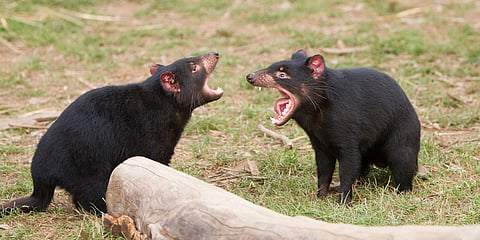
The experts also noted that classifying species as naturally endemic to islands can be challenging, as anthropogenic extirpations of mainland populations may create “artificial island endemics”, such as the Tasmanian devil, now endemic to the island of Tasmania but previously distributed across much of mainland Australia.
Another key finding, according to a statement by the University of Birmingham was that for certain groups — primarily birds and mammals — researchers have a reasonable idea of the biodiversity that has been lost on islands. However, for many others there is a lack of knowledge, making it difficult to identify pre-human biodiversity baselines and fully understand the extent to which island ecosystems have been altered.
The authors conclude that “ultimately, contemporary patterns of island diversity, distinctiveness, and distribution emerge from the combined effects of both classic biogeographic drivers and the more recent anthropogenic factors including those of trade and land use change, with economic area (based on the amount of developed land) and economic isolation/connectivity (as measured by international trade routes and tourism) increasingly driving biodiversity patterns on islands as globalization proceeds.”
“Thus, contemporary biodiversity patterns may still be suitable for analysis and the development of predictive models provided that any approach includes assessments of the intensity and geographic dynamics of anthropogenic as well as natural processes. Such an integrative approach seems essential if we are to reconstruct the natural (prehumanity) patterns of biological diversity across the world’s islands and develop effective strategies for conserving or recovering the natural patterns as the Anthropocene progresses,” they added.
The study’s findings have been published in the journal Science Advances.
