
‘Protecting insects today is an investment in the resilience of our planet for generations to come’

Butterflies have captivated humans with their grace and beauty since time immemorial and have also inspired art and folklore.
However, butterflies are not just ‘pretty insects’. They are pollinators and also food for other species. They thus offer valuable ecosystem services, which means there would be trouble if they are gone.
These insects are elusive, and there is still a great deal unknown about their behaviour and habitat.
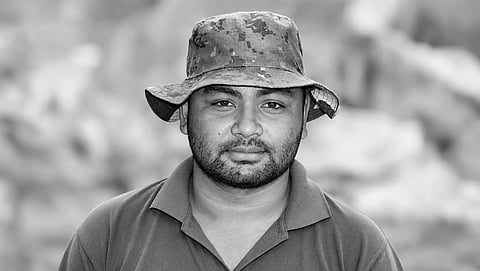
Sarangapani Neog is a wildlife photographer who has spent several years observing and documenting butterflies across the forests of Northeast India.
He recently came out with the second edition of Butterflies Of Gibbon Wildlife Sanctuary, where he has chronicled the butterflies of the Hollongapar Gibbon Wildlife Sanctuary, widely referred to as Gibbon Wildlife Sanctuary, in Upper Assam’s Jorhat.
The sanctuary, best known for its population of Hoolock Gibbon, the only ape species found in India, is one of the good sites in Assam for observing butterflies.
Neog spoke to Down To Earth about the guide and other issues related to research on butterflies and insects. Excerpts.
Down To Earth (DTE): Why did you decide to author this guide and how is it unique compared to others?
Sarangapani Neog (SN): I began this journey with a field study that I submitted to the Department of Zoology at Debraj Roy College in 2014. In 2015, that work became the first edition of Butterflies of Gibbon Wildlife Sanctuary, which received a warm response from readers across Assam.

Over the years, one question stayed with me: Can butterfly identification be made simple enough for everyone, not just researchers? As I continued photographing butterflies and documenting nearly 250 species, I realised that many existing guides were excellent but could be challenging for beginners.
That inspired me to create a book that is simple, practical, and easy to use in the field. One of its most distinctive features is the photographic identification keys designed to help readers quickly distinguish between similar-looking butterfly species. I also updated the taxonomy, added clearer photographs, improved descriptions, and included new field observations based on years of research.
I believe science should be accessible to everyone. When scientific knowledge is presented in a simple and engaging way, more people can appreciate biodiversity and become active in conserving it. That is the main reason I wrote this guide.
DTE: What is the situation regarding Lepidoptera in Assam and the greater Northeast? Is this order thriving or has it been affected due to anthropogenic activities?
SN: The Northeast is one of the richest regions in India for butterfly diversity because of its unique geography, varied climate, and extensive forests. While many forested landscapes still support healthy butterfly populations, there is growing concern over the long-term impacts of human activities. Habitat loss and fragmentation, expansion of infrastructure, pesticide use, pollution, climate change, and invasive plant species are affecting butterfly habitats. Changes in rainfall patterns and temperature are also influencing the seasonal emergence and distribution of many species.
At the same time, there are encouraging signs. Protected areas such as Hollongapar Gibbon Wildlife Sanctuary continue to provide important refuges for butterflies. Increasing participation by citizen scientists, photographers, researchers, and conservation organisations is also improving documentation and awareness.
The greatest challenge today is not only conserving butterflies but also improving our scientific knowledge. Many areas of Northeast India remain underexplored, and continued research and long-term monitoring are essential for effective conservation.
DTE: Global media reports suggest an ‘insect apocalypse’ is happening because of human activities. What, in your view, should policymakers do to prevent further damage worldwide?
SN: Insects are the foundation of healthy ecosystems. They pollinate crops and wild plants, recycle nutrients, support food webs, and maintain ecological balance. Protecting insects is therefore not just about conserving biodiversity—it is about safeguarding food security, agriculture, and human well-being.
Policymakers should prioritise the protection and restoration of natural habitats, strengthen the management of protected areas, and create ecological corridors that connect fragmented forests. Reducing the indiscriminate use of chemical pesticides through sustainable agricultural practices is equally important.
Governments should invest more in insect research, biodiversity monitoring, and taxonomic studies, as many insect groups remain poorly documented. Conservation planning should include insects alongside larger wildlife species. Public awareness and environmental education also deserve greater attention because conservation succeeds only when communities understand the value of biodiversity.
Climate change must remain a central focus. Reducing greenhouse gas emissions and restoring degraded ecosystems will benefit not only insects but entire ecological communities.
The future of butterflies and insects in general depends on a combination of sound science, strong environmental policies, and active public participation. Protecting insects today is an investment in the resilience of our planet for generations to come.