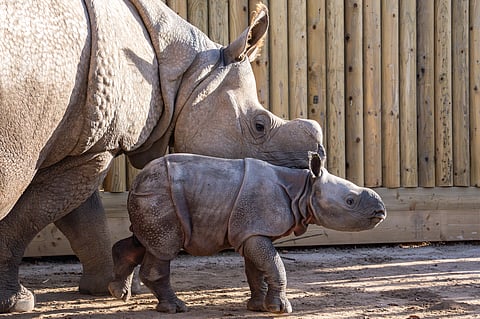


Chester Zoo in the UK captures the birth of a rare greater one-horned rhino on CCTV.
Calf born on October 11 after a 15-month pregnancy; both mother and newborn are healthy.
Classified as vulnerable to extinction, the species has a wild population of around 4,000 in India and Nepal.
Habitat loss, poaching and concentration in a few protected areas continue to threaten the species.
The newborn is part of a European conservation breeding programme to maintain genetic diversity.
A rare greater one-horned rhinoceros has been born at Chester Zoo in the UK, with CCTV cameras capturing the birth of the calf on October 11, 2026.
The calf's mother, Asha, gave birth after a 15-month pregnancy. Both mother and calf are healthy, according to a statement issued by the zoo.
They spent the first few days indoors to stay warm before moving into a secluded outdoor paddock. The calf's sex, weight and name have yet to be announced.
The greater one-horned rhinoceros is classified as vulnerable on the International Union for Conservation of Nature's (IUCN) Red List of Threatened Species.

Around 4,000 remain in the wild, inhabiting the wetlands, forests and grasslands of India and Nepal. Although conservation efforts have helped the species recover, its concentration in a relatively small number of protected areas continues to pose risks.
The species was driven close to extinction in the early 20th Century by habitat loss and trophy hunting. Poaching for its horn has also threatened its survival, despite the absence of scientific evidence supporting claims of medicinal benefits.
"Greater one-horned rhinos are much better protected in the wild than they once were, but many of them are concentrated within one national park in India, which makes them vulnerable to illness and environmental changes," said Mark Brayshaw, head of mammals at Chester Zoo.
Greater one-horned rhinos are the largest rhinoceros species in Asia, standing up to 1.8m at the shoulder and weighing more than two tonnes as adults. Their thick, folded skin gives them an armour-plated appearance.
Primarily found in wetlands, they are excellent swimmers and generally solitary animals. Calves remain with their mothers during their early years.
The newborn is the fourth offspring of Asha and Beni, who died earlier this year following a sudden illness. The calf is part of a European conservation breeding programme aimed at maintaining a genetically diverse population of greater one-horned rhinos in human care.
"It's always exciting to welcome a new calf and Asha has been a brilliant mum to all her youngsters. Every birth is important for the future of this species and it's wonderful to see another healthy arrival," said Tom Garland, assistant manager of the zoo's rhino team.
Conservation scientist John O'Hanlan said Asha was among relatively few greater one-horned rhinos actively breeding in Europe, making each successful birth important for the species' long-term conservation.
Greater one-horned rhino calves typically weigh around 45kg at birth, while adults can exceed two tonnes.
The zoo has yet to announce further details about the newborn.