
Subscribe

Leopard attacks in northern West Bengal have undergone a change, a senior wildlife official has told Down To Earth (DTE).
“Normally, leopard attacks used to occur seasonally from December to March in the North Bengal region comprising eight districts, including Jalpaiguri. But now, attacks happen even during the monsoon and the peak summer seasons,” said Ashesh Paul, the ranger of Diana Forest Range in Jalpaiguri district.
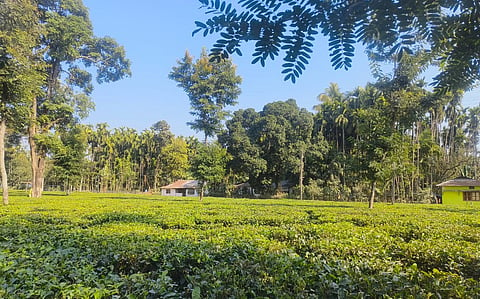
In the Kalabari tea garden which comes under the Diana range, three human deaths occurred during the rainy season (July, August and September) and some eight injuries took place in 2025. All the three deceased were aged between three and 12 years. After leopards were spotted in the garden area, three animals were caught within a month, caged and released elsewhere. To tackle the situation, cages were placed inside the garden and warnings issued to people who reside in the labour lines. Compensation for the deaths amounted to Rs 5 lakh in each case.
The deceased were Ayush Nagarchi, Karimul Haque and Ashmit Roy. Towards the end of 2024, a female child, Sushila Gowala, was also killed. Nagarchi was just three-years-old and dragged from the courtyard of his house around 7pm in the evening. Karimul’s elder brother Aminul Haque said the deceased was dragged by the leopard near his house when the latter was with another child. Aminul works as a labourer in building construction work. “The Kolabari tea garden is about a kilometre away from the Khutabari basti where the family resides. I sometimes feel afraid to return home in the evening after work.”
Though the exact reason behind the sudden change is hard to pinpoint to one particular cause, a rise in the leopard population is perhaps one of the reasons. The All-India Leopard Estimation reported 233 leopards in 2022 in north Bengal, up from the 83 recorded in 2018, according to the Status of Leopards in India report.
Another reason could be that north Bengal has no tiger left even in the Buxa Tiger Reserve. The 2022 Status of Tigers, Co-predators and Prey report says that there is only one tiger in Buxa, but according to media reports, no tiger has been spotted since 2023. In the absence of tigers, 61 leopards are within the tiger reserve and 74 are utilising the area.
Winter has traditionally been the peak season for human-leopard conflict in north Bengal. Aritra Kshettry, who works for WWF-India, said big tea estates undergo pruning during the season, where the top vegetation layers are cut to enable new leaves to grow though some sections are left untouched. So, the overall hiding area of leopards reduces, as the animals can only hide in the unpruned sections where plucking of leaves happens occasionally, along with other activities like maintenance work. In such cases, the probability of humans and leopards coming into close contact with each other increases and this raises the possibility of attacks. Kshettry had previously worked in north Bengal’s tea gardens on the human-leopard conflict.
In north Bengal, which has undergone land use changes, both sightings as well as attacks on humans have risen, according to Paul. He shared that the animals are now being spotted in new areas.
For instance, in Naxalbari, a village in Darjeeling district, Paul did not encounter leopards or hear about sightings frequently during his service tenure there for 10 years. But things are different now. “Leopards were restricted in and around Bagdogra some 12 km away from Naxalbari, and the nearby tea gardens. But they are now spreading out.”
When humans share space with wildlife, the conflict often turns acute. A change in landscape use also aggravates the issue and this transformation in north Bengal has happened due to the spread of tea gardens, especially the small ones, where the traditional pruning regime does not always take place. According to Kshettry, with the spread of these small gardens, leopards are finding new areas to live. In a way, the small tea gardens are increasing the distribution of leopards across the landscape.
According to an assessment of small tea growers’ data carried out last year by the Tea Board of India, there are 39,654 small tea gardens or STGs in north Bengal comprising Darjeeling and the Dooars-Terai regions. The assessed tea area in hectares stands at 25,282.63. Tersa Ekka works in the New Chumtha tea garden, and her duty is from 7.30 am till 4.30 pm with a break in between. When leopard attacks happen, compensation is paid but it involves a lot of effort and missed daily wages due to hospitalisations.
Kshettry explained that though most attacks are non-fatal in nature, it impacts tea garden workers who are already poor and marginalised. Even if they miss work by a few days, it is a huge challenge for them. The Government of West Bengal has a legal provision. If injuries require hospitalisation, there is monetary relief paid by the forest department and the cost of treatment is covered at a government hospital. But few people know about this provision, and it also involves paperwork, including a doctor’s certificate. He feels that leopard attacks can be avoided by following certain practices inside tea gardens, like making sounds before plucking starts, to drive away the animals. But only few big gardens practise this.
Elephants are the reason as to why farmers have switched over to tea. Bappa Chhetri, who buys leaves from several small tea farmers in Jalpaiguri, said elephant raids are common in the villages which lie near forests. As a result, many paddy farmers have turned to tea to overcome losses. Rajesh Roy, a small tea garden owner, had spotted leopards near his garden situated in the Sipaipara village in Jalpaiguri. “I take precaution as leopards are often found in drains inside gardens. Now, even wild boar pose a threat, besides leopards.” He shared that a few days back, one person died and two others were injured in a wild boar attack during the day.
As the number of STGs have soared, leopards have found such places suitable habitats to hide and give birth. Chettri informed that despite problems, many farmers feel growing tea is far more profitable than paddy, which is labour-intensive and often damaged by elephants.
Malay Bhattacharya, who works in the Department of Tea Science, University of North Bengal, shared that tea is still a profitable business, especially for small farmers even though profit levels have dipped for big tea gardens compared to the past years. “There are around 60,000-70,000 small growers and they occupy 65 per cent of the market area. STGs started coming up in the 80s and 90s in four north Bengal districts: Jalpaiguri, Alipurduar, North Dinajpur and Coochbehar. They are around four decades old, and the growth of leaves hasn’t been impacted as a result of age.”
Bhattacharya, who specialises in the use of pesticides in tea, said this region is not that ideal for paddy. As there is migration taking place from the region’s rural areas to urban centres in search of employment, it is difficult to find cheap labour for paddy and other crops. “At my university tea garden, which is around 10 hectares in size, a few people were injured due to a leopard. Mostly, leopards give birth to cubs in the winter.”
In neighbouring Assam, also known for tea, conservationist Mubina Akhtar launched the Living with Leopards campaign eight years back to spread awareness about human-leopard conflict through dos and don’ts posters and meetings. From April last year, she started another campaign as a follow up initiative and a poster drive in the Kamakhya Temple area in Guwahati. In this, she received assistance from PRERANA, the IAS Officers’ Wives Association of Assam. She regularly visits places where leopards are sighted. Akhtar, who works under the banner of the Kaziranga Wildlife Society, a non-profit, said maximum attacks on humans happen in tea gardens.
She also shared that women feel afraid when they come to know about the presence of leopards near their houses. “Even at night, they cannot sleep. It takes a toll on their health.” According to Status of Leopards in India, the Brahmaputra floodplains have 349 leopards. In Assam, excluding the Brahmaputra flood plains, leopards have increased from 47 in 2018 to 74 in 2022.
India has 13,874 leopards. The most adaptable of big cats, the common leopard has even moved into higher altitudes where they share space with snow leopards. Paul shared that during night patrols, he often sights leopards. Thus, his team’s surveillance has increased to prevent more fatalities.
Siliguri-based Avijan Saha, who works on human-wildlife conflict mitigation and runs a non-profit called Airavat, told DTE, “I try to find areas with no leopards, but it is hard to find such places at present. The animals have spread out to even India’s border areas with Bangladesh, Nepal and Bihar where there is no connectivity with tea gardens. Caging leopards always doesn’t help. The animals either return to the old place or move to a new place.”
