

Halting the loss of biodiversity is one of the greatest conservation challenges of the 21st century. Despite decades of effort, the pace of decline shows little sign of slowing. Since the 1990s, ecologists have warned of an impending mass extinction. It would be the Earth’s sixth—but unlike any that has come before. Today’s crisis is driven by a potent mix of pressures: climate change, pollution and the relentless exploitation of land, sea, plants and animals. What makes this crisis unprecedented is that every major ecological upheaval can be traced back to a single species: Home sapiens.
So far, the damage has been stark: at least 680 vertebrate species have been driven to extinction since 1500. Losses are accelerating as a rapidly warming climate intensifies the pressures on already strained ecosystems. The latest “Living Planet Report”, released in 2024 by the World Wide Fund for Nature and the Zoological Society of London, paints a grim picture. Drawing on data from over 5,000 vertebrate species, it finds that global wildlife populations have declined by an average of 73 per cent in just 50 years. Terrestrial species have fallen by 69 per cent, marine species by 56 per cent and freshwater species by a staggering 85 per cent. Habitat loss and degradation, driven largely by the food systems, remain the most widespread threats, followed by overexploitation, invasive species and disease. Such declines, the report notes, are more than statistics: they are early warning signals of rising extinction risk and the unravelling of the ecosystems on which life depends.
Yet much of this loss remains invisible to the public. That is partly because the webs linking species within and across ecosystems are complex—likely even more intricate than the processes driving climate change—and still poorly understood. Conservation efforts, as a result, often gravitate towards species that can capture attention and funding. “Because of their marketing role, flagship species are often selected on criteria other than biodiversity, such as charisma and aesthetic appeal,” notes a November 2024 article in Nature Conservation. The authors from University of Helsinki, Finland, found no evidence that charismatic flagship species raised more funds than other conservation targets. They recommend that environmental non-profits diversify fundraising strategies based on the best available knowledge, rather than rely on mere species charisma. Even conservation group Wildlife SOS quotes the International Union for the Conservation of Nature (IUCN) noting most attention and media coverage go to big cats, large herbivores and other mammals; smaller, non-mammalian fauna slip under the public radar despite a higher proportion of threatened species.
India illustrates this vividly. The country harbours an impressive share of global biodiversity—with just 2.4 per cent of the world’s land area, India hosts nearly 8 per cent of global plant species and about 7.5 per cent of global animal species, including a remarkable number of endemics, as stated by Union Minister of State for Environment Kirti Vardhan Singh at the IUCN World Conservation Congress. At the Congress held in Abu Dhabi in October, Singh launched a National Red List Assessment initiative to accurately assess the conservation status of its species and meet commitments under the Convention on Biological Diversity and the Kunming-Montreal Global Biodiversity Framework by 2030. India has made commendable strides in safeguarding this richness. Flagship programmes such as Project Tiger have earned international recognition. Tiger numbers, once in steep decline, are rising again in Madhya Pradesh, Uttarakhand and Maharashtra. Project Lion has also delivered notable gains. The Asiatic lion population in Gujarat’s Gir landscape has grown from 674 individuals in 2020 to 891 in 2025, prompting a change in its IUCN conservation status from Endangered to Vulnerable. Yet these successes mask steep declines elsewhere. Many ecologically indispensable species, from frogs to snakes to lagomorphs and birds remain overlooked, victims of a textbook case of “taxonomic bias”.
The 2024 “Living Planet Report” underscores the consequences. Birds of open habitats, rivers and coasts are quietly slipping away. Several vulture species, including white-rumped vulture, Indian vulture and slender-billed vulture have declined by 67 per cent, 48 per cent and 89 per cent. Pollinators, too, are in trouble: in Odisha, native bee populations are believed to have fallen by 80 per cent since 2002. And little is known about the flies, beetles and butterflies that keep Indian agriculture running.
The recent plight of India’s only ape, the western hoolock gibbon, brings the problem into sharp focus. In the first week of December, a family of gibbons was found stranded atop a solitary ficus tree in Arunachal Pradesh after farmland expansion severed the forest canopy. Underweight and isolated, they were rescued and relocated—but their ordeal reflected a larger truth: habitat fragmentation is outpacing conservation. The machinery of protection suffers too. The Central Zoo Authority recently misidentified the critically endangered Alpine musk deer (Moschus chrysogaster), confusing it with its Himalayan cousin (Moschus leucogaster) and launched a breeding programme for the wrong species. If authorities cannot distinguish their own wildlife, how can donors be expected to invest in conservation?
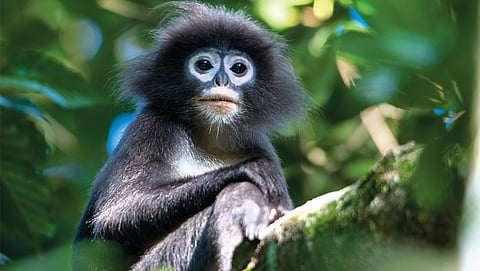
This special edition seeks to shine a light on conservation’s lesser-known species—the ones that quietly underpin ecosystems but rarely make headlines. They may not appear on posters or adorn government campaigns, but they hold together the fraying web of life. Lose them, and the charismatic giants will not be far behind. Read on.
This article was originally published as part of the December 16-31, 2025 print edition of Down To Earth
