

According to the State of Food and Agriculture released last month, between 2001 and 2023 sub-Saharan Africa (SSA) lost 72 million hectares of forests — an area about the size of Kenya. The primary driver of this deforestation: agricultural expansion.
The crux of this challenge is SSA’s stubbornly low crop yields. It is the lowest in the world. The average yield per hectare in Africa is roughly half that of India and one-fifth of what a US hectare produces. These dismal yields mean efforts to feed Africa’s fast growing population pose an acute threat to its remaining wild places.
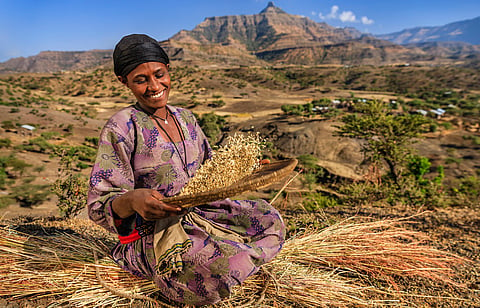
The solution is clear: help Africa’s smallholder farmers grow more food on the land they already cultivate.
Achieving this requires an alliance that doesn’t yet exist: across Africa’s farmers, nutrition champions, rural development leaders, and the conversation and environmental communities. Together, we must demand more investment in agricultural research capable of revolutionising African farming and helping smallholders sustainably grow more food.
The African agricultural and global conservation and environmental communities must recognise they are fighting the same battle. When forests fall to feed people, everyone loses. When farmers grow more food on their existing land with investments in improved seeds and fertiliser to farm sustainably, people and the planet thrive.
By standing beside Africa’s farmers and the continent’s hunger-fighting agricultural researchers we can catalyse a transformation of Africa’s agriculture sector.
There are many reasons why this is the perfect moment to ramp up investments in agricultural research. Chief among them a powerful new tool in our toolbox: AI is supercharging Africa’s agricultural researchers, helping them develop disease-resistant bananas, maize resistant to lethal necrosis, and sorghum resistant to the parasitic plant Striga.
African elected leaders have long recognized the need to increase agricultural yields. Towards that end, in 2003, they signed onto the Maputo Declaration, pledging to allocate at least 10 per cent of their national budgets to strengthening their agricultural sectors. Building on this, in 2004, former UN Secretary-General Kofi Annan called for a uniquely African Green Revolution, led by African governments in partnership with their farmers.
Many African governments responded with subsidies for inputs and pledges to expand farmers’ access to markets, but robust government funding to support an agricultural transformation has largely not materialised. Only seven African countries consistently met the 10 per cent investment target. One critical area remains particularly overlooked: the agricultural research needed to develop high-nutrition, high-yield, climate-smart, and locally adapted seeds.
According to the African Union, at least 20 African governments spend so little on their agricultural research systems that they are “effectively defunct.” China and South Korea invest about two per cent of their agricultural GDP on agricultural research and development. In Africa, the figure is typically below one per cent.
And because agricultural production is so specific to geographic and cultural context, relying on outside technology is not adequate. Africa’s farmers can’t use agricultural innovations such as more productive seeds developed in other geographies. Africa must develop its own.
Together we must advocate for African research into climate-resilient, nutritious crops, especially sorghum and millets. These are more adaptable to the drylands of Africa, which occupy about 65 per cent of the total land mass and are increasingly under pressure as population growth outstrips food production.
This aligns with the African Union’s 2026-2035 Kampala CAADP Declaration, which advocates for the cultivation of diverse, nutrient-dense crops, including biofortified crop varieties.
The returns on investments in agricultural research are massive: as high as $200 in economic returns for every $1 invested. A wide and growing body of evidence indicates that in SSA, economic growth from agriculture is many times more effective at reducing extreme poverty than any other sector. But here’s the catch, as IFPRI has noted, these returns tend to take a decade or longer to bear fruit. Policy makers tend to work on shorter time frames aligned with 4- or 6-year election cycles and often have more incentive to steer precious government funding towards investments that deliver tangible results during their term in office.
But when conservationists and environmentalists, global health and development champions, and agricultural communities and leaders speak with one voice in support of an agricultural transformation, their vision becomes harder to ignore. We must demand African governments invest in agricultural research to both improve nutrition in the world’s fastest growing continent and protect its wild places.
Rebbie Harawa is Global Research Program Director of Resilient Farms and Food Systems Research Program & Director of Africa for the International Crops Research Institute for the Semi-Arid Tropics in Nairobi Kenya
Peter Kelly, is a former agricultural economics professor at Remin University, China. He is the founder of Grow Further, a nonprofit mobilizing a global movement in support of agricultural research that has the potential to transform farming and nutrition in low- and middle-income countries
Views expressed are the authors’ own and don’t necessarily reflect those of Down To Earth