

Climate change could expand chikungunya risk into parts of North America, Europe and East Asia by the end of the century, a new study says.
The mosquito-borne disease is currently concentrated mainly in tropical and subtropical regions.
Researchers say warming temperatures could allow Aedes mosquitoes to survive in areas previously too cold for sustained transmission.
North-eastern North America, central Europe and East Asia have been identified as emerging risk zones.
The study says countries in temperate regions should strengthen mosquito surveillance and clinical diagnosis before 2040.
Climate change could expand the risk of chikungunya into parts of North America, Europe and East Asia by the end of the century, according to a new study. The findings suggest that public-health systems in regions where chikungunya has not historically been endemic may need to prepare for changing mosquito-borne disease risks as temperatures rise.
The mosquito-borne disease is currently concentrated mainly in tropical and subtropical regions, but warming temperatures could allow its vectors to survive in areas that have historically been unsuitable for sustained transmission, the researchers said.
The study, published in the journal Frontiers in Cellular and Infection Microbiology, identified north-eastern North America, central Europe and East Asia as emerging risk zones. At present, chikungunya is not endemic to Europe or North America.
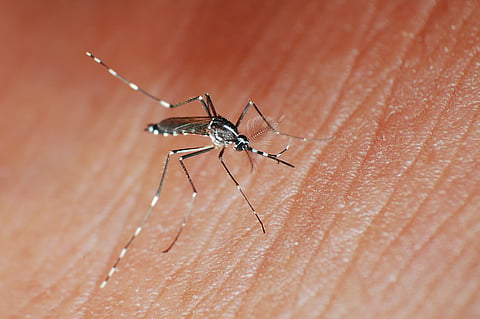
However, researchers said that “northward expansion into temperate regions” could occur as climate change alters the habitats of the mosquitoes that transmit the virus. The disease is transmitted by Aedes aegypti and Aedes albopictus mosquitoes.
Chikungunya can cause symptoms including high fever, joint pain, muscle and back pain, headache, fatigue, nausea and skin rash. It is classified by the World Health Organization as a neglected tropical disease.
In 2026, about 33,000 symptomatic chikungunya cases and nine related deaths have been reported worldwide, largely concentrated in South America, according to the European Centre for Disease Prevention and Control.
The study found that 21.26 per cent of global land area across 139 countries is currently at risk of chikungunya transmission. The present risk is mainly concentrated in tropical and subtropical zones, including the Caribbean coast of North America, eastern South America, the Gulf of Guinea in Africa, and coastal South and Southeast Asia, the authors said.
At the continental scale, South America had the highest proportion of land at risk, at 83.41 per cent, according to the study. Africa followed with 42.67 per cent, while Oceania recorded 41.77 per cent, the researchers found. Asia, North America and Europe had lower current risk proportions, at 30.69 per cent, 13.60 per cent and 6.62 per cent respectively, the study said.
“Future projections reveal northward expansion into temperate regions,” the authors noted, identifying northeastern North America, central Europe and East Asia as emerging risk zones.
The modelling study analysed more than 57,000 mosquito occurrence records and more than 13,500 chikungunya records collected globally. The researchers found that climate change affects chikungunya risk mainly by changing where mosquito vectors can live.
“Our results showed that climate change affects chikungunya mainly by changing where its mosquito vectors can live,” said Yang Wu, corresponding author of the paper and a researcher at the Guangzhou Customs Technology Center, in a statement. “In our study, the Asian tiger mosquito was especially important, explaining more than 70 per cent of the predicted distribution of the virus.”
The Asian tiger mosquito, or Aedes albopictus, can tolerate cooler conditions better than the yellow fever mosquito, or Aedes aegypti, Wu said. Warming may therefore allow Aedes albopictus to establish in places that were previously too cold, increasing the chance of local chikungunya transmission.
The study also found that extreme warming could reduce chikungunya transmission risk in some tropical areas. Under the highest-emissions climate scenarios, parts of Africa and Asia could experience habitat shrinkage as temperatures exceed the physiological limits of mosquito vectors, making some areas less suitable for mosquito survival, the researchers said.
This pattern reflects the non-linear response of vector suitability in tropical core regions. Warming may initially increase suitability before eventually causing thermal stress and population decline, the researchers wrote in the paper.
The researchers said north-central Europe, north-eastern North America and eastern Asia should be treated as high-priority zones. Countries along these temperate margins should prioritise pre-emptive mosquito surveillance and clinical diagnosis training before 2040, the study warned.
The researchers identified temperate Europe, including the United Kingdom and Germany, the north-eastern United States, and East Asian countries such as China and Japan as areas where preparedness should increase.
