

Extreme weather events are increasingly disrupting elections in India, from heatwaves to cyclones
At least 94 elections in 52 countries have been affected over the past two decades
In 2024 alone, 23 elections across 18 countries were impacted by climate-related events
India recorded extreme weather on 331 days in 2025, intensifying risks to polling and campaigning
Report calls for elections to be treated as critical infrastructure vulnerable to climate disruption
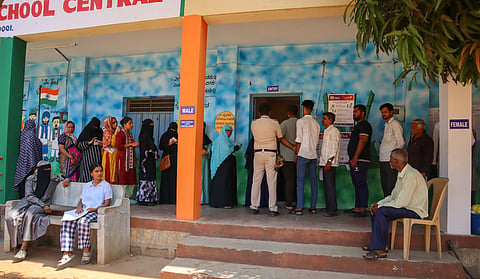
As voting began in Tamil Nadu and West Bengal on April 23, 2026, an intense heatwave sweeping parts of India cast a shadow over the electoral process, with at least four reported deaths in West Bengal. Earlier, on April 9, 2026, Kerala went to the polls for its Assembly elections amid an unusually early and humid summer. The adverse weather conditions reshaped campaigning across the state, as candidates, party workers, and voters struggled to cope with rising temperatures and increasingly erratic climate patterns.
These developments underscore a growing concern; extreme weather events, ranging from heatwaves and floods to cyclones, are increasingly disrupting elections, both in India and globally. A new report highlights that 94 elections across the world have been affected by such events over the last 20 years. As climate change intensifies the frequency and severity of natural hazards, elections must now be viewed as critical infrastructure vulnerable to disruption, it said.
The report was released on Earth Day (April 22, 2026) by the International Institute for Democracy and Electoral Assistance, an intergovernmental organization that supports and strengthens democratic systems worldwide.
Extreme weather events in India are becoming increasingly frequent, the report said, citing an analysis by Delhi-based think tank Centre for Science and Environment (CSE). In 2022, extreme weather events were recorded on 314 out of 365 days, meaning nearly every day saw disruption in some part of the country. However, more recent estimates released by CSE suggest this trend is intensifying, with extreme weather reported on 331 days or over 99 per cent of days between January and November 2025. This is the highest in four years—making stronger election resilience systems urgent.
These events are now beginning to shape the country’s elections. For instance, during the 2024 Lok Sabha elections, temperatures crossed 45 degrees Celsius (°C) in several regions. In Uttar Pradesh, at least 33 polling officials reportedly died due to heat-related causes on the final voting day. In response, the Election Commission of India (ECI) provided drinking water, shaded waiting areas, and medical kits at polling stations.
During the 2024 Lok Sabha and Vidhan Sabha elections, an election officer in Odisha wrote for Down To Earth about how extreme heat in Kalahandi claimed the lives of several presiding officers on polling day, while many others suffered serious heat-related impacts.
Voting in an Odisha constituency was postponed in 2019 due to Cyclone Fani. The ECI has also coordinated with disaster agencies and developed state-level disaster management plans, including in Himachal Pradesh in 2022. This was the only state-level plan of its kind, meaning an electoral one, to be developed in such detail in 2022, although all states do have a disaster management authority for natural hazards, read the report.
However, the report notes that preparedness in India remains uneven. Current national guidance under the ECI’s Manual on Electoral Risk Management sets only minimal requirements and mainly focuses on traditionally disaster-prone regions, with no comprehensive, standardized framework covering all climate-related risks across states and Union Territories.
The report finds that at least 94 elections in 52 countries have been disrupted by extreme weather events over the past two decades. Between 2006 and 2025, natural disasters were severe enough to delay at least 26 elections and referendums, either fully or partially.
In 2024 alone, at least 23 elections across 18 countries were impacted by extreme weather events such as tropical storms, floods, heatwaves, wildfires and even volcanic eruptions, the report says. It adds that in most cases, disruptions were local or regional rather than nationwide, but they affected both low-, middle- and high-income countries, showing that climate risks to elections are universal.
The report is based on over 100 real-time crisis briefs from the Election Emergency and Crisis Monitor and 13 detailed case studies from Asia, Africa, North America and Europe. These include the 2022 floods affecting elections in Victoria (Australia), 2023 wildfires in Canada, cyclones during Mozambique’s 2019 elections, heatwaves during the Philippines’ May 2025 midterm elections, and wildfire-related disruptions in California, USA.
Beyond documenting risks due to the extreme weather events, the report highlights how election authorities are adapting under crisis conditions, offering lessons for safeguarding democratic processes under growing environmental pressure.
It finds that the most common hazards affecting elections are sudden-onset events such as storms and floods. Together, tropical storms and floods account for 67 per cent of all cases recorded in the Election Emergency and Crisis Monitor. Other hazards include heatwaves (9%), earthquakes (7 per cent) and wildfires (7 per cent).
Between 2006 and 2025, at least 34 elections in 24 countries were affected by severe storms including cyclones, hurricanes and typhoons. The report says that as such storms continue to make landfall globally, lessons from places like New Jersey and New York on managing elections during emergencies will be increasingly important.
Studies by World Weather Attribution have linked multiple extreme weather events to climate change, with at least 10 such events occurring during election periods in 2024.
These included hurricanes such as Helene and Milton affecting the United States presidential election, heatwaves impacting elections in India, the Maldives and Mexico, and floods disrupting polls in Austria, Czechia and southern Brazil.
“The Philippine heatwave election of 2025 underscores that safeguarding electoral integrity in a warming world requires expanding the definition of ‘credible elections’ to include physical safety, health protection and climate resilience,” the report noted.
These are not distant risks, said Kevin Casas-Zamora, Secretary-General of International IDEA, in a statement. “They are real threats that democratic institutions everywhere must face with urgency,” he said, adding that electoral management bodies must combine mitigation and adaptation efforts as part of broader climate response strategies.
The report calls for stronger coordination between election bodies and meteorological, environmental, disaster relief and humanitarian agencies so that early warning systems can be effectively used. This is one of the eleven key, action-oriented recommendations highlighted in the report.
It also cautioned that unless countries address the root cause of climate change by reducing carbon emissions, extreme weather events will continue to become more frequent and intense, regardless of how well emergency preparations are made. In this context, the report recommends that electoral systems be formally integrated into national climate adaptation and disaster risk reduction plans, which would help governments prepare better and build long-term resilience.
Further, as climate change increases the severity and frequency of extreme weather, the report stresses that elections should be treated as critical infrastructure that can be disrupted by disasters. The findings and recommendations of the report are significant and call for attention from at least 31 countries across Asia, Africa, Europe, North America, South America and Oceania, where elections are scheduled between May and December 2026.
