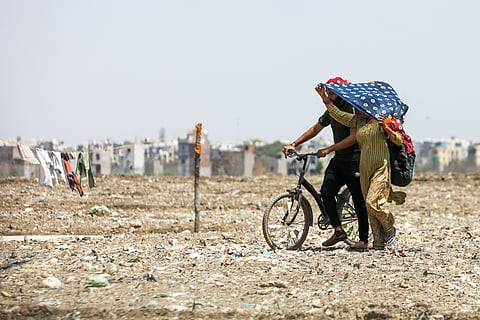


India has added heatwaves and lightning to its list of notified natural disasters, making states eligible for financial assistance under the Disaster Management Act, 2005.
The decision follows recommendations by the 16th Finance Commission and comes amid rising concern over extreme weather linked to climate change.
At least 20 people died of heatstroke between March 1 and July 26, 2026, while nearly 5,000 heatstroke cases were reported across several states.
States can now draw on State Disaster Response Fund and mitigation funds for heatwave and lightning-related relief, with the National Disaster Response Fund available when state funds are inadequate.
Heatwaves are now a notified natural disaster in India. In a significant decision, the government has included heatwaves and lightning in the list of notified natural calamities, making state governments eligible for financial assistance under the Disaster Management Act, 2005.
The move follows a long-standing demand from state governments, policy and civil society groups, public health advocates and vulnerable communities.
According to official figures, at least 20 people in India died of heatstroke between March 1 and July 26, 2026. Of these confirmed deaths, 11 were reported from Maharashtra.
Nearly 5,000 people have suffered heatstroke since March this year across several states, including Telangana, West Bengal, Chhattisgarh, Jharkhand, Uttar Pradesh, Maharashtra, Bihar, Andhra Pradesh, Rajasthan, Odisha, Madhya Pradesh, Gujarat and Karnataka.
The Union Ministry of Home Affairs said it had included heatwaves and lightning in the list of notified natural calamities under the operational guidelines for the administration of the State Disaster Response Fund and the National Disaster Response Fund for 2026-31, in a written reply in the Lok Sabha.
The decision follows recommendations by the 16th Finance Commission, which had called for the inclusion of heatwaves and lightning in view of the increasing frequency and intensity of extreme weather events linked to climate change.
“Accordingly, a policy framework for providing relief assistance through SDRF/ NDRF is now in place. Heat Wave Mitigation Projects are eligible under the Disaster Mitigation Funds,” said Nityanand Rai, Union minister of state for home affairs.
Until now, heatwaves were excluded from the Disaster Management Act’s notified disaster list, which covered only 12 categories: cyclone, drought, earthquake, fire, flood, tsunami, hailstorm, landslide, avalanche, cloudburst, pest attack, and frost/cold wave.
The 15th Finance Commission did not find strong reasons to include heat waves as a notified disaster in the disaster management act. Till now, states had to notify heatwaves at the state level and could spend only up to 10 per cent of their annual SDRF allocation for heatwave relief.
Now, with the new notification, states can draw on the full state disaster response and mitigation funds and the national fund also becomes available when state funds are inadequate to deal with a disaster.