
Subscribe

A Stand.earth Research Group analysis says 15 global fashion companies sourcing from Bangladesh could help avoid 8.59 million tonnes of carbon dioxide emissions by 2040.
The companies account for 26.3% of Bangladesh’s apparel exports by weight, giving them significant influence over the sector’s energy transition.
The report says only two of the 15 companies have 100% renewable electricity targets covering their supply chains.
Stand.earth has called on brands to fund clean energy, electrification and worker protection without adding to suppliers’ debt.
Just 15 global fashion companies sourcing from Bangladesh could help reduce the climate impact of one of the world’s most polluting industries by supporting a clean energy transition in the country’s garment sector, a new analysis by research group Stand.earth says.
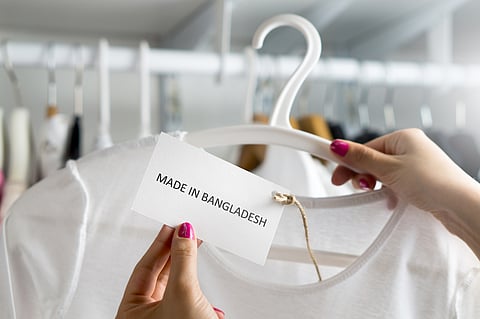
The report, Fashion’s Fair Share: Bangladesh Buyers’ Climate Opportunity, says the companies, which includes giants like H&M Group, Inditex, Primark and Walmart, account for 26.3 per cent of Bangladesh’s apparel exports by weight. It says their purchasing power gives them both an opportunity and responsibility to help transform the energy systems behind one of the world’s most important garment manufacturing hubs.
The findings have relevance for India, where textile and apparel clusters also face growing pressure to decarbonise supply chains, improve energy resilience and meet climate-linked requirements from global buyers.
Stand.earth said the 15 companies could help Bangladesh cut annual emissions by 1.26 million tonnes of carbon dioxide by 2040. Cumulatively, this would amount to 8.59 million tonnes of avoided emissions, equivalent to eliminating emissions from more than three million North American homes for a year, it said.
The analysis comes as fashion’s climate pollution continues to rise. Stand.earth cited Apparel Impact Institute findings reported by Bloomberg, which said sector emissions rose 7.5 per cent in 2023 and a further 6.3 per cent in 2024, reaching about one billion tonnes of greenhouse gases annually.
Bangladesh’s garment sector is facing an energy crisis, with fossil fuel import dependence, unreliable electricity and gas shortages affecting manufacturing operations and workers, the report said. Renewables supply less than 5 per cent of Bangladesh’s grid electricity, meaning brands must support changes beyond individual factories, it added.
Rachel Kitchin, senior corporate climate campaigner at Stand.earth, said the country’s biggest buyers must be part of the solution. “Demanding cleaner production while leaving suppliers and workers to foot the bill simply won’t cut it,” she said in a statement.
The report found that only two of the 15 companies, Inditex and H&M Group, have 100 per cent renewable electricity targets covering their supply chains. Only four publicly disclose participation in supplier financing initiatives, and none showed strong evidence of grant-based or debt-free financing, it said.
Stand.earth also found that no brand had concrete public climate adaptation policies for its manufacturing base. Only Next publicly disclosed a supplier code addressing heat stress.
The group has launched a Clean Energy Investment Pact, calling on brands to provide financing that does not add to supplier debt, support renewable energy and electrification, protect workers from extreme heat and climate disruption, and report progress publicly.
For India and the wider South Asian apparel economy, the report signals that clean energy access, worker protection and buyer financing are likely to become central to the future competitiveness of garment exports.