

Green industrialisation is emerging as the organising principle of economic strategy across multilateral forums
Yet the global climate regime has failed to meaningfully integrate this shift into climate governance
As industrial policy reshapes decarbonisation pathways, COP processes risk being sidelined unless they catch up
There is growing convergence among experts and institutions around the world today that the decarbonisation agenda will struggle without industrial transformation—and that industrial transformation, in turn, will fail without policy, planning and cooperation.
Green industrialisation is therefore increasingly being framed as the organising principle of economic strategy. This is being articulated in political declarations, multilateral development reports, long-standing development debates, and new analyses focused on the industrial capabilities of countries.
Yet the climate regime remains largely untouched by this recognition, and the gap is becoming untenable.
Multilateral institutions are shaping their language around green industrialisation and green industrial policy.
The Industrial Development Report 2026, United Nations Industrial Development Organization’s flagship report, stresses the renewed centrality of industrialisation in development thinking. It repeatedly links future industrialisation to the energy transition and environmental efficiency, suggesting that ‘green’ is not a qualifier but a defining characteristic. Its emphasis on capability gaps, regional differentiation and long-term structural transformation reflects an understanding of green industrialisation as a systemic, multi-decade process.
The G20, too, is referencing “sustainable industrial policy”, stressing the need for value addition and supply-chain development, particularly around critical minerals and clean technologies.
A G20-linked policy brief authored by institutions including Institute for Economic Justice, International Trade Administration Commission of South Africa, University of Oxford, School of Oriental and African Studies, and Industry, Infrastructures, and Innovation for Strategic Transformation or i3T focuses on the constraints that industrial policy is facing globally.
Trade rules, investment agreements, intellectual property regimes and financial architecture are identified as barriers that shape who can pursue green industrial strategies and who cannot. The message here, too, is that global rules have not caught up with the urgency of transformation being demanded, especially for developing countries.
Thus, there appears to be a degree of convergence in these discussions—from calls to remove international constraints on industrial policy to efforts to map the potential for building clean-technology manufacturing capabilities or make high-level declarations on green industrialisation. A few commonalities across forums are telling. Green industrialisation is being highlighted as:
necessary for decarbonisation,
central to development and employment,
dependent on policy space and coordination, and
already shaping global competition and supply chains.
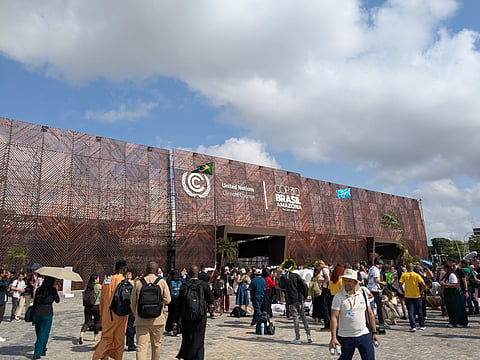
The Belem Declaration on Global Green Industrialisation, adopted at 30th Conference of Parties (COP30) to the United Nations Framework Convention on Climate Change (UNFCCC), was yet another avenue where green industrialisation is explicitly elevated as a necessary condition for meeting Paris goals. The declaration links climate outcomes to industrial supply chains, while also stressing that green industrialisation must avoid deepening inequalities. It calls for a multilateral effort to advance the green industrialisation agenda.
The centrality of industrial policy has long been emphasised across several distinct spaces, each approaching the agenda from a different starting point.
Among experts, one strand of discussion has focused on questions of policy space and structural asymmetries in the global economy. Some scholars are examining the green transition through a political-economy lens, leading to newer insights on green industrialisation and its contours.
Ahumada and Chang, for instance, situate the push for green industrialisation within a broad structural context. They note that countries in the Global North are increasingly using industrial policy to manage strategic competition and security concerns by deploying subsidies, trade measures and standards, largely insulated from multilateral discipline. In contrast, countries in the Global South continue to face tighter constraints, shaped by historical disadvantages and existing trade and investment rules. This asymmetry, they argue, risks locking developing countries into import-dependent pathways. Addressing it, they suggest, requires revisiting ideas associated with the New International Economic Order (NIEO), framing green industrialisation both as a sovereign development right and as a global necessity for climate-compatible development.
Similar concerns surface in more applied discussions on development and industrialisation. In a recent interview, Ha-Joon Chang argues that many developing countries have not failed because industrialisation is no longer viable, but because they did not undertake the sustained process of building productive capabilities in the first place.
Our new research series, Towards a New Green World from Delhi-based think tank Centre for Science and Environment, flips the lens to climate policy itself and highlights the need for economic resilience and green industrialisation to be central to the climate agenda for developing countries. Calling for decarbonisation without these agendas is no longer viable, and the Global South must be empowered to capture greater value, diversify their economies and shape the governance of emerging green industries.
Economists have also attempted construct frameworks to ensure that green industrial policy efforts are held to the test of progressive values related to sustainable resource use, democratic control of production, and ecological justice; others have done the same to conceptualise green industrial policy more holistically in line with the mission of human and natural flourishing.
Another strand of expert work is more operational. Initiatives such as the Clean Industrial Capabilities Explorer (CICE) start from the premise that green industrialisation is already unfolding as a competitive process. The emphasis here is on practical positioning within clean-technology value chains. This kind of work focuses on identifying where existing industrial capabilities can be built upon.
The UNFCCC process today treats industry and manufacturing largely as a sector limited to discussions under mitigation action, not as a development and political economy question. The climate regime continues to operate as if industrial outcomes will emerge organically from measures such as carbon pricing, targets and voluntary action, without confronting who produces clean technologies, where value is captured and on what terms.
The Belem Declaration acknowledges this gap in a limited way, but the absence of this conversation risks leaving the climate regime on the sidelines of an agenda that will be shaped elsewhere.
There is potential to amplify this agenda in existing and upcoming spaces within the UNFCCC, such as the new trade and climate dialogues kicking off in Bonn next year and discussions to shape the new mechanism for just transition. Outside of, and parallel to, the UNFCCC, discussions on a roadmap to transition away from fossil fuels — spearheaded either under the Brazilian banner or through Colombia’s conference in April — must consider the question of green industrialisation to map out viable alternative pathways to prosperity as countries leave fossil-heavy growth paths behind.
Brazil’s upcoming Integrated Forum on Climate Change and Trade, too, must consider this as a pillar in relation to green industrialisation and trade.
At its core, the focus on green industrialisation reflects a shift in how the green transition is being understood — not in terms of emission targets alone, but also as a production challenge: who makes clean technologies, how supply chains are organised, where value is added and who benefits economically.