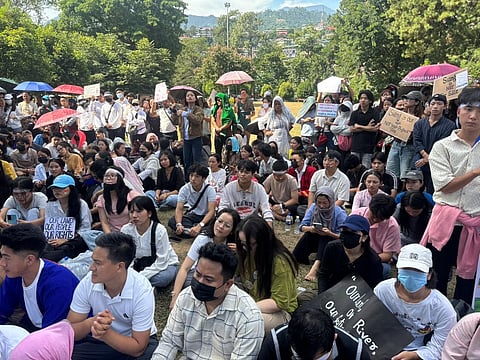

The Siang Upper Multipurpose Project highlights the need for inclusive planning that integrates local concerns over livelihoods, ancestral land, and cultural heritage.
Recognising cultural heritage and ensuring procedural justice can lead to sustainable and inclusive outcomes.
Transparent engagement with communities can address grievances, build trust, and reduce conflict, ensuring a balanced approach to development and national security.
The Siang Upper Multipurpose Project (SUMP) must be viewed from multiple perspectives. India has legitimate strategic concerns, particularly following China’s announcement of the Medog dam. I do not undermine these. However, a project of this scale will have consequences far beyond power generation and national security. Why can concerns over livelihoods, ancestral land rights and cultural heritage not be integrated into the feasibility assessment from the outset? The debate is not simply about supporting or opposing the project. It is about objectively assessing its risks and benefits through transparent and meaningful engagement with local communities. Such engagement could help address grievances, build trust and reduce the likelihood of conflict. At present, however, the project’s stated objectives appear increasingly at odds with the concerns of local communities.
This brings us to the question of just transition. As the world moves away from fossil fuels in pursuit of the Paris Agreement goals, India will need to accelerate its transition to cleaner energy. Hydropower is likely to assume greater importance in this process. This makes it imperative to rethink how dams are planned and built, including through better training and capacity-building for engineers and other professionals. Consider the way hydropower projects are assessed.
Engineers working with organisations such as National Hydroelectric Power Corporation (NHPC) and North Eastern Electric Power Corporation Limited (NEEPCO) have traditionally relied on historical hydrological data and return-period estimates to evaluate dam safety and feasibility. But in a changing climate, can historical estimates reliably predict future flood risks? Are existing assessment methods equipped to account for shifting rainfall patterns, extreme weather events and growing climate uncertainties? These must become central to dam planning.
The other issue is if the three dimensions of justice—distributional, recognition and procedural—are adequately addressed in planning and implementing such projects. Distributional justice concerns how benefits, risks and costs are shared. Large dams often impose disproportionate costs on local communities through displacement, loss of ancestral land and disruption of cultural heritage, while the benefits of electricity generation and economic development are spread across wider regions.
Recognition justice requires acknowledging and respecting the identities, cultural heritage, traditional knowledge and distinct concerns of affected communities. These have often been overlooked in project planning. Procedural justice demands that communities have a meaningful voice in decisions that profoundly affect their lives. This requires timely access to information, transparent decision-making, genuine consultation and the incorporation of community concerns into project design and implementation. Had these been addressed adequately from the beginning, many grievances could have been avoided.
This article was first published in the November 16-30, 2026 print edition of Down To Earth
