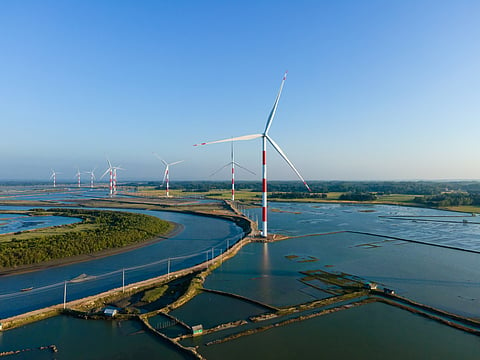


Clean energy subsidies rose 31% to nearly Rs 32,000 crore in 2023–24, a report says.
Fossil fuel subsidies fell, narrowing the support gap to a five-year low.
State-owned enterprises directed 83% of energy capex to fossil fuel projects.
Electricity subsidies reached a record Rs 2.1 lakh crore.
IISD warns fossil-heavy public investment could slow the energy transition.
Clean energy subsidies in India rose by 31 per cent year on year to nearly Rs 32,000 crore in the 2023-24 financial year, while fossil fuel subsidies fell by 12 per cent, narrowing the gap between the two to its lowest level in five years, according to a new report.
However, government support for fossil fuels remains around five times higher than spending on clean energy, highlighting the scale of the challenge India still faces in shifting its energy system, the International Institute for Sustainable Development (IISD) said.
The findings are detailed in Mapping India’s Energy Policy 2025, which notes that the fall in fossil fuel subsidies was driven largely by favourable global price movements rather than structural policy reforms, raising the risk that subsidies could rebound if prices rise again.
The report says the changing subsidy landscape has helped push non-fossil sources above 50 per cent of India’s installed electricity capacity in 2025 — five years ahead of the target set under India’s updated nationally determined contribution (NDC 2.0).
Despite this milestone, IISD warns that public investment patterns continue to favour fossil fuels, potentially undermining longer-term climate goals.
In 2023-24, 83 per cent of capital expenditure by central government energy-related public sector undertakings (PSU) was directed towards fossil fuel activities, including coal mining, refinery expansion, and oil and gas development.
Clean energy diversification by state-owned enterprises remains limited in scale, the report says, increasing the risk of locking in infrastructure that is misaligned with India’s long-term transition plans.
“While budgetary support for clean energy is improving, public enterprises are still committing the bulk of capital to fossil assets,” said Swasti Raizada, senior policy adviser at IISD. “Stronger policy signals are needed to steer state-owned enterprises towards meaningful diversification.”
Public financial institutions such as the Rural Electrification Corporation and the Power Finance Corporation have expanded lending for renewable energy and power sector reforms. However, IISD says these changes have yet to translate into a broader reorientation of PSU investment strategies.
The report highlights growing fiscal pressure in the power sector, with electricity subsidies reaching a record Rs 2.1 lakh crore in 2023-24 — an increase of 18 per cent — even though electricity demand grew by just 7 per cent.
The widening gap between the cost of supply and consumer tariffs continues to strain state finances, the report says, and reflects persistent inefficiencies in electricity distribution companies.
Despite the decline in subsidies, fossil fuels generated nearly Rs 9 trillion in government revenue in 2023-24, accounting for about 16 per cent of total revenues across central and state governments.
Fossil fuels continue to make up around 90 per cent of energy-related revenues, leaving public finances exposed to volatility in global fuel prices.
Nearly 79 per cent of fossil fuel tax revenue is borne by consumers, according to the report. IISD points to recent tax changes — including the removal of the GST compensation cess on coal and lower taxes on internal combustion engine vehicles — as weakening the polluter-pays principle.
To sustain progress, IISD recommends better targeting of electricity subsidies through measures such as smart metering and direct benefit transfers. It also calls for a reorientation of PSU capital expenditure towards clean technologies, including offshore wind, battery storage and green hydrogen.
The report further suggests gradually diversifying government revenues through instruments such as green taxes and carbon pricing.
Without such reforms, IISD warns, India’s energy transition risks being undermined by continued fossil fuel-heavy public investment, even as clean energy capacity continues to expand.