

Global electricity demand is expected to grow by 3.6% in 2026 and 3.8% in 2027, driven by industry, electric vehicles, cooling, appliances and data centres.
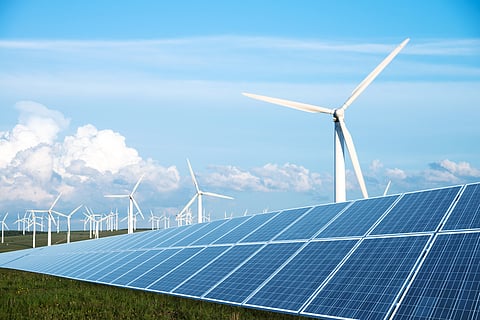
The IEA says renewable electricity generation is set to overtake coal globally in 2026, after reaching near parity in 2025.
India’s electricity demand is forecast to rebound by 7% in 2026, supported by industrial activity, services growth and heatwave-driven cooling demand.
India crossed 100 GW of variable renewable energy supply for the first time in July, even as rising evening peaks continue to strain the grid.
Global electricity demand is expected to grow by 3.6 per cent in 2026 and a further 3.8 per cent in 2027, driven by rising consumption from industry, electric vehicles, air conditioning, household appliances and data centres, according to the International Energy Agency.
The IEA’s Electricity Mid-Year Update 2026 says global electricity consumption is projected to rise from 28,600 terawatt hours in 2025 to 30,700 terawatt hours by 2027.
The report says power systems have largely adapted to disruptions in liquefied natural gas supplies through the Strait of Hormuz, triggered by the war in the Middle East. But the crisis pushed natural gas prices in Asia and Europe to their highest levels since the 2022-23 energy crisis, increasing electricity generation costs and prompting some countries to switch from gas to coal.
At the same time, the expansion of renewable electricity has helped diversify power supplies and strengthen energy security, the report said.
The IEA projects renewable electricity generation to overtake coal globally in 2026, after reaching near parity in 2025.
Renewable generation is expected to grow by more than 8 per cent in 2026, raising its share of global electricity generation from 33 per cent in 2025 to 37 per cent by 2027.
Solar photovoltaic power remains the largest contributor to global electricity supply growth. Solar PV generation is forecast to increase by around 600 terawatt hours in 2026, matching the record annual expansion seen in 2025.
The IEA expects solar PV to surpass wind power and become the world’s second-largest renewable electricity source after hydropower.
India and other Asian economies are expected to play a growing role in global solar deployment. Their combined contribution to solar capacity additions is projected to rise from nearly 10 per cent in 2025 to around 17 per cent in 2026.
Global gas-fired electricity generation is forecast to remain broadly unchanged in 2026, breaking the growth trend seen through much of the past decade. Growth is expected to resume at around 1.5 per cent in 2027, although the IEA said geopolitical uncertainty could continue to affect the outlook.
Nuclear power generation is also expected to rise in 2026 and accelerate in 2027, supported by new reactors coming online in China and India, and strong output in the United States and France.
India’s electricity demand is expected to grow by 7 per cent in 2026, rebounding from 1.6 per cent growth in 2025, when an early monsoon reduced cooling demand.
The report said India’s electricity demand rose by around 6 per cent in the first half of 2026, supported by stronger activity in the industrial and services sectors and heatwaves between mid-April and early June.
India’s combined solar PV and wind generation rose by more than 25 per cent during the first half of 2026, increasing their share in the electricity mix from 14 per cent a year earlier to 16.5 per cent.
Over the same period, gas-fired electricity generation fell by around 15 per cent compared with the first half of 2025, and remained more than 40 per cent below levels recorded in the first half of 2024.
Peak electricity demand reached a record 270.8 gigawatts on May 21, with solar PV supplying 60 GW, or 22 per cent of daytime peak demand.
But the IEA said rapidly rising evening peak demand continues to require coal and gas-fired plants to increase generation. This led to electricity shortages in some northern states during the first five months of the year.
The report also warned that lower-than-average monsoon rainfall, forecast by the India Meteorological Department, could raise electricity demand further by increasing irrigation and cooling needs.
India also reached new renewable energy milestones in July.
On July 13 and 14, variable renewable energy — mainly solar and wind — crossed 100 GW in the country’s power supply for the first time. Its share in total power supply reached 42.79 per cent, the highest recorded so far.
Instantaneous ground-mounted variable renewable energy generation touched an all-time high of 103 GW at 12:05 on July 13. A day earlier, wind power generation reached a record 36.6 GW during the evening.
The gains came during a summer in which heatwaves, cooling demand and rising ownership of electrical appliances pushed India’s electricity demand to around 270 GW on two occasions.
On April 25, when electricity demand touched a record 270 GW, solar power contributed 57 GW during peak demand hours and 81 GW at midday, the highest level recorded.
Since April, renewable energy’s share has ranged between 35 per cent and 42 per cent. When hydropower and nuclear power are included, non-fossil sources have accounted for nearly half of total electricity supply.
China’s electricity demand is forecast to grow by 5.5 per cent in 2026, driven by manufacturing, digital services and transport electrification.
Production of lithium-ion batteries rose by 39.3 per cent year on year in the first half of 2026, while production of new energy vehicles recovered after a slower start to the year.
By the end of May, China had more than 22 million electric vehicle charging points, up 45 per cent year on year. Electricity consumption from EV charging and battery-swapping services rose by nearly 57 per cent in the first half of the year.
According to the China Association of Automobile Manufacturers, new energy vehicles accounted for 58.5 per cent of all new vehicle sales in June 2026, while first-half sales rose by 7.3 per cent year on year.
The LNG supply disruption has affected electricity markets differently across regions.
Average wholesale electricity prices in the second quarter of 2026 rose by more than 30 per cent year on year in the European Union and Japan, both of which depend heavily on imported gas.
India saw a smaller rise of less than 10 per cent, as natural gas accounts for only a limited share of its electricity generation.
Australia saw the opposite trend. Wholesale electricity prices fell by about 45 per cent, as higher renewable generation and rapidly expanding battery energy storage reduced reliance on gas-fired plants during periods of peak demand.
The IEA said negative wholesale electricity prices are becoming more common in markets with high renewable penetration, reflecting insufficient flexibility in power systems.
It said battery storage, demand response programmes, modernised electricity grids and more flexible power systems would become increasingly important as countries integrate larger shares of renewable energy while maintaining grid reliability.