

A new report warns that US and Israeli military action against Iran could unleash a wave of inflation, debt distress and financing pressures across the Global South.
Energy importers and remittance-dependent economies in Asia, Africa and Latin America face heightened risks from surging fuel and food prices, disrupted trade routes, tighter dollar liquidity and worsening conditions for millions of migrant workers in Gulf states.
The United States and Israeli military action against Iran could push countries across Asia, Africa and Latin America into a fresh cycle of inflation, debt distress and external financing pressures, with energy importers and remittance dependent economies facing the biggest risks, according to a new report.
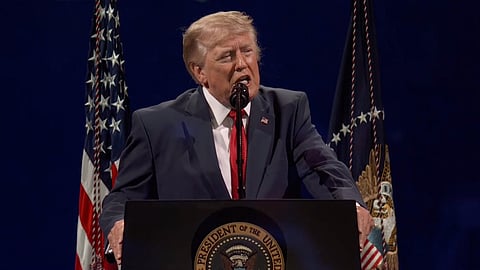
The report, War on Iran and the Global South, released by International Development Economics Associates, comes amid renewed tensions in the Gulf. It follows the US launching a third consecutive night of strikes on Iran, hours after Donald Trump said Washington would reinstate a maritime blockade on the country and charge ships for safe passage — an apparent policy reversal. The escalation comes only weeks after a ceasefire between Iran and Israel had eased immediate hostilities, raising fresh concerns over the wider economic fallout for countries in the Global South.
The report warned that any renewed escalation could revive disruptions to energy supplies, trade routes and financial markets, amplifying vulnerabilities across developing economies.
While the report focuses on the economic and financial fallout of the conflict, the authors emphasise that these developments cannot be viewed in isolation. They argued that the war has unfolded against a backdrop of “breaches of Iranian and Lebanese sovereignty” that they say violate international law and the United Nations Charter. The report said its analysis of inflation, debt, trade disruptions and remittance risks should therefore be read within this wider political and legal context.
Countries in the Global South face risks through four major transmission channels: rising energy and food prices, tighter financial conditions, shrinking remittance inflows and worsening labour conditions for migrant workers in Gulf countries, the report added.
India, South Korea, Thailand and the Philippines are among Asian economies expected to face higher energy import bills alongside currency depreciation and tighter dollar liquidity if the conflict escalates. The combination could increase borrowing costs for governments and businesses while limiting their ability to support economic growth.
The report drew parallels with the Russia Ukraine war, noting that global energy prices surged 54 per cent and food prices rose 18 per cent in the first two months of 2022, according to World Bank commodity market data. It cautioned that the fallout from a prolonged Iran conflict could prove even harder to contain because of its implications for oil shipping routes and global energy supplies.
Financial risks could also intensify. The report said 22 sub Saharan African countries account for 44 per cent of projected interest payments by all low income countries during 2024 to 2027, based on IMF estimates. It added that 21 African low income countries are already in debt distress or at high risk, citing World Bank and IMF debt sustainability analyses.
For South Asia, the report highlighted the vulnerability of remittance flows. India, the world's largest remittance recipient, received an estimated $137 billion during 2023 and 2024, of which about $51 billion came from the Middle East, according to World Bank data cited in the report. Pakistan received 55 per cent of its $36 billion remittance inflows from the region during the same period.
The report also warned that more than 25 million migrant workers in Gulf countries could face worsening employment conditions if the conflict persists. Citing the International Labour Organization, it noted that migrant workers account for between 76 per cent and 95 per cent of the labour force in Gulf countries and more than 90 per cent of private sector workers in Qatar and Kuwait.
According to the report, sovereign wealth funds in Gulf Cooperation Council countries, which collectively manage more than $5 trillion in assets, may increasingly shift investments from overseas projects towards domestic economic support and infrastructure rebuilding, potentially slowing global investment flows.
The report concluded that while the most immediate impacts have been felt through higher energy prices, supply chain disruptions and trade shocks, prolonged conflict could trigger a broader macroeconomic crisis across the Global South by tightening access to international finance and worsening inflation, debt and balance of payments pressures.