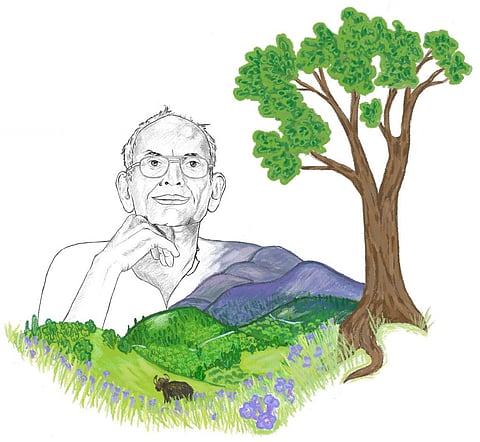


“In India, environmentalism as I define it was made possible only after the subcontinent came under the control of British imperialists. Colonialism constituted an ecological watershed, in that it brought with it new technologies of controlling, manipulating, reshaping and destroying nature. In pre-British times, the state had occasionally participated in natural resource management…under the British the state became a far more active player in human-nature interactions.”
Ramachandra Guha, “Speaking with Nature”
Environment. Environmentalism. Environmentalist. For India these words have a different meaning. For, India is an ecological being — from the economy to people sustenance to her political life, environment or the ecology is the most defining, and dependence factor. Agriculture still sustains close to 50 per cent of India’s population; forests are a source of livelihood for close to 20 per cent of population; and livestock dependent on natural grazing earns the most for a rural Indian. Our modern economy critically depends on natural resources like minerals. So, being an Indian is the same as belonging to the environment, feeling environmentalism, and fighting like an environmentalist to protect our very existence.
For more such content, head to Down To Earth’s sister site Young Environmentalist.