

Ranch is today the pulsating heart of Jharkhand. But if one looks closely, one can easily spot the Adivasi culture and identity for preserving which, the state of Jharkhand was carved out of Bihar in 2000.
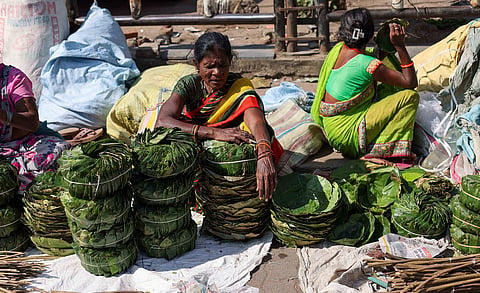
The surest signs to sight tribal culture are the roadside markets of Ranchi. Resembling a tribal haat, these markets have tribal women selling leaf bowls and forest-collected twigs which serve as natural toothbrushes.

Jharkhand produces non-timber forest produce (NTFP) in large quantities. NTFP includes items like sal leaves, mahua flowers and seeds, tamarind, chironji, lac, and various fruits and vegetables such as mango, jamun, and siali leaves.
These products are a significant source of income and livelihood for Jharkhand’s tribal communities. They support food security and the local economy through collection, processing, and sale.